Singapore and India-based startup HYDGEN is working on a part of the hydrogen economy that often receives less attention than large green hydrogen projects: producing hydrogen directly at industrial sites instead of transporting it over long distances.
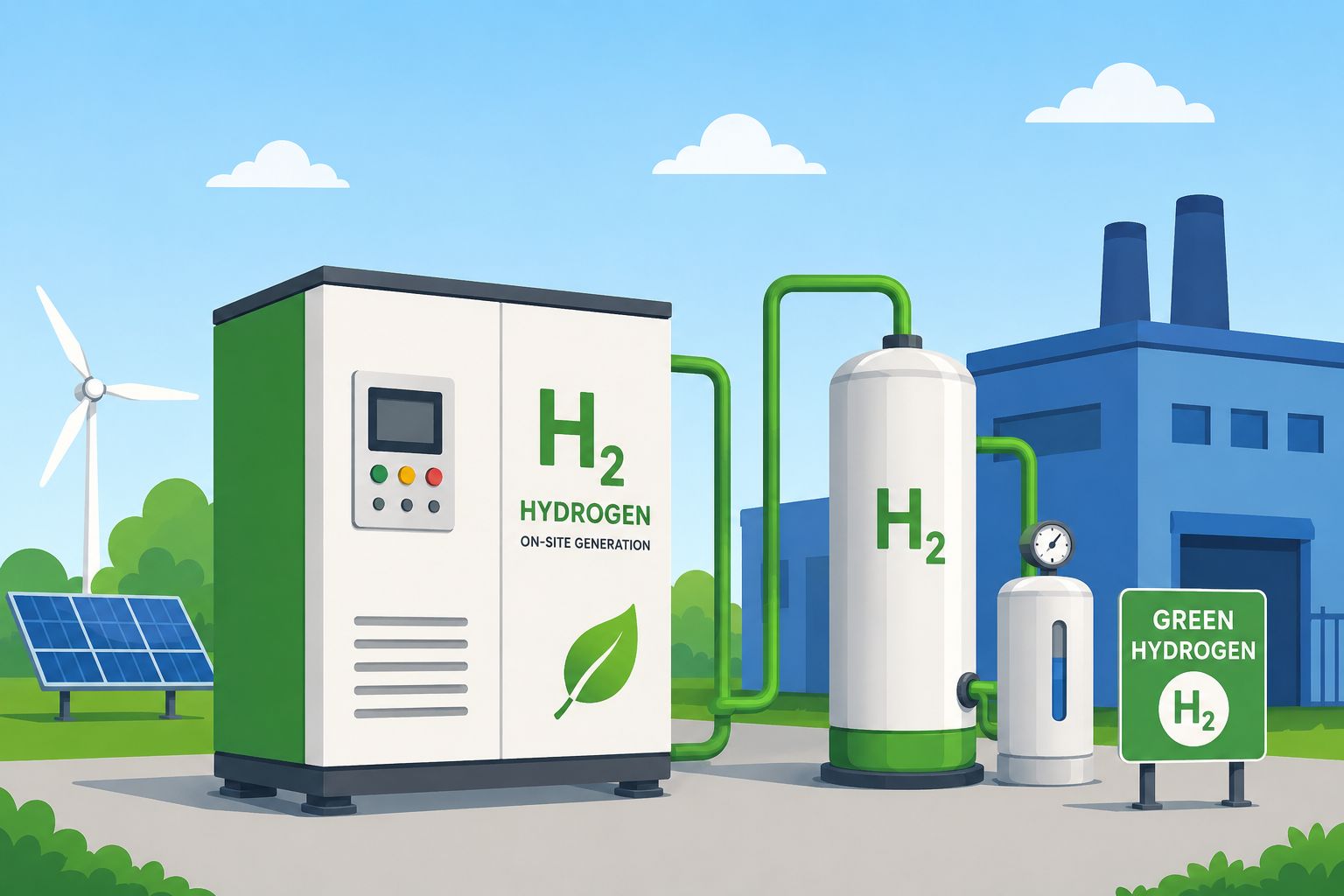
The company develops modular hydrogen electrolyser systems that allow industries to generate hydrogen on-site and on-demand. Rather than relying on tanker deliveries or cylinder logistics, HYDGEN’s systems are designed to produce hydrogen where it is needed using electricity and water. The goal is to reduce logistics costs, improve supply reliability, and make hydrogen economically viable for smaller industrial applications.
HYDGEN operates from Singapore with major engineering and manufacturing operations in Mangaluru, Karnataka.
The startup formally launched operations around 2024. Over the past two years, it has focused on developing and commercialising electrolyser systems aimed at decentralized hydrogen generation. Unlike many large hydrogen projects that target massive industrial production plants, HYDGEN is focusing on smaller modular systems that can operate directly inside factories, research facilities, mobility projects, or industrial campuses.
The company’s core technology is based on electrolysis. Electrolysers use electricity to split water into hydrogen and oxygen. If the electricity comes from renewable sources such as solar or wind power, the resulting hydrogen is classified as green hydrogen because it is produced without fossil fuel emissions.
HYDGEN says its primary platform uses Anion Exchange Membrane, or AEM, electrolyser technology. This is an emerging category within hydrogen production systems. Traditional alkaline electrolysers are usually cheaper but slower to respond to fluctuating renewable power. PEM electrolysers are more flexible and efficient but often require expensive platinum-group metals. According to HYDGEN and multiple investor reports, the company’s AEM architecture is designed to combine lower material costs with operational flexibility.
The company claims its systems can generate hydrogen with purity levels of up to 99.97% directly at the point of use. In some industrial processes, hydrogen purity is critical because contaminants can affect manufacturing quality or chemical reactions.
HYDGEN is also developing a larger 250 kW single-stack system for industrial-scale operations.
The company’s systems are modular. In practice, this means multiple units can be combined depending on hydrogen demand. A small research lab may need only a compact setup, while a larger factory could deploy multiple skids connected together. This modular approach is becoming common among newer hydrogen startups because it allows gradual scaling without requiring massive upfront infrastructure investment.
One of HYDGEN’s early deployments was in the lab-grown diamond sector. In late 2025, the company announced dispatch of its first in-house engineered electrolyser system for a diamond manufacturing facility in Surat, Gujarat. That deployment was significant because it marked the startup’s transition from prototype development into commercial operations. The company said the electrolyser was fully engineered and manufactured at its own facility in Mangaluru.
Since then, HYDGEN says it has launched pilot deployments across India, Singapore, and Southeast Asia covering industrial applications, mobility projects, and research institutions.
The company has also demonstrated hydrogen blending with LPG for cooking applications. According to company statements reported in local media, a 10% hydrogen blend reduced water boiling time from 4 minutes 20 seconds to around 3 minutes in demonstration tests. Independent large-scale validation data for this claim is not publicly available.
In October 2025, the company raised $5 million in a pre-Series A funding round comprising equity and debt. The round was led by Transition VC with participation from Cloudberry Pioneer Investments, Moringa Ventures, and family offices from India and Singapore.
HYDGEN operates in a rapidly growing global electrolyser market. Large international companies such as Plug Power, Nel Hydrogen, Bloom Energy, and Siemens Energy are investing heavily in hydrogen infrastructure and electrolysis systems. Most of these firms target utility-scale or industrial hydrogen production.
In India, companies such as Newtrace, GreenH Electrolysis, and Hygenco are also building hydrogen-related infrastructure and electrolyser technologies.
What makes HYDGEN somewhat different is its focus on decentralized hydrogen generation systems rather than large centralized plants. The company is betting that many industries will prefer producing hydrogen directly inside their facilities instead of depending entirely on external supply chains.
That approach could become important as India expands its National Green Hydrogen Mission. The Indian government has allocated nearly ₹20,000 crore for developing domestic hydrogen infrastructure, manufacturing capacity, and industrial adoption.
The challenge for HYDGEN now is scaling manufacturing while proving long-term reliability in industrial environments. Electrolyser systems operate under demanding conditions, and industrial customers typically require years of operational stability before adopting new energy infrastructure at scale.
So far, the company has moved beyond the concept stage into early commercial deployment. Whether it can grow into a major industrial hydrogen equipment player will depend on manufacturing execution, system durability, and how quickly India’s hydrogen ecosystem develops over the next few years.
- Our Correspondent