Kolkata-based startup Aldrogen Energy is working on a problem that is still difficult to solve in India’s clean energy sector: how to provide reliable electricity in places where diesel generators are still the default option.
The company is developing portable hydrogen-powered generators aimed at off-grid and backup power applications. Its systems are designed for use in locations where batteries alone may not provide long-duration power and where diesel generators are expensive, noisy, or polluting.
Aldrogen Energy is targeting sectors such as construction sites, hospitals, EV charging infrastructure, ports, transportation, rural electrification, and industrial backup power systems.
Aldrogen Energy emerged from Jadavpur University in Kolkata. The startup was incubated through the university’s innovation ecosystem and began working on hydrogen-based power systems focused on decentralized electricity generation.
The work has also received technical guidance from Raj Kumar Das, assistant professor in the Chemical Engineering department at Jadavpur University, along with mentorship from Dipankar Sanyal from the Mechanical Engineering department.
The startup first gained wider public attention after participating in the Carbon Zero Challenge 5.0 hosted by IIT Madras in early 2026. The competition focused on climate and clean energy technologies. Aldrogen Energy was among the top three winners selected from more than 1,300 applicants. The company received prototype support funding of ₹5 lakh during the competition and later secured an additional ₹10 lakh award as one of the final winners.
Product
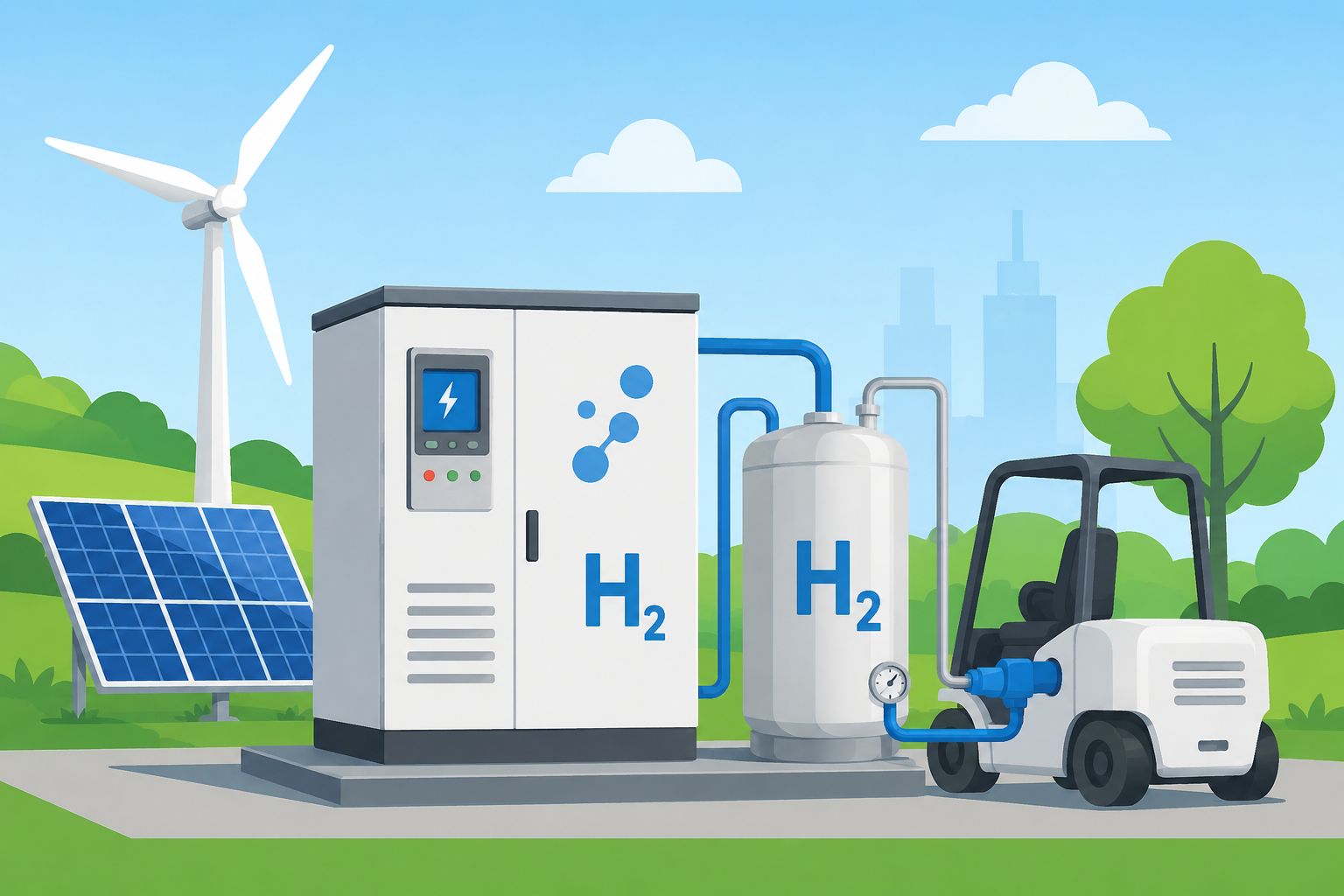
The company’s core product is a hybrid hydrogen-powered generator. Unlike a conventional diesel generator, which burns fuel to produce electricity, Aldrogen’s system uses hydrogen and oxygen to generate power electrochemically. The system stores hydrogen in a solid-state form and combines it with oxygen from ambient air to produce electricity. The only direct by-product is water.
The use of solid-state hydrogen storage is important because storing hydrogen safely is one of the biggest engineering challenges in hydrogen energy systems. Traditional hydrogen systems often rely on high-pressure tanks, which can be expensive and difficult to transport. Aldrogen says its approach is designed to improve portability and operational safety.
The generator is also described as a hybrid system because it includes an integrated battery. In practice, this means the battery handles sudden fluctuations in power demand while the hydrogen system provides sustained electricity generation over longer durations. This hybrid arrangement is increasingly common in clean backup power systems because it improves reliability and reduces stress on the fuel-cell stack.
Aldrogen’s current showcased system is a 6.25 kVA generator. That places it in the same broad category as small commercial backup generators used in telecom infrastructure, remote work sites, small industrial operations, field deployments, and emergency response setups.
The company says the system is designed for near-silent operation and remote monitoring. Unlike diesel generators, hydrogen fuel-cell systems typically produce very little vibration and significantly lower noise levels because there is no combustion engine involved in the power generation process.
Hydrogen power systems often face challenges during real-world deployment. Fuel availability, maintenance requirements, stack durability, and overall operating cost can vary significantly depending on how and where the systems are used.
The broader market for hydrogen-based power systems is becoming more active globally, particularly in sectors where batteries are not always practical. Batteries work well for short-duration storage and predictable charging cycles, but they can become difficult to scale for long backup periods or remote operations without charging infrastructure. Hydrogen systems are increasingly being explored for applications that require longer runtimes, fast refueling, portability, or operation in harsh environments.
Globally, companies such as Plug Power in the United States, Ballard Power Systems in Canada, and Bloom Energy in the US have spent years developing hydrogen fuel-cell systems for industrial and mobility applications. Bloom Energy has focused heavily on stationary fuel-cell power systems, while Plug Power has worked extensively on hydrogen fuel-cell equipment for warehousing and logistics. Ballard has concentrated more on transportation fuel cells, including buses and heavy-duty mobility systems.
In India, the hydrogen ecosystem is still relatively early-stage but is expanding rapidly due to policy support under the National Green Hydrogen Mission. Larger companies such as Reliance Industries, NTPC, Indian Oil, Avaada Group, and Adani Group are investing in green hydrogen production and industrial-scale infrastructure.
Alongside these large industrial players, a smaller group of startups is working on different parts of the hydrogen value chain. Bengaluru-based Newtrace, for example, is developing electrolyser technology aimed at reducing the cost of hydrogen production. HYDGEN is working on decentralized electrolyser systems. Other startups are focusing on storage, transportation, industrial applications, or fuel-cell systems.
Aldrogen Energy’s positioning is somewhat different from companies focused purely on hydrogen production. Instead of building large-scale hydrogen generation plants, the company is concentrating on portable electricity systems that can potentially replace diesel generators in specific operating environments.
That market is significant. Diesel generators remain widely used across India because they are portable, relatively easy to operate, and capable of providing immediate backup power. However, they also create air pollution, carbon emissions, fuel logistics costs, and noise problems. In sectors such as telecom towers, remote industrial operations, defense installations, mining sites, ports, and temporary infrastructure projects, there is growing interest in lower-emission alternatives.
The challenge for startups such as Aldrogen will be whether hydrogen systems can compete economically. Hydrogen-powered systems usually have higher upfront costs than diesel generators, and the economics depend heavily on hydrogen availability and fuel pricing. India’s green hydrogen ecosystem is still developing, which means fuel supply chains are not yet widespread.
Even so, the category is receiving increasing policy attention. The Indian government launched the National Green Hydrogen Mission in 2023 with an outlay of nearly ₹20,000 crore aimed at building domestic hydrogen production capacity and related infrastructure. Government-backed programs are also beginning to support startup pilots and applied hydrogen technologies.
So far, the company has demonstrated enough technical promise to gain recognition in university and climate-tech innovation platforms. Whether it can scale into a commercially viable energy hardware business will depend on execution during pilot deployments, manufacturing capability, and the wider growth of India’s hydrogen ecosystem.
- Our correspondent