Developing a new drug is a long and expensive process. Pharmaceutical companies can spend years studying disease pathways, testing molecules, analyzing biological data, and running experiments before a drug candidate even enters clinical trials.
A large part of that work now involves software, simulations, and data analysis rather than only wet-lab experiments. Hyderabad-based Aganitha is one of a growing number of companies trying to accelerate this process using AI, computational biology, and cloud-scale scientific computing.
Founded in 2017, Aganitha works with pharmaceutical and biotechnology companies on areas such as target discovery, biomarker analysis, molecular modeling, antibody engineering, genomics, and therapeutic design.
The company describes itself as combining “deep science” and “deep tech,” meaning it integrates AI systems with computational chemistry, molecular simulations, and biological research workflows rather than operating as a general-purpose AI software company.
Aganitha was founded by Prasad Chodavarapu, Vikram Duvvoori, and Ramarao Kanneganti. The company operates in both India and the United States.
Several members of the leadership team came from enterprise technology backgrounds before entering AI-driven pharmaceutical research. Prasad Chodavarapu, previously worked at HCL Technologies, where he led large enterprise transformation programs. He studied robotics at the University of Illinois.
Kiran Somalwar, listed as co-founder and Chief Revenue Officer, also worked at HCL Technologies and focused on digital transformation services in North America. He is a computer science graduate from IIT Madras and the University of Texas at Austin.
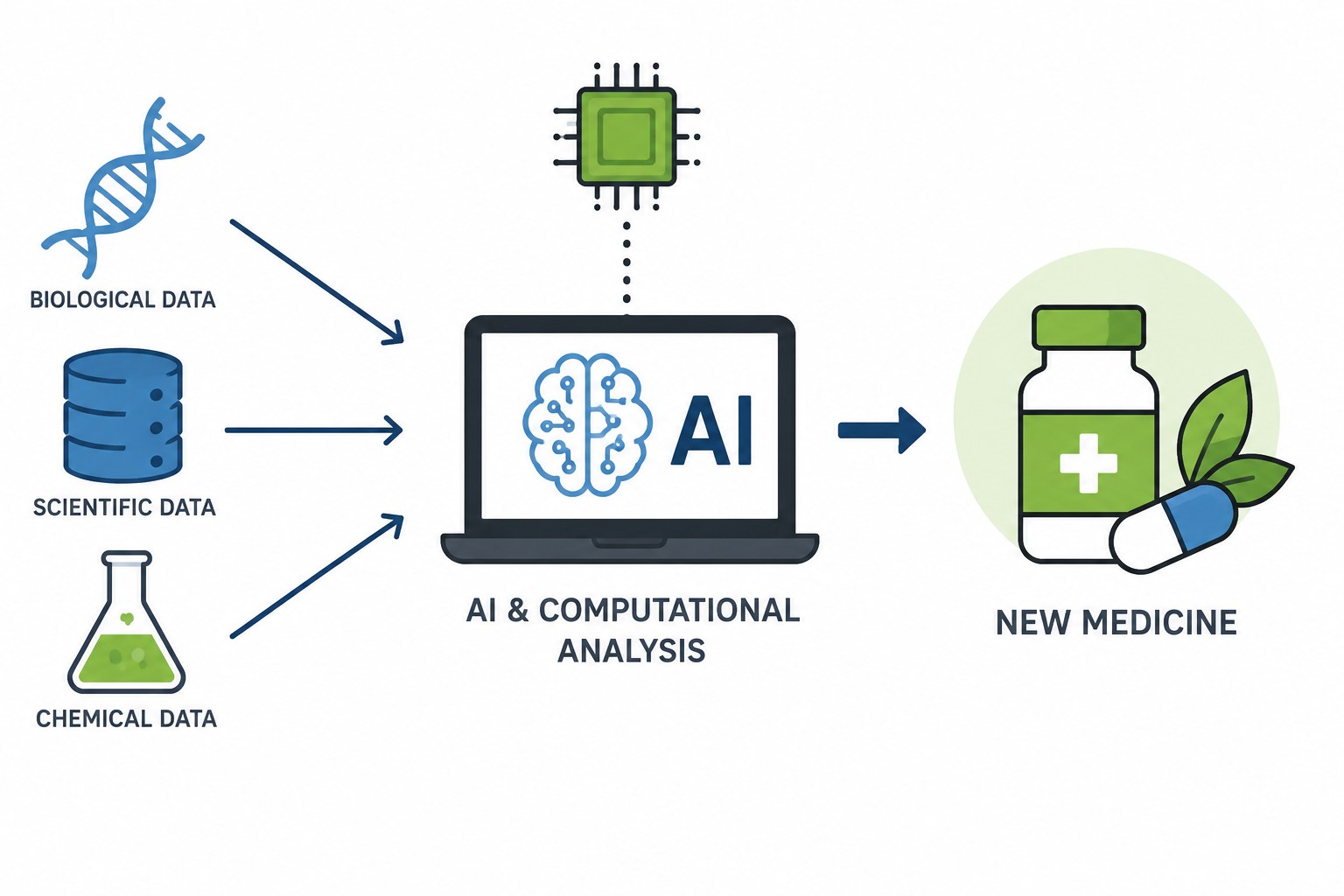
The company’s core business is centered around computational drug discovery. In practical terms, that means using software systems to help pharmaceutical researchers narrow down which molecules, proteins, or biological targets are worth testing in the lab. Instead of experimentally screening enormous numbers of compounds physically, AI systems can prioritize the most promising candidates first.
One of Aganitha’s main platforms is Igniva, which the company launched publicly in 2025. Aganitha describes it as a suite of “agentic AI” systems for therapeutic design and scientific research. The platform is designed to assist researchers with scientific literature analysis, disease pathway exploration, molecule prioritization, target evaluation, and therapeutic prediction workflows.
The company says Igniva combines generative AI with computational chemistry and biology models. This matters because pharmaceutical companies generally avoid relying entirely on black-box AI outputs. Instead, drug discovery companies increasingly combine AI-generated predictions with physics-based simulations, structural biology, and laboratory validation systems. Aganitha positions itself within this hybrid model.
Another product developed by the company is DBTIPS, short for Disease Biomarker and Target Insights Platform and Services. According to Aganitha, the system aggregates scientific literature, omics datasets, and disease intelligence into searchable workflows that help pharmaceutical researchers identify therapeutic targets and biomarkers more efficiently.
Beyond software products, Aganitha also provides computational biology and computational chemistry services directly to pharmaceutical clients. The company works with several large global pharmaceutical organizations on projects that include AI-powered antibody design, genomics analysis, molecular optimization, and manufacturing analytics.
Aganitha has a partnership with CSIR-CCMB, the Centre for Cellular and Molecular Biology in Hyderabad. Under the agreement, Aganitha and CCMB are working on applying generative AI systems to therapeutic design for diseases including malaria, tuberculosis, and neurological disorders.
CCMB researchers explained that some biological modeling tasks that traditionally took months or years in the lab can now be narrowed down computationally in much shorter periods before laboratory validation begins.
Aganitha in 2023 won the Accenture Ventures Tech Next Challenge in the science-tech category.
Globally, the AI drug discovery category has expanded rapidly over the last decade. Companies such as Insilico Medicine, Recursion Pharmaceuticals, Atomwise, and BenevolentAI are all building AI systems for molecular discovery, disease analysis, and therapeutic design. Large pharmaceutical companies including Pfizer, Roche, and Novartis have also entered partnerships with AI-focused biotech firms.
The broader challenge for the industry is scientific reliability. Drug discovery is highly regulated, and many AI-generated candidates fail during laboratory testing or clinical trials. Pharmaceutical companies therefore need systems that are explainable, reproducible, and scientifically defensible rather than simply fast.
The AI drug discovery market has attracted significant attention globally, but long-term commercial success will depend less on demos and more on whether these systems can help produce real drug candidates that survive laboratory validation and eventually reach patients.
- Our correspondent