Abridge was built around a problem almost every doctor understands immediately: too much time is spent writing notes and too little time is spent with patients.
In many hospitals, clinicians finish appointments only to spend hours documenting conversations, updating electronic health records, handling coding requirements, and preparing billing notes. This late-night administrative work after clinic hours—has become one of the biggest drivers of physician burnout.
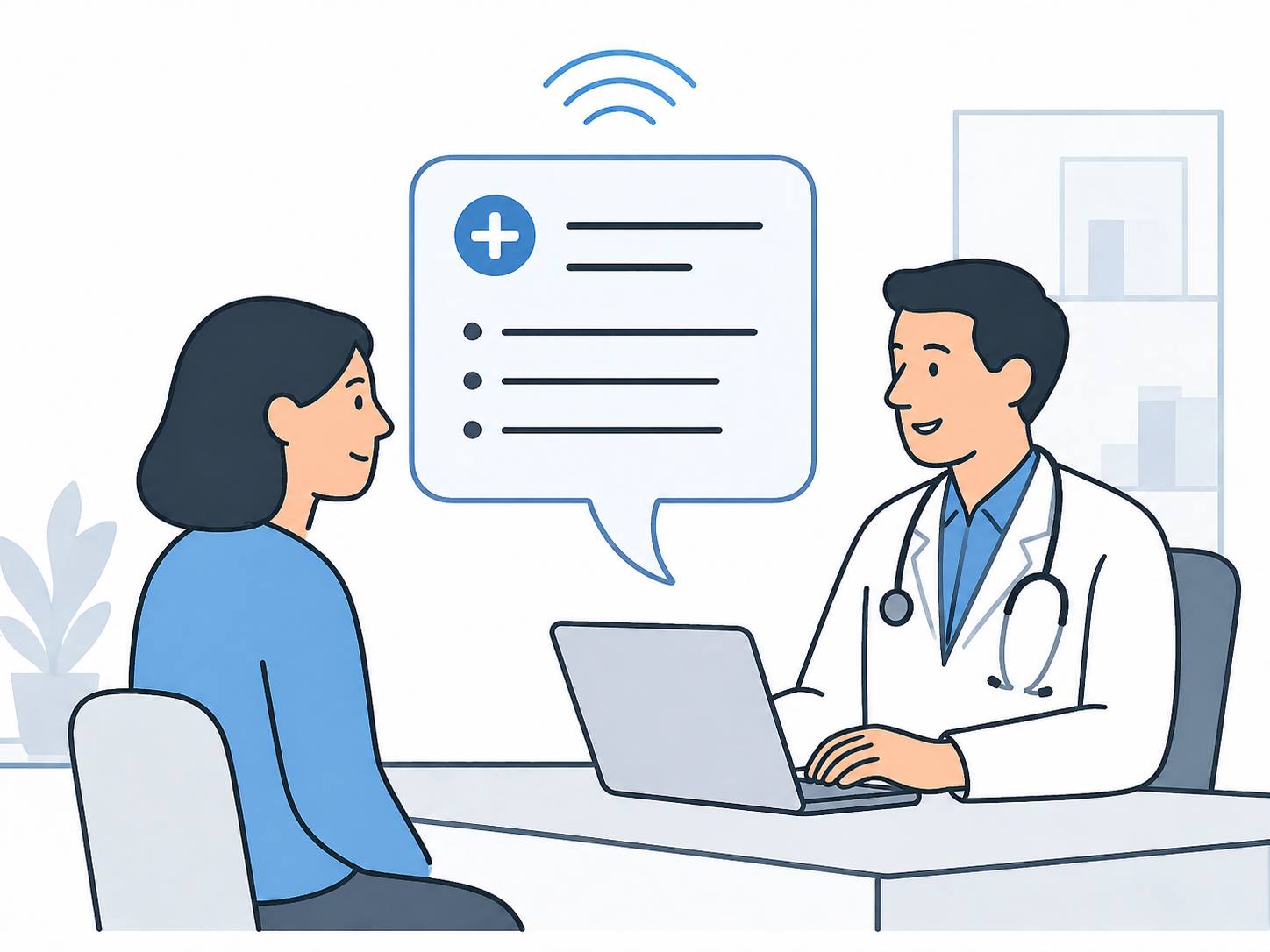
Abridge’s product is designed to remove that burden. It listens to the patient-doctor conversation, converts it into structured clinical notes in real time, and pushes those notes directly into hospital record systems like Epic.
Instead of replacing doctors, the company focuses on reducing administrative work so doctors can spend more time on care.
That practical use case helped Abridge earn a place on the 2026 Forbes AI 50 list, where Forbes highlighted it among the world’s most promising private AI companies applying artificial intelligence to real-world problems.
Founders
Abridge was founded in 2018 by Dr. Shiv Rao. Rao is a practicing cardiologist and faculty member associated with the University of Pittsburgh Medical Center (UPMC). Before starting Abridge, he worked closely inside hospital systems and saw firsthand how documentation overload affected physicians. In interviews, he has said the idea came from watching clinicians spend more time facing computer screens than patients.
Unlike many healthcare AI founders who came from software first, Rao came from medicine first. That shaped the company’s focus: solve a specific operational problem inside healthcare rather than build a general AI platform.
The company started with patient-facing tools that helped people understand medical conversations. It later shifted toward enterprise clinical documentation, where demand from hospitals proved much stronger.
That move became the real growth engine.
What the product actually does
Abridge is often described as an “AI medical scribe,” but the product is more specific than that. It records the clinical conversation between doctor and patient—with permission—during appointments. It then uses speech recognition and medical language models to create structured notes that fit directly into the workflow doctors already use.
This includes: history of present illness, assessment and plan, clinical summaries, coding support for billing, revenue cycle documentation, follow-up instructions.
The system works directly inside electronic medical record systems, especially Epic, so doctors do not need to copy and paste notes manually.
Abridge calls the engine behind this its “Contextual Reasoning Engine,” which is designed not just to transcribe words but to understand what matters clinically. For example, if a patient casually mentions chest pain during a longer conversation, the system identifies that as medically important rather than treating it like ordinary speech.
This distinction matters because normal transcription software simply converts speech to text. Clinical documentation requires interpretation, structure, and medical relevance.
Workflow
The workflow is simple.
A clinician opens Abridge during the consultation. The conversation is captured securely. The AI generates a draft note in real time. The doctor reviews it, edits if needed, and signs off before it enters the formal record. The goal is not zero human review. The doctor remains responsible for final accuracy. This makes adoption easier because hospitals are more comfortable with “doctor-in-the-loop” systems than fully automated documentation.
Abridge also supports multilingual environments and different specialties, which matters in large health systems where workflows vary significantly.
Deployments
This is where Abridge stands out.
The company says it is now trusted by more than 250 of the largest and most complex health systems in the United States and is projected to support more than 100 million clinical conversations in 2026.
Its customers include major institutions such as Johns Hopkins Medicine, Mayo Clinic, Kaiser Permanente, Duke Health, and UPMC .
Funding
Abridge has become one of the largest healthcare AI startups in the U.S. Forbes reports that as of April 2026, the company had raised about $830 million and reached a valuation of $5.3 billion.
That places it among the most valuable clinical workflow AI companies, not just healthcare startups generally. Its investors include major venture firms and strategic healthcare backers, though the exact latest round structure varies by reporting source.
The company has also been named the Best in KLAS market leader in ambient AI for 2025 and 2026, which matters because KLAS rankings strongly influence hospital procurement decisions.
Competitors
The ambient clinical documentation category has become crowded. Its closest competitors include Nuance’s Dragon Ambient eXperience (DAX), now backed by Microsoft, which is the most established player. Suki is another major competitor focused on voice-enabled clinical documentation. Nabla, DeepScribe, and Augmedix also operate in the AI scribe space. OpenEvidence is adjacent but different—it focuses on clinical search and evidence retrieval rather than note creation.
The competition is intense because hospitals clearly see documentation automation as one of the fastest-return AI purchases.
Unlike AI diagnostics, documentation tools face fewer regulatory barriers and show ROI quickly.
Global overview of this category
This category—ambient clinical documentation—is growing rapidly because healthcare systems worldwide have the same problem: documentation overload.
Doctors in the U.S., UK, Canada, and India all spend significant time on paperwork instead of care.
The first generation of digital health software added more documentation burden because records became mandatory and billing requirements became more complex. AI scribes are the response to that.
Even open-source systems are now appearing. A 2026 research paper from Alberta Health Services described “Berta,” an AI documentation system used by 198 emergency physicians across 105 facilities, generating more than 22,000 clinical sessions. The reported operating cost was under $30 per physician per month—far below many commercial systems. This shows the market is no longer experimental.
Hospitals are now deciding whether to buy from companies like Abridge or build their own versions.
- Our correspondent