n aquaculture, most decisions are still made after something goes wrong. A drop in oxygen, a spike in ammonia, or a sudden disease outbreak is usually detected only when fish start showing visible stress. By that point, losses are already underway.
NatureDots is built around changing this sequence. Instead of reacting to problems, it tries to predict them early by continuously monitoring water systems and modeling how they behave over time.
The company focuses on aquaculture and water ecosystems rather than land agriculture. Its core idea is to treat a pond, lake, or reservoir as a system that can be measured, modeled, and simulated using data. This is where its concept of a digital twin comes in.
Origins
NatureDots was founded by Ashwin Sawant and Anirudh Rao, who come from backgrounds in artificial intelligence, geospatial systems, and enterprise technology. Before starting the company, they worked on large-scale data and modeling problems, particularly in environments where physical systems needed to be represented digitally.
Their early work focused on water bodies rather than farms. They observed that while agriculture had started adopting data tools, aquaculture and water management were still largely manual. Farmers and operators relied on periodic measurements and experience, with limited ability to anticipate changes. This gap shaped the direction of the company.
Product
NatureDots does not operate as a single-product company. Instead, it has built a layered system, with AquaNurch as the central platform.
AquaNurch functions as a digital twin engine for water systems. It creates a continuously updated model of a pond or water body by combining multiple data inputs. On top of this, the company has developed more specific solutions such as Twingills, which is tailored for fish farming operations.
There are also adjacent modules aimed at water utilities and ecosystem monitoring, but aquaculture remains the most operationally active use case.
How it works
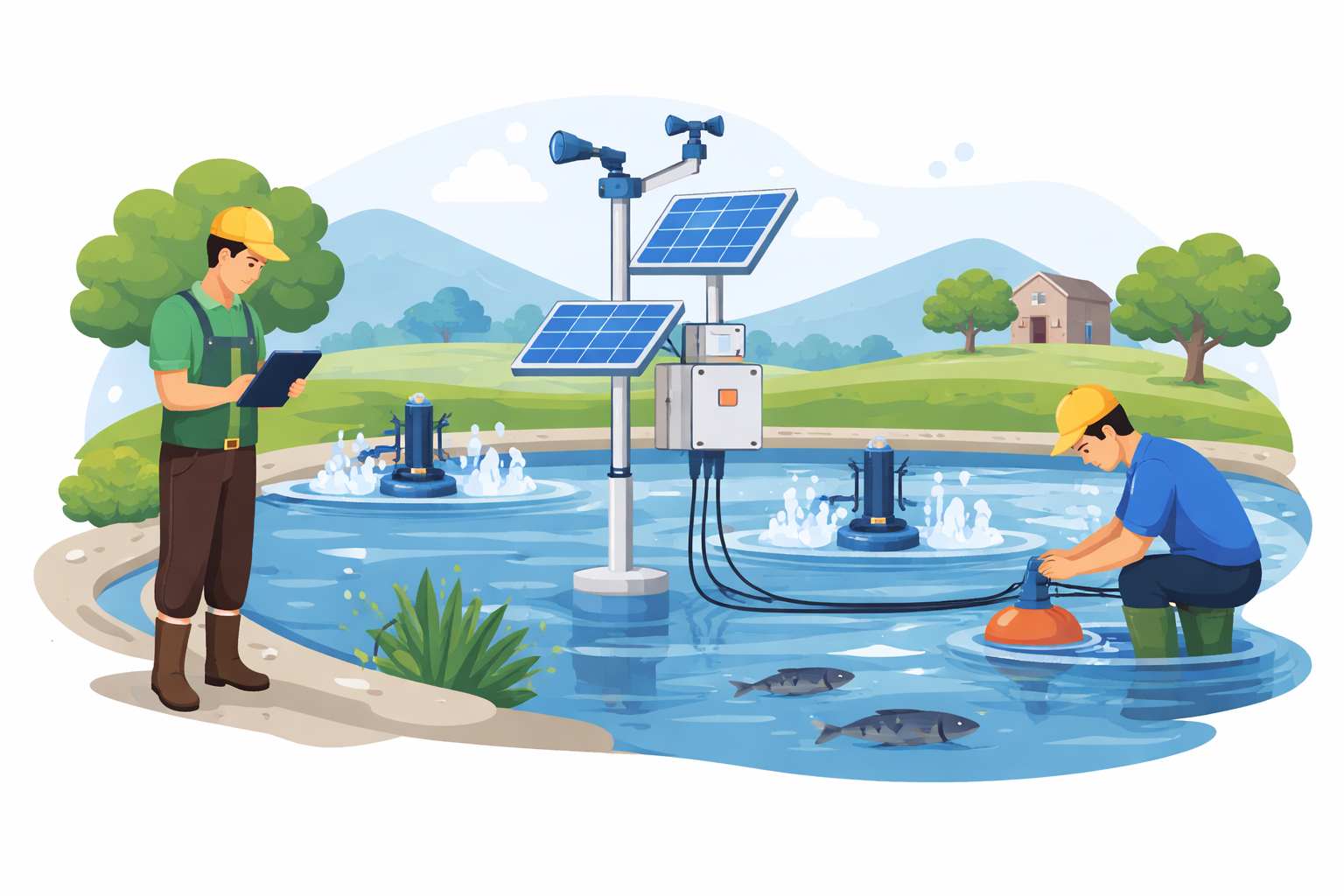
The system begins with data collection. Sensors are deployed in water bodies to measure parameters such as dissolved oxygen, temperature, pH levels, and ammonia concentration. These are critical indicators because small changes in them can significantly affect fish health.
This sensor data is combined with external inputs such as weather conditions, rainfall, and sometimes satellite observations. All of this flows into the AquaNurch platform.
The platform then builds a digital representation of the water body. This is not just a static snapshot. It is a dynamic model that updates continuously as new data comes in. The model learns how the system behaves under different conditions.
For example, if temperature rises over a few hours, the system can estimate how dissolved oxygen levels will change and whether that could stress the fish. Similarly, it can detect patterns that often precede disease outbreaks.
The output is delivered as alerts, predictions, and recommended actions. A farmer might receive a notification that oxygen levels are likely to drop overnight and that aeration should be increased. The goal is to act before visible damage occurs.
Deployment
NatureDots has been deployed in aquaculture farms where continuous monitoring is critical. In these environments, even a few hours of poor water quality can lead to large losses.
Using systems like Twingills, farmers and farm operators can track multiple ponds at once. Instead of manually testing water at intervals, they get a continuous stream of data and insights.
One of the key operational benefits is feed optimization. Feeding is one of the largest costs in aquaculture, and overfeeding can degrade water quality. By linking fish behavior, growth patterns, and water conditions, the system helps operators adjust feeding schedules more precisely.
Another area is disease management. While the system does not diagnose diseases directly, it identifies conditions under which diseases are more likely to occur. This allows preventive action rather than reactive treatment.
Performance
The value of NatureDots’ system comes from reducing uncertainty. Aquaculture has many variables that change quickly, and manual monitoring cannot keep up with this pace.
By providing continuous visibility, the platform helps reduce sudden losses caused by oxygen crashes or toxic spikes. It also improves consistency in production, which is important for commercial operations supplying to processors and exporters.
The system’s effectiveness depends on both data quality and model calibration. Farms that combine sensor data with occasional manual validation tend to get better results. Over time, as more data is collected, the predictions become more reliable.
Feedback
Operators using the system tend to focus on two aspects: early warning and operational control. The ability to see changes before they become critical is seen as a major shift from traditional practices.
Competition
Globally, aquaculture technology is still developing compared to crop agriculture. Companies like eFishery focus on feeding automation, while Aquabyte uses computer vision to monitor fish growth.
There are also sensor-focused companies that provide water quality monitoring hardware. NatureDots sits at a different layer by combining sensing, modeling, and prediction into a unified platform.
In India, the space is relatively underdeveloped, which creates room for companies that can build integrated systems rather than standalone tools.
Global Context
Aquaculture is one of the fastest-growing food production sectors globally. As demand for fish increases, farms are becoming more intensive, which makes them more sensitive to environmental changes.
Water quality becomes a critical constraint in these systems. Small imbalances can scale into large losses when stocking densities are high. This is driving interest in technologies that provide continuous monitoring and predictive insights.
At the same time, there is growing attention on sustainability. Managing water resources efficiently and reducing waste are becoming important not just for productivity but also for regulatory and environmental reasons.
Digital twin models, like those used by NatureDots, are part of a broader trend where physical systems are replicated in software to improve decision-making. This approach is being used in industries ranging from manufacturing to energy, and is now extending into natural systems like water bodies.
- Our correspondent