Food quality testing is still slow and heavily manual in many agricultural supply chains.
Commodities such as grains, tea leaves, spices, milk, and oilseeds are often graded through visual inspection or laboratory testing that can take several days. This affects pricing, procurement decisions, exports, and traceability.
Chandigarh-based AgNext is building technology systems that try to replace these slow and subjective processes with rapid digital quality assessment tools.
Founded in 2016, AgNext develops AI-driven food quality assessment systems for agricultural and food supply chains.
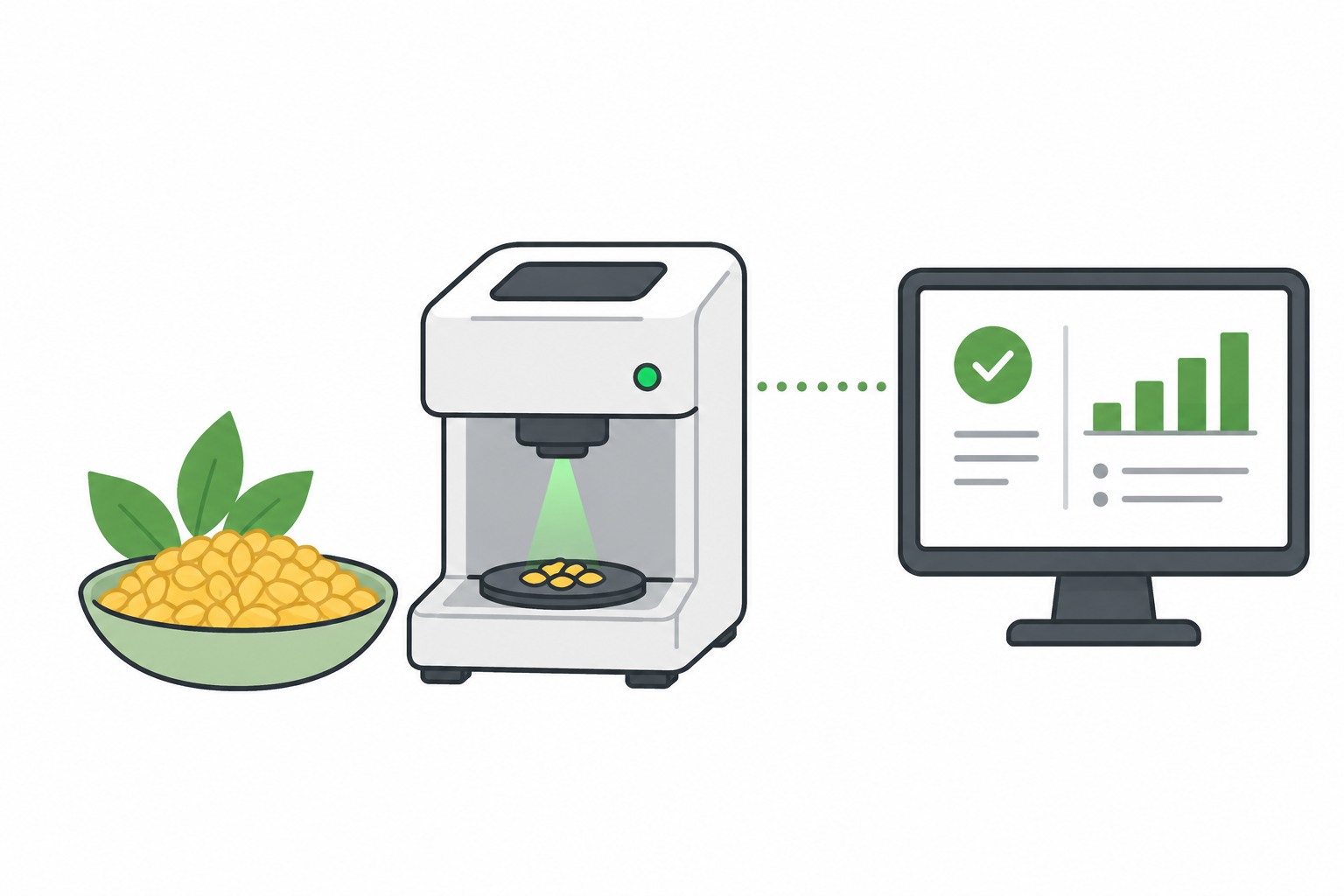
The company combines spectroscopy, computer vision, IoT sensors, cloud software, and machine learning models to evaluate the quality of agricultural products directly at procurement and processing points. The company’s systems are used by agribusinesses, food processors, commodity traders, and institutional buyers to measure quality parameters in real time rather than sending samples to labs.
AgNext was founded by Taranjeet Singh Bhamra along with co-founders including Mrigank Sharad and Sparsh Kaur. The company was incubated at IIT Kharagpur and received early support from a-IDEA, the agribusiness incubator associated with the National Academy of Agricultural Research Management.
The founders approached agriculture from a quality-data perspective rather than a farm-input or marketplace model. Instead of building farmer commerce apps, they focused on digitizing quality assessment and procurement workflows. The company described quality measurement as one of the least standardized parts of agricultural trade, especially in developing markets.
AgNext’s flagship platform is called Qualix. The platform combines portable testing hardware with cloud-based analytics software. The goal is to allow buyers and processors to assess food quality instantly at the point of procurement.
Traditionally, agricultural quality testing can take anywhere from four days to two weeks depending on the commodity and lab availability. AgNext claims its systems can generate quality assessments within about 30 seconds in many use cases. The company says the devices are portable, battery-operated, and designed for field deployment rather than laboratory-only environments.
The technology works through a combination of spectral analysis, imaging systems, and machine learning models. Spectroscopy involves analyzing how materials interact with light. Different food materials reflect and absorb light differently depending on their chemical composition. AgNext uses this principle to estimate quality parameters such as moisture, fat content, protein levels, contamination, and adulteration indicators.
For example, in milk testing, the system can measure fat, lactose, protein, and solids-not-fat content while also detecting adulterants such as detergent, starch, urea, and vegetable oils. In grain procurement, the system can assess moisture and composition parameters that affect pricing and storage quality.
The company also uses computer vision systems in some agricultural categories. One publicly discussed deployment involves tea leaf assessment. Tea quality often depends on fine leaf count and leaf composition, which are traditionally measured manually. AgNext developed imaging systems that identify buds, shoots, and leaf structures using AI-driven image recognition.
The platform is designed as a SaaS system, meaning customers subscribe to the software and analytics platform while using connected testing hardware. Each quality test is digitized and stored through the cloud platform, creating traceable procurement records across supply chains.
AgNext says its systems currently support commodities including grains, pulses, oilseeds, tea, spices, coffee, cocoa, milk, herbs, and animal feed. The company also states that its technology is being used across India as well as in markets in Africa, the Middle East, Europe, and the United States.
The company received early-stage funding support from a-IDEA during incubation. In 2018, Omnivore led a seed round of approximately $2.1 million. Kalaari Capital invested about $2 million in a later pre-Series A round in 2019.
In 2021, AgNext raised a $21 million Series A round led by Alpha Wave Incubation, backed by DisruptAD and Falcon Edge Capital. Multiple startup databases and funding reports described this as one of the largest Series A rounds in Indian agritech at the time.
The company claims that its systems improve procurement efficiency, reduce subjectivity in grading, and reduce quality-based losses in food supply chains. Some company-linked material states that customers have achieved faster procurement decisions and better consistency in commodity grading. However, independently verified public performance audits remain limited.
The broader market for digital food quality assessment is growing internationally. Food supply chains are becoming more data-driven because of export regulations, traceability requirements, food safety rules, and pressure to reduce waste. Global companies such as Cropin, FOSS, Neogen, and Perten Instruments also operate in food diagnostics, agricultural analytics, and quality measurement systems.
Many traditional food-testing systems still depend heavily on centralized laboratories. Newer companies are instead building portable diagnostic systems that can operate directly at farms, warehouses, procurement centers, and factories. This reduces delays and allows immediate commercial decisions during procurement.
One major issue in global agriculture is quality inconsistency between buyers and sellers. Commodity grading often depends on human interpretation, leading to disputes and uneven pricing. AgNext’s core business is built around replacing those manual decisions with standardized digital measurements.
The company is also part of a larger shift toward traceable food systems. Governments and food companies increasingly want digital records showing where food came from, how it was tested, and whether quality standards were maintained during transportation and storage. AgNext’s cloud-based systems are designed to capture and store this information continuously.
- Our correspondent