PathShodh started inside the laboratories of Indian Institute of Science (IISc) with a specific problem in mind: most diabetes testing in India still depended on large laboratory systems or single-parameter glucometers that only gave a snapshot reading.
The company was founded in 2015 as a medical-device startup incubated at IISc. Its core work came out of research at the Centre for Nano Science and Engineering (CeNSE), where researchers were working on biosensors and electrochemical diagnostics that could be used outside traditional laboratories.
PathShodh’s co-founders include Dr. Vinay Kumar Chauhan and Dr. Navakanta Bhat. Vinay Kumar completed his PhD in Nano Science and Engineering from IISc Bengaluru and worked on biosensing technologies that later became the base technology for PathShodh’s products.
Dr. Navakanta Bhat, the company’s other co-founder and chairman, is a professor at CeNSE, IISc, and has worked extensively in nanoelectronics, sensors, and semiconductor systems.
The company has focused on point-of-care diagnostics. In practical terms, this means building small portable devices that can run tests near the patient instead of sending samples to a central laboratory. PathShodh’s flagship system, called anuPath, is designed as a handheld or tablet-sized diagnostic platform capable of running multiple biomarker tests from a very small blood sample.
The company says its systems can test markers linked to diabetes management, anaemia, liver disease, malnutrition, and infectious diseases. Instead of depending on optical laboratory systems used in many conventional diagnostic machines, PathShodh uses electrochemical sensing. In this approach, the device measures tiny electrical changes produced during chemical reactions in the test strip or cartridge.
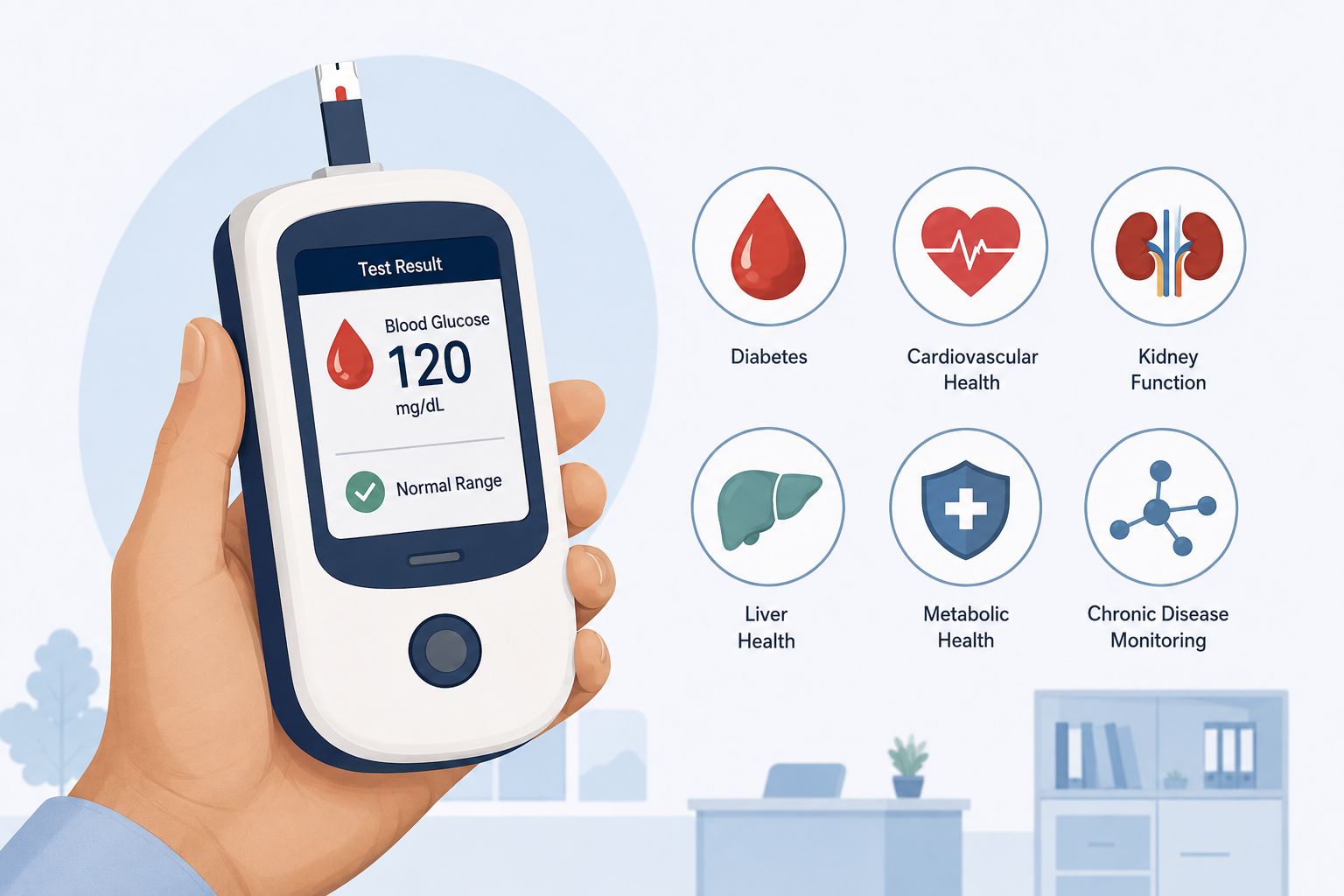
One of the company’s main diabetes-focused products is the anuPath nano A1c system. HbA1c tests are used to estimate average blood glucose levels over roughly three months. Unlike a glucometer reading taken at one moment, HbA1c testing helps doctors understand longer-term glucose control. The company positions the device as a lower-cost and portable alternative to large lab systems that typically perform HbA1c analysis.
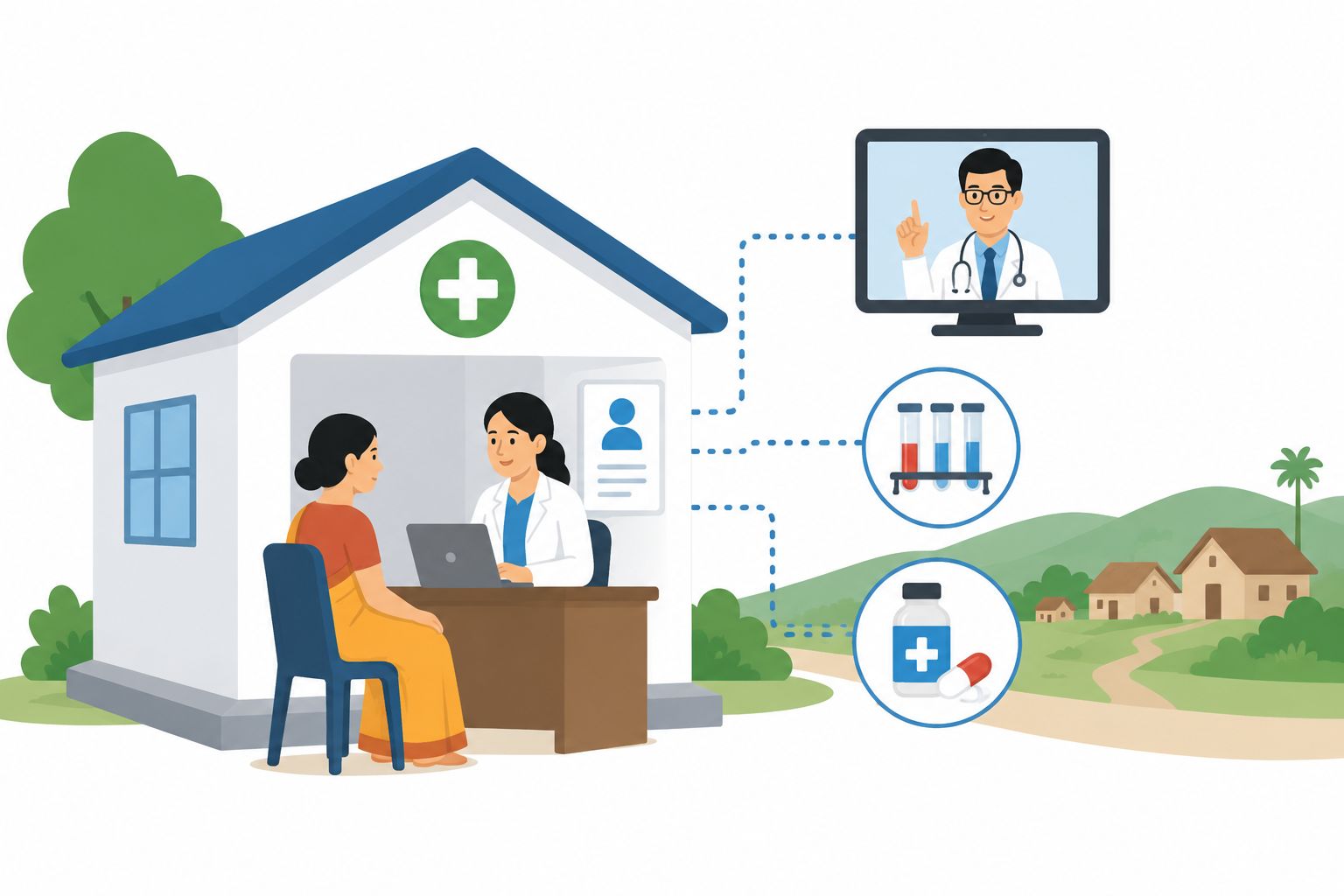
The workflow is relatively straightforward. A small blood sample is placed onto a disposable test strip or cartridge. The strip is inserted into the handheld device, which performs electrochemical analysis and displays the result on the screen. PathShodh says its devices are designed for use in clinics, small diagnostic centres, community-health settings, and semi-urban or rural locations where access to large pathology labs may be limited.
The company later expanded the same platform into infectious-disease diagnostics during the COVID-19 pandemic. In 2021, PathShodh announced an electrochemical ELISA-based COVID-19 antibody testing system that received manufacturing approval from India’s Central Drugs Standard Control Organisation after validation at the Translational Health Science and Technology Institute in Faridabad.
According to the Department of Science and Technology and IISc, the system could perform semi-quantitative antibody estimation rather than only giving a yes-or-no result. The company stated at the time that the device could detect COVID-19 antibodies down to nanomolar concentration levels and work with finger-prick blood samples as well as serum samples.
The same announcements also provided one of the few publicly available operational numbers from the company. In 2021, PathShodh said its production capacity for COVID-related tests was around one lakh tests per month, with scope for further scaling.
Government support has played a visible role in the company’s development. PathShodh’s website lists support from agencies including the Department of Science and Technology, the Ministry of Electronics and Information Technology, and other public innovation programs. During the pandemic, its COVID diagnostic work received support under the CAWACH program of the Department of Science and Technology.
The company has also highlighted regulatory and manufacturing milestones. IISc stated in 2021 that PathShodh had become the first startup from the institute to receive ISO 13485 certification, a quality-management standard used in medical-device manufacturing.
PathShodh operates in a broader category often referred to as point-of-care diagnostics or decentralized diagnostics. This segment has grown globally because healthcare systems increasingly want tests to move closer to patients rather than requiring centralized labs for every procedure.
Several Indian and global companies work in adjacent areas, though their approaches differ. Companies such as Roche, Abbott, and Siemens Healthineers offer portable diagnostic systems and diabetes-testing platforms at global scale. In India, startups and healthcare companies such as Molbio Diagnostics and NanoHealth have also worked on decentralized testing and chronic-disease management systems, though with different business models and technologies.
Globally, the push toward portable diagnostics accelerated after COVID-19 exposed weaknesses in centralized testing infrastructure. Handheld analyzers, cartridge-based testing systems, and rapid electrochemical sensors are now being used for diabetes monitoring, infectious disease testing, cardiac markers, and pregnancy care.
One major challenge in this category is balancing portability with laboratory-grade accuracy. Many small diagnostic systems are easy to use but limited in the number of biomarkers they can measure reliably. Companies working in this sector therefore spend significant effort on calibration, quality control, regulatory approvals, and manufacturing consistency.
PathShodh’s differentiation appears to come from its attempt to combine multiple diagnostic functions onto a compact electrochemical platform rather than building a single-purpose device. The company’s messaging has consistently focused on multi-analyte testing using small blood volumes and lower-cost hardware.
The larger commercial question for companies in this category is not only whether the technology works, but whether it can become part of routine healthcare workflows. Diagnostics companies need distribution networks, recurring consumable sales, physician acceptance, and regulatory approvals across regions.
What is clear is that the company represents a particular kind of Indian deep-tech healthcare startup: one emerging directly from academic research, focused on low-cost medical hardware, and attempting to convert laboratory biosensor research into field-ready products. Over the last decade, India has seen more startups emerge from institutions such as IISc and the IITs in sectors like medical devices, semiconductors, and advanced diagnostics. PathShodh is part of that broader shift.
- Our correspondent