Cervical cancer is one of the most preventable forms of cancer, yet it remains a major cause of death among women, especially in low- and middle-income countries.
The biggest challenge is not treatment but screening. Many women never get tested because existing methods require laboratories, specialists, multiple visits, and healthcare infrastructure that is often unavailable outside major cities.
Pune-based Periwinkle Technologies was founded to address this problem.
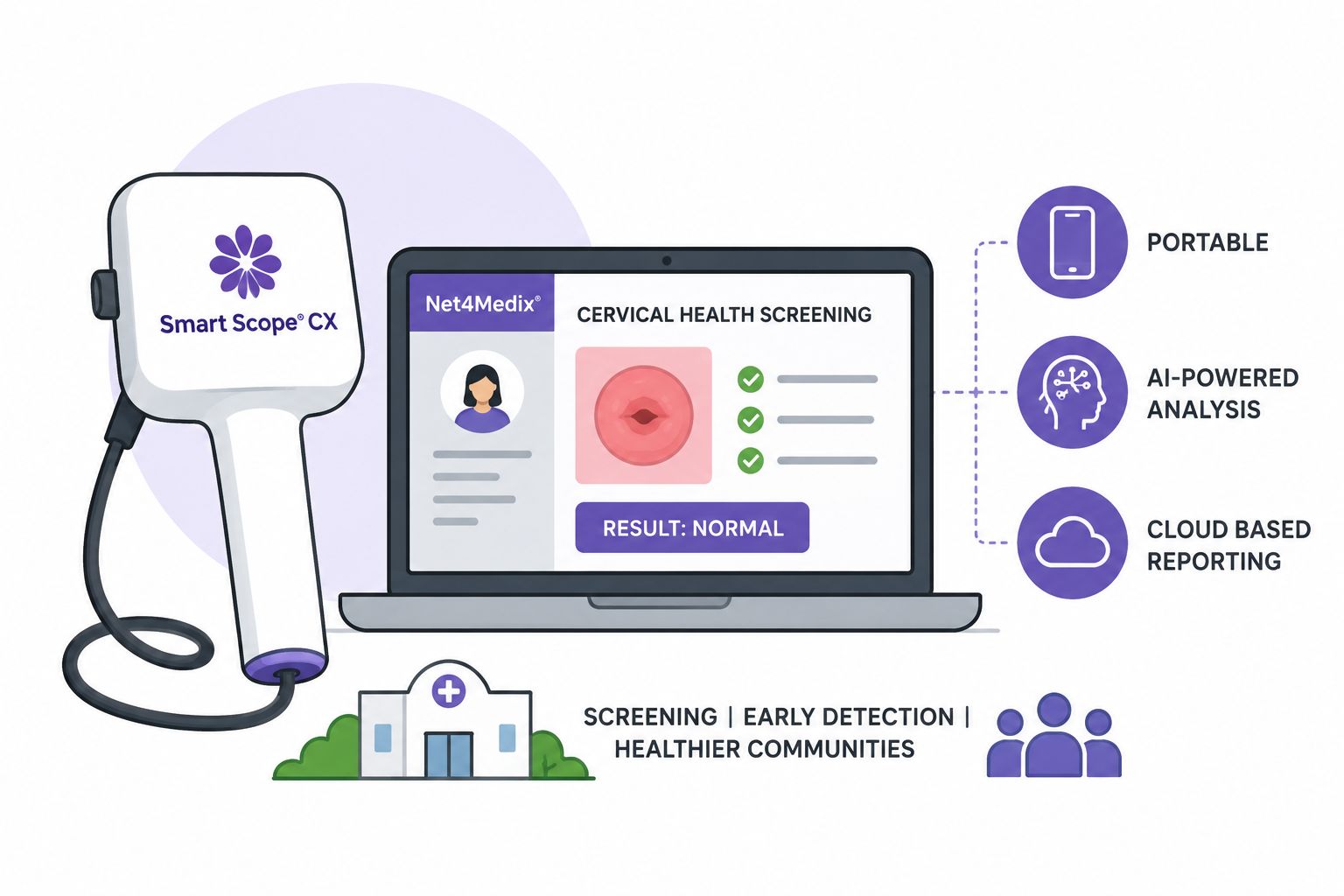
The company has developed a portable, AI-enabled screening system called Smart Scope® CX that allows healthcare workers to screen women for cervical abnormalities and precancerous conditions in a single visit. Over the past decade, the company has grown into one of India’s most visible women’s health technology startups, with deployments across hospitals, public-health programs, NGOs, and international healthcare initiatives.
Origins
Periwinkle Technologies was founded in 2013 by Veena Moktali and Koustubh Naik in Pune, Maharashtra. The founders started the company with the goal of improving access to early cancer detection through technology-enabled diagnostics.
Veena Moktali serves as Co-founder and Director. She has a background in healthcare technology commercialization and product development. She has frequently spoken about the need to create cervical cancer screening systems that can work in rural and resource-constrained settings.
Koustubh Naik, Co-founder and Director, has led product development, technology strategy, and commercialization efforts. Under his leadership, the company developed the Smart Scope platform and expanded its deployment across healthcare programs in India and abroad.
The company’s mission was driven by a stark reality: more than 90% of women in India have never undergone cervical cancer screening, and many cancers are detected only after symptoms appear. Periwinkle’s approach was to move screening closer to where women live rather than requiring women to travel to specialist centers.
How the Technology Works
The screening process is relatively simple.
A healthcare worker uses the handheld Smart Scope® device to capture high-quality images of the cervix. The images are then analyzed through AI-assisted software that identifies visual patterns associated with cervical abnormalities.
The software provides color-coded assessments and helps determine whether further evaluation or treatment is needed. In many cases, results can be generated within seconds.
Unlike conventional Pap smear testing, which may require laboratory processing and multiple follow-up visits, Smart Scope® is designed as a single-visit screening system. Women can be screened, receive results, and be referred for treatment during the same healthcare encounter.
Recognition and Market Feedback
Periwinkle has received substantial recognition from healthcare and innovation organizations.
Smart Scope® was launched nationally through BIRAC’s innovation showcase in 2019. The company later won the Ayushman Bharat Startup Grand Challenge and has received recognition from organizations including MIT Solve, UNFPA, Microsoft for Startups UAE GrowthX Accelerator, and the Zayed Sustainability Prize.
Competing Companies
Periwinkle operates in the growing field of AI-assisted women’s health diagnostics.
Globally, similar companies include MobileODT, which develops smartphone-based cervical imaging systems, and various AI-enabled digital colposcopy providers working on cervical cancer screening technologies.
Within India, companies such as Niramai focus on AI-assisted breast cancer screening, while Periwinkle concentrates on cervical health. In some public-health programs, these technologies have been deployed together as complementary screening tools. Periwinkle’s main differentiator is its emphasis on single-visit screening, portability, AI-assisted analysis, and suitability for low-resource healthcare environments.
The World Health Organization has identified cervical cancer elimination as a major global public-health objective. Yet screening remains difficult in many countries because conventional methods depend on laboratories, specialists, and follow-up visits.
This has created demand for portable, AI-assisted diagnostic systems that can operate at the point of care.
Companies around the world are developing digital colposcopes, smartphone-based imaging devices, telemedicine-enabled screening systems, and AI-assisted diagnostic platforms. The goal is to move screening from specialized hospitals into community healthcare settings.
Periwinkle Technologies is part of this broader movement, but with a particular focus on making cervical cancer screening practical in regions where specialist infrastructure is limited.
- Our correspondent