As electric vehicles become more common, one of the biggest operational challenges is not the vehicle itself but the charging network around it.
Charging stations need software to authenticate users, process payments, monitor charger health, balance electricity loads, manage fleets, and connect with mobile apps.
Bengaluru-based Numocity focuses on this software layer.
Founded in 2018, Numocity develops digital infrastructure for electric vehicle charging networks. Instead of manufacturing chargers, the company builds software platforms that allow charging operators, vehicle manufacturers, fleet operators, and energy companies to manage EV charging systems at scale.
The company positions itself as a white-label EV charging software provider, meaning businesses can launch their own branded charging networks using Numocity’s backend systems and mobile applications.
The company was founded by Ravikiran Annaswamy, Siddharth Sreenivasan, and Muralidhar Somisetty. Ravikiran Annaswamy, who serves as CEO, previously worked at Nokia Siemens Networks and Siemens AG, where he was involved in telecom infrastructure and digital services. His background is in mobile prepaid systems, charging platforms, and large-scale digital infrastructure as preparation for building energy and mobility software.
The founders approached EV charging as a systems integration problem rather than only a hardware problem. Their focus was on creating a software layer capable of connecting charging stations, payment systems, fleet operators, grid infrastructure, and EV users through a common platform.
In January 2020, Numocity raised early-stage funding from Ideaspring Capital along with other investors. Later, ABB moved to acquire a controlling stake in Numocity in 2022 through its ABB E-mobility division. ABB stated that the acquisition would strengthen its digital charging software capabilities and expand its presence in EV charging management systems.
Numocity’s main product is an EV charging and energy management software platform. The software acts as the operating system behind a charging network. When an EV user opens a charging app, searches for a station, reserves a slot, authenticates a charging session, pays for charging, or tracks charging progress, those functions are managed by software platforms such as Numocity’s.
One of Numocity’s key positioning points is hardware agnosticism. In practical terms, this means the software is designed to work across chargers from different manufacturers rather than being tied to one hardware vendor. The company also highlights compliance with OCPP, or Open Charge Point Protocol, which is an industry communication standard used to connect charging stations with management software.
The software also includes energy management functions. EV charging creates pressure on electrical systems, especially when many vehicles charge simultaneously. Numocity’s platform includes load management tools that distribute available power across chargers. This can help operators avoid overloading electrical infrastructure or paying high peak-demand charges.
Another feature discussed by the company is remote diagnostics and fault handling. Charging stations frequently face operational issues including communication failures, payment interruptions, and hardware errors. Numocity claims its platform can identify faults in real time and in some cases automatically recover systems remotely without requiring physical maintenance visits.
The company says its platforms are active in more than 15 countries. The platform supports public charging operators, fleet charging systems, workplace charging, and residential charging deployments. The company has also discussed integrations with car manufacturers and navigation systems that help EV drivers locate nearby charging stations based on battery levels and route requirements.
The EV charging software market itself has become highly competitive. In India, companies such as Statiq, Bolt.Earth, and ElectricPe are also building charging management platforms and charging networks. Some companies focus on operating charging stations directly, while others focus on software layers, roaming systems, or fleet charging.
Globally, the category includes companies such as ChargePoint, EV Connect, and Driivz. These companies provide cloud-based charging management systems used by utilities, fleet operators, commercial real estate firms, and public charging networks. Many global charging companies are moving toward software-first business models because recurring software revenue can become more stable than one-time hardware sales.
The global EV charging software market is growing alongside electric vehicle adoption. Governments in Europe, China, India, and North America are pushing large-scale EV transitions, which requires millions of connected charging points. This creates demand for systems that can manage authentication, billing, roaming, energy balancing, and charger monitoring across large distributed networks.
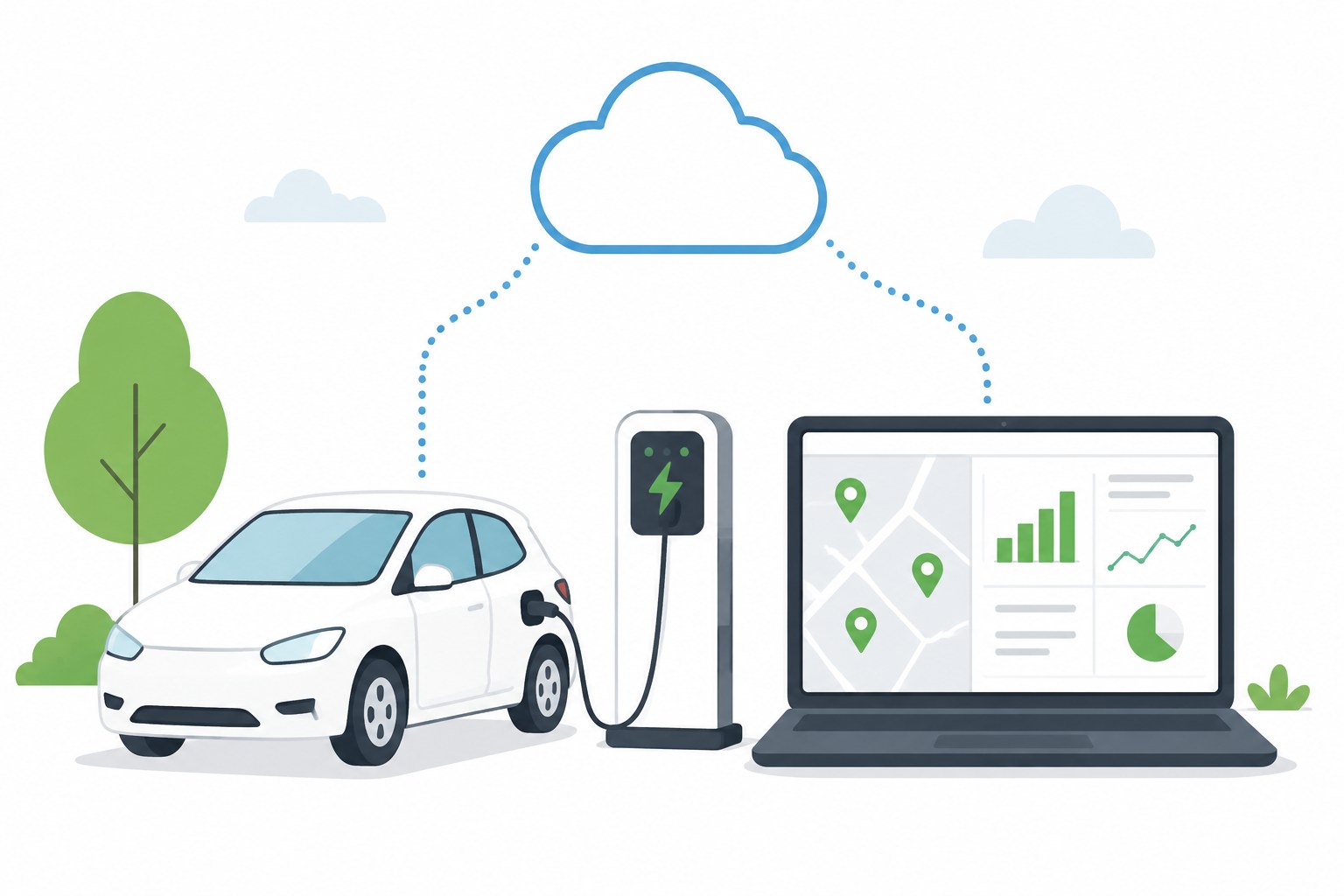
Industry reports from the International Energy Agency and charging industry analysts show that interoperability and software standardization are becoming central challenges for the sector. A charging station is no longer treated as a standalone machine. It increasingly functions as a connected energy device linked to cloud systems, power grids, payment systems, and fleet management platforms.
Numocity operates within this transition layer. The company is not building EVs or electricity infrastructure directly. Instead, it builds the software systems that allow those physical assets to work together in daily operations. As EV adoption expands, the operational reliability of charging networks will likely depend heavily on these backend systems.
- Our Correspondent