As governments and industries push toward net-zero targets, carbon capture technologies are attracting growing attention worldwide.
Heavy industries such as cement, steel, chemicals, refineries, and thermal power plants continue to emit large volumes of carbon dioxide that are difficult to eliminate completely through renewable energy alone.
Mumbai-based UrjanovaC is building carbon capture and utilization systems designed to reduce these industrial emissions.
Founded in 2023, UrjanovaC develops carbon capture, utilization, and storage technologies, commonly referred to as CCUS systems. The company focuses on capturing carbon dioxide from industrial exhaust gases and ambient air using water-based chemical systems. The startup emerged from research work conducted at IIT Bombay’s National Centre of Excellence in Carbon Capture and Utilization (NCoE-CCU).
The company was founded by Prof. Vikram Vishal and Prof. Arnab Dutta, both faculty members at IIT Bombay. Vikram Vishal is known for his work in subsurface engineering, carbon sequestration, geothermal systems, and energy transition technologies at IIT Bombay. Arnab Dutta’s research has focused on catalysis, chemical conversion systems, and sustainable energy chemistry. Thee founders started UrjanovaC to commercialize carbon-management technologies developed through academic research.
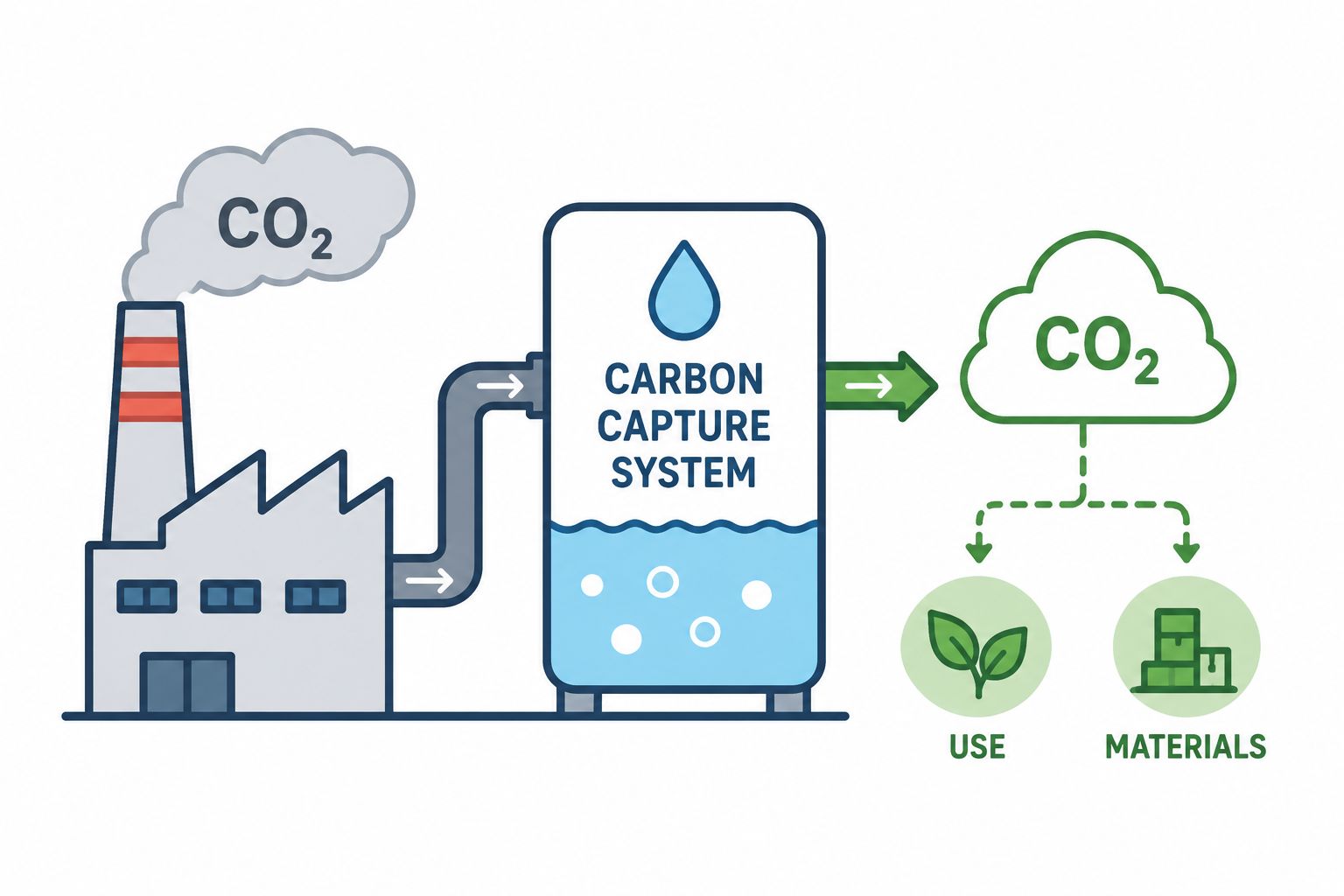
The company positions itself around a practical industrial problem. Many industries cannot immediately eliminate carbon emissions because their manufacturing processes inherently generate CO₂. Carbon capture systems attempt to remove CO₂ before it enters the atmosphere.
Traditional carbon capture technologies are often energy intensive and expensive. Many existing systems depend on amine-based chemical solvents that require large regeneration energy inputs. UrjanovaC says its approach uses aqueous, water-based systems along with synthetic catalysts intended to reduce energy requirements and operational costs.
The company’s technology captures carbon dioxide from both industrial flue gas and ambient air. Flue gas refers to exhaust gases released from industrial facilities such as thermal power plants, steel plants, and manufacturing units. Direct air capture refers to systems that remove carbon dioxide directly from atmospheric air.
UrjanovaC’s system works in the presence of water and can also utilize industrial wastewater or non-potable water sources during the capture process.
After capture, the CO₂ can be converted into usable materials such as carbonates and other industrial products. The company positions this as a carbon utilization approach rather than only carbon storage.
The technology was operating around Technology Readiness Level 5 during early public announcements. In industrial technology development, TRL-5 generally means a system has moved beyond laboratory validation and is being tested in more realistic operational environments.
UrjanovaC also participates in India’s expanding carbon capture research ecosystem. The company is associated with the DST-supported National Centre of Excellence in Carbon Capture and Utilization at IIT Bombay. Public reports additionally mention collaborations with organizations such as SINE IIT Bombay, Venture Centre, and industrial commercialization partners.
In 2026, the company won the Avaana Capital–Startup India–NITI Aayog AIM Grand Challenge for Climate Tech Innovation.
The broader carbon capture industry has expanded significantly over the past decade because industries are facing increasing pressure to reduce emissions while maintaining production capacity. Carbon capture technologies are especially important for sectors where electrification alone cannot eliminate emissions easily, including cement, steel, chemicals, aviation fuels, and heavy manufacturing.
Globally, companies such as Carbon Clean, Carbon Engineering, Climeworks, Heirloom, and Svante are developing various carbon capture systems. Carbon Clean, which also has Indian roots, develops modular industrial carbon capture systems for heavy industries. Climeworks focuses mainly on direct air capture facilities in Europe and Iceland. Carbon Engineering in Canada works on large-scale atmospheric CO₂ removal systems.
The carbon capture sector itself remains technically and economically challenging. One major issue is cost. Capturing carbon dioxide at industrial scale often remains expensive relative to current carbon-credit prices and emissions regulations.
Another challenge is scale. Industrial emissions volumes are extremely large, requiring massive infrastructure deployment if carbon capture is to contribute meaningfully to global climate targets.
There are also debates within climate policy circles about how carbon capture should be used. Some environmental groups argue that carbon capture may extend the lifespan of fossil-fuel-dependent industries instead of accelerating transition away from them. Supporters argue that some sectors will continue requiring carbon management systems because zero-emission alternatives are not yet commercially viable at scale.
UrjanovaC operates within this emerging industrial decarbonization market. The company is not building renewable power systems or electric vehicles directly. Instead, it focuses on emissions-management infrastructure for industries that continue generating carbon dioxide during production processes.
- Our correspondent