India is one of the world’s largest producers of textiles, but it is also one of the largest generators of textile waste.
Large volumes of cotton scraps, yarn waste, factory offcuts, unsold garments, and post-consumer clothing end up in informal recycling networks, landfills, or low-value applications. While recycling exists, much of the industry still struggles with inconsistent quality, fragmented supply chains, and limited traceability.
IndigoTex, based in India, is working on a different part of that problem. The company focuses on converting textile waste into recycled cotton fibre and other circular raw materials that can be reintroduced into textile manufacturing. Rather than operating as a fashion brand, IndigoTex positions itself as a materials and recycling company supplying fibre inputs to manufacturers.
The company operates in the growing textile circularity sector, where businesses attempt to recover value from discarded textile materials instead of relying entirely on virgin cotton or synthetic fibre production. Cotton cultivation requires significant land, water, and agricultural inputs. As sustainability requirements increase across global apparel supply chains, textile brands and manufacturers are facing pressure to incorporate recycled content into their products.
IndigoTex was founded by entrepreneurs working in textile recycling and circular manufacturing. IndigoTex emerged from efforts to build industrial-scale textile waste recovery systems that could supply recycled fibre back into mainstream manufacturing.
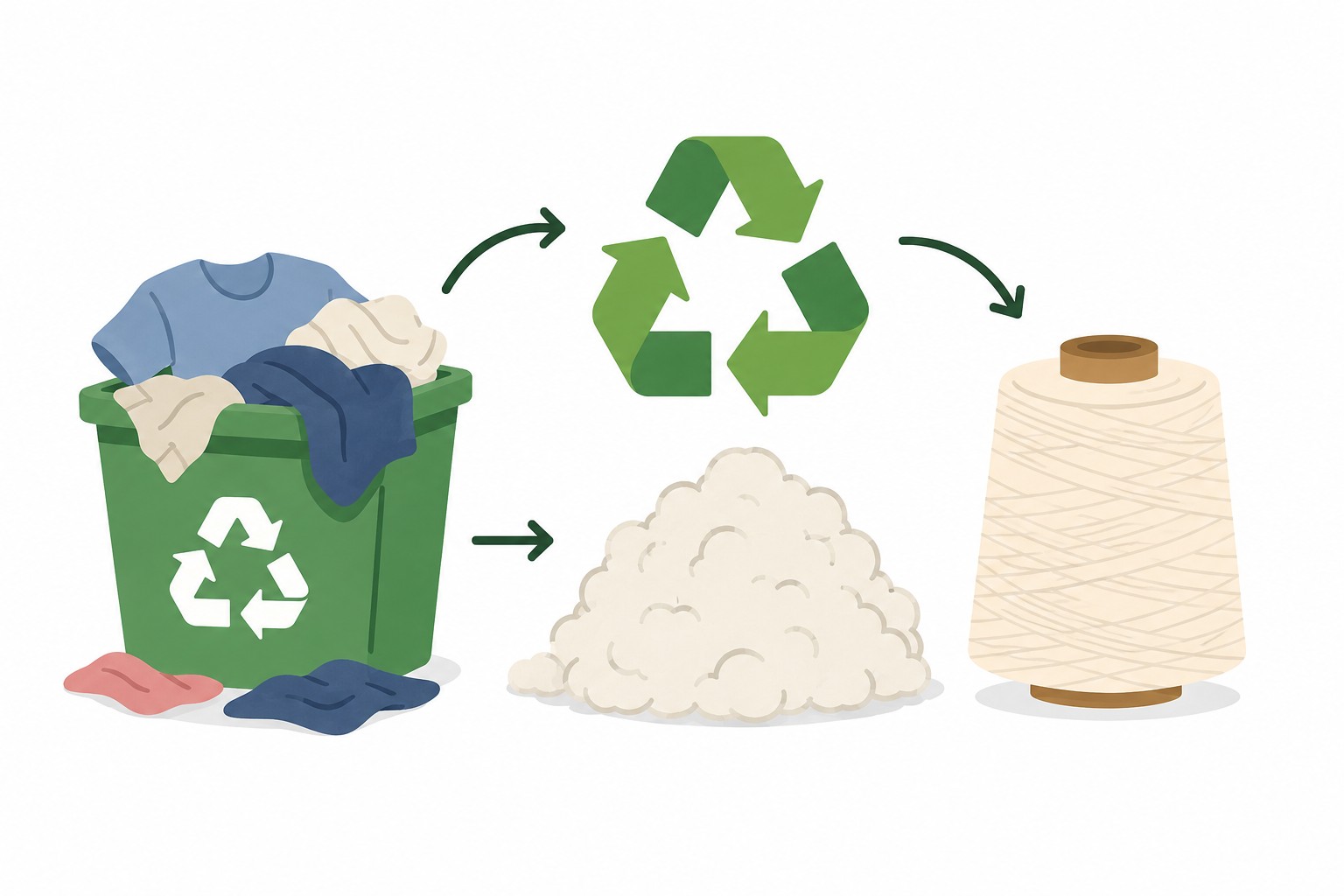
The company’s operational focus is on textile recycling infrastructure. IndigoTex collects and processes textile waste streams that include factory cutting waste, spinning waste, fabric waste, and used textile materials. These materials are sorted, processed, and converted into recycled fibre that can be blended into new textile production.
The process begins with waste collection and classification. Textile waste is not uniform. Cotton waste, polyester waste, blended fabrics, yarn remnants, and dyed materials all require different handling methods. Sorting is therefore one of the most important stages in textile recycling because contamination affects fibre quality and downstream manufacturing performance.
According to the company, incoming textile waste is segregated based on fibre composition, colour, and quality characteristics. Mechanical recycling systems are then used to break down textile materials into reusable fibres. In mechanical recycling, fabrics are shredded and opened into fibre form rather than being chemically dissolved. This approach is commonly used in cotton recycling because it can operate at industrial scale without requiring large volumes of chemical processing.
The resulting recycled fibres can then be supplied to spinning mills and textile manufacturers for production of yarns, fabrics, home textiles, and apparel products. One advantage of colour-sorted recycling is that some manufacturers can reduce additional dyeing requirements because recycled fibres already carry existing colour characteristics. This can help lower water consumption during manufacturing, although actual savings vary depending on the final product and production process.
A significant challenge in textile recycling is fibre degradation. Cotton fibres become shorter each time they are mechanically recycled. Shorter fibres can reduce yarn strength and affect fabric quality. As a result, recycled cotton is often blended with virgin cotton or other fibres to maintain manufacturing performance. This is one of the core technical limitations across the global textile recycling industry rather than a challenge unique to IndigoTex.
IndigoTex positions its operations around maintaining fibre quality while processing large volumes of textile waste. The company states that it works with textile manufacturers seeking recycled raw materials that can fit into existing production systems.
One of the broader trends supporting companies like IndigoTex is the increasing demand for recycled content from global apparel brands. International fashion companies are facing pressure from regulators, investors, and consumers to reduce environmental impact and improve supply-chain transparency. Many brands have established targets for recycled fibre usage over the coming decade. This has increased interest in textile-to-textile recycling systems capable of producing industrial-scale raw materials.
The textile recycling market itself is becoming increasingly competitive. Globally, companies such as Renewcell in Sweden, Circ in the United States, Worn Again Technologies in the United Kingdom, Recover in Spain, and Infinited Fiber Company in Finland are developing various approaches to textile circularity. Some focus on mechanical recycling while others use chemical recycling processes that break fabrics down into molecular building blocks before creating new fibres.
India occupies an important position within this market because it sits at multiple stages of the textile supply chain. The country is a major cotton producer, garment manufacturer, yarn exporter, and textile processor. It also generates large quantities of textile waste through manufacturing activities. As a result, many circular textile initiatives are increasingly being built close to manufacturing clusters rather than relying solely on waste exports or overseas recycling infrastructure.
The larger textile industry is moving toward stricter reporting requirements around recycled content, carbon emissions, water usage, and waste management. Regulations in Europe and sustainability commitments from major fashion brands are expected to increase demand for recycled fibres over the coming years. Companies that can produce consistent recycled raw materials at industrial scale are likely to play a larger role in textile manufacturing networks.
- Our correspondent