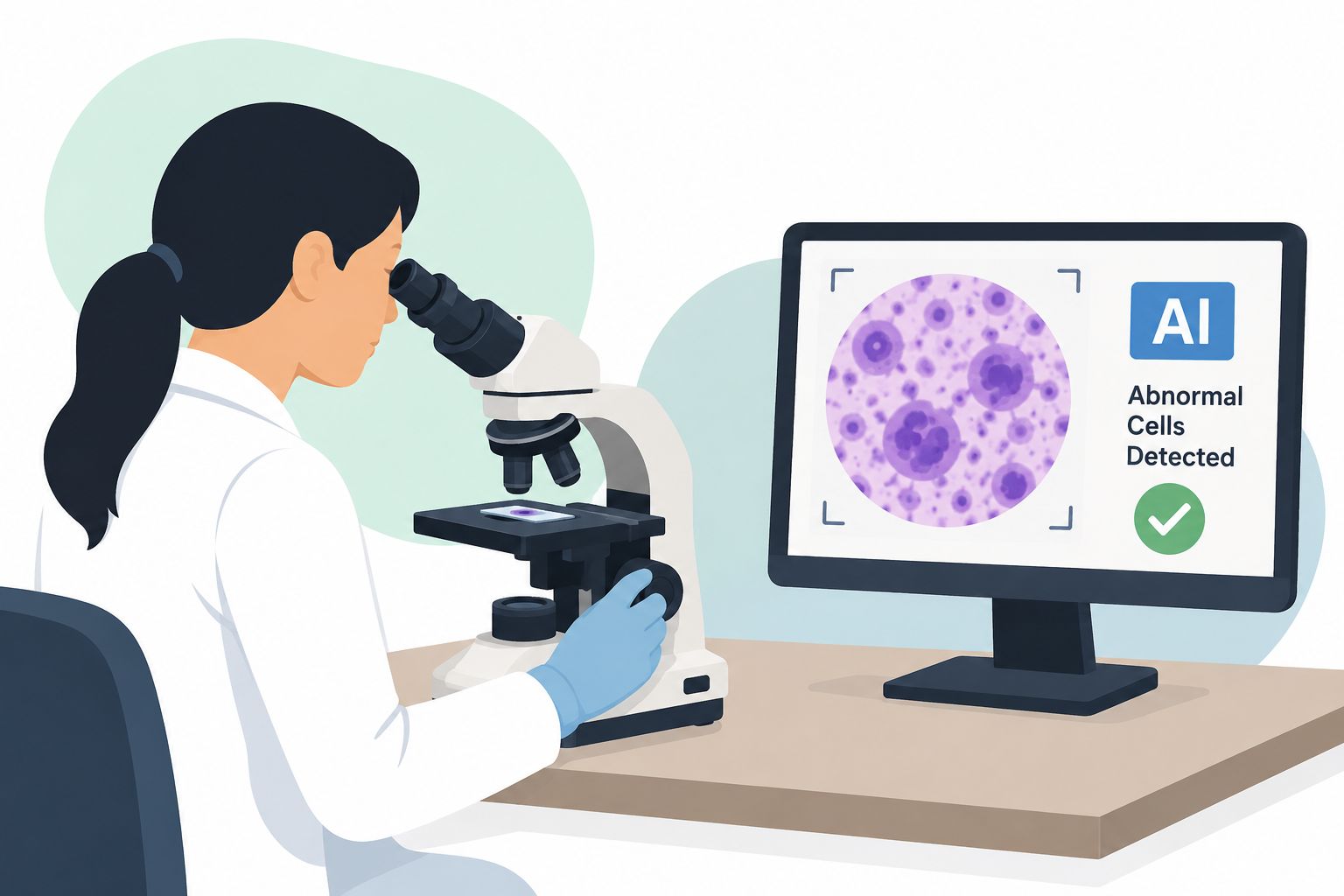
Bengaluru-based startup Aindra Systems is building AI-powered diagnostic systems aimed at improving how cervical cancer screening is conducted, particularly in places where access to specialist pathology services is limited.
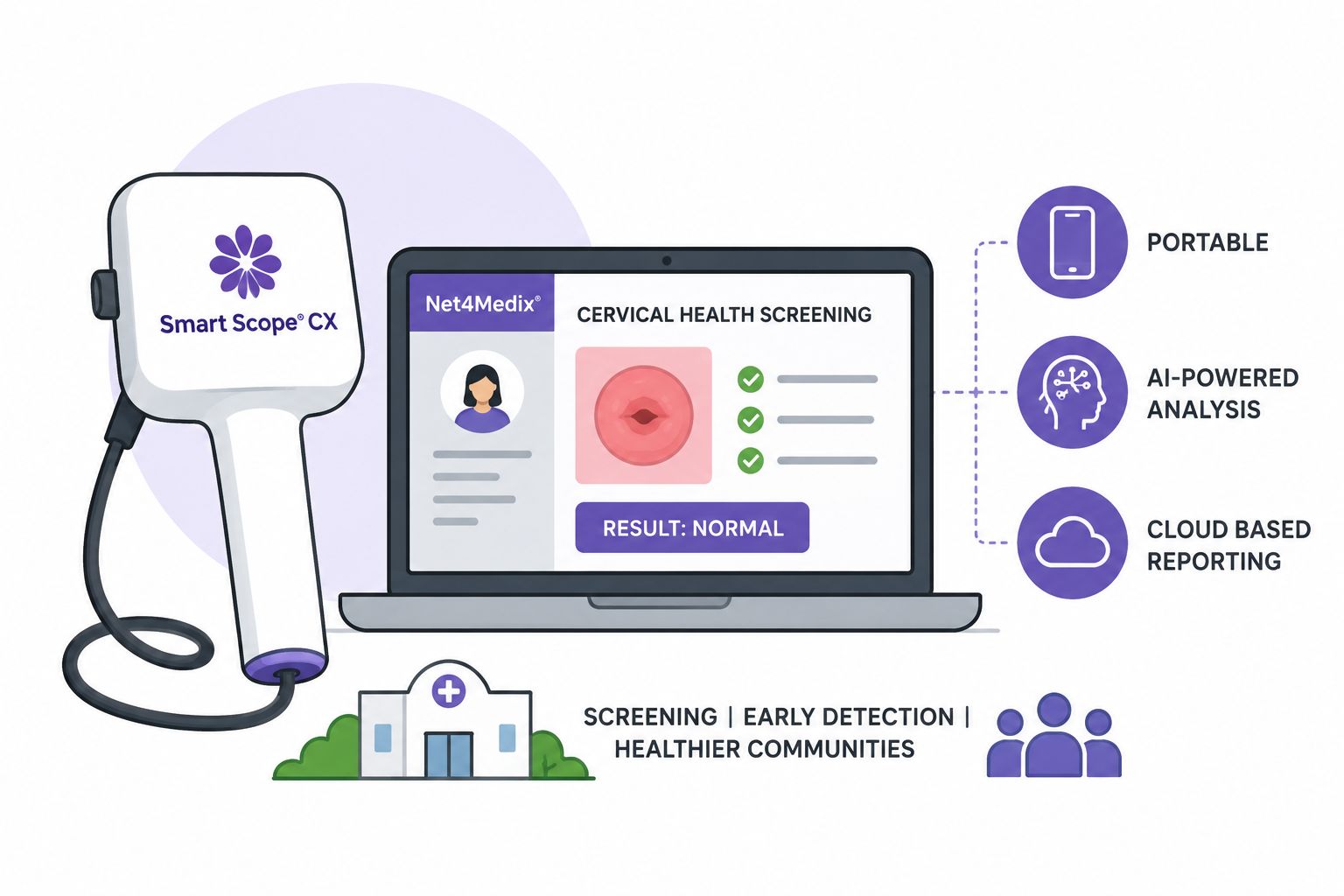
Aindra has developed a point-of-care cervical cancer screening platform called CervAstra that combines automated slide preparation, digital imaging, telepathology, and artificial intelligence into a single workflow.
The company was founded in 2012 by Adarsh Natarajan, an engineer and entrepreneur who started the company with a focus on applying deep technology to healthcare diagnostics.
Aindra began by focusing on cervical cancer because it remains one of the biggest public health challenges for women in India. According to company statements and public health reports cited in media coverage, many women are diagnosed late because screening infrastructure is concentrated in urban centers and pathology turnaround times can take weeks.
The company’s core product, CervAstra, is designed to reduce that delay. In a conventional cervical cancer screening workflow, pap smear samples are collected and transported to pathology labs where trained specialists manually examine slides under microscopes. This process can be slow, especially in rural areas where pathologists are scarce.
Aindra’s system attempts to automate large parts of this workflow. The company has built what it calls a computational pathology platform combining optics, imaging systems, AI models, and telepathology tools.
The automated stainer prepares biological samples mounted on glass slides. Normally, staining quality can vary between technicians and laboratories, affecting the clarity of diagnostic images. Aindra says its automated staining system standardizes this process using mechatronics and software controls.
The slides are then digitized using the imaging system, which captures high-resolution images that can either be reviewed remotely by pathologists or analyzed using the company’s AI software.
The Astra platform uses machine learning models trained on pathology data curated by experienced pathologists to identify potentially abnormal cells. According to the company, the AI system highlights suspicious regions so specialists can focus on relevant samples rather than manually reviewing every slide in full.
In practical terms, the company is trying to reduce both diagnosis time and dependency on specialist availability. Aindra says CervAstra can produce results within a few hours, compared to turnaround times that can stretch into weeks in conventional rural screening setups.
The company has also emphasized portability and point-of-care deployment. Rather than requiring centralized laboratory infrastructure, the systems are designed to operate closer to primary healthcare centers and smaller diagnostic facilities. This is particularly important in India, where diagnostic infrastructure remains unevenly distributed across urban and rural regions.
The company says its AI models can achieve over 90% accuracy in detecting cervical abnormalities, although large-scale peer-reviewed clinical validation data remains limited in the public domain. Academic analysis published in Science and Public Policy described CervAstra as a point-of-care computational pathology platform integrating AI, telepathology, automated staining, and imaging workflows.
Beyond cervical cancer, Aindra says it is extending its computational pathology platform into other disease areas including prostate, thyroid, oral, and lung cancers.
Aindra operates in a growing global market for AI-assisted pathology and cancer diagnostics. International companies such as Paige AI, PathAI, and Ibex Medical Analytics are building AI systems for pathology workflows, particularly in developed healthcare markets. In India, startups such as Niramai are also applying AI to cancer screening, although Niramai focuses on breast cancer screening using thermal imaging instead of pathology slides.
What makes Aindra somewhat different is its focus on integrating AI directly into lower-cost point-of-care screening systems intended for deployment outside major hospitals. The company is not just building software models; it is also developing the surrounding hardware systems needed for sample preparation, imaging, and remote pathology workflows.
From a tech-for-good perspective, Aindra’s work addresses one of the biggest structural problems in cancer care in developing countries: delayed diagnosis caused by shortages of specialists and diagnostic infrastructure.
Cervical cancer is highly treatable when detected early, but screening rates remain low in many parts of India because testing is expensive, centralized, or difficult to access. By combining AI with portable pathology systems, Aindra is trying to reduce the time, cost, and infrastructure needed for screening.
The company’s approach is aimed less at replacing doctors and more at helping limited pathology resources handle larger screening volumes more efficiently, especially in smaller towns and rural healthcare systems.
- Our correspondent