MicroGO is part of a growing group of Indian deep-tech companies trying to solve public health and sanitation problems using engineering, microbiology, and automation rather than traditional cleaning products alone.
Based in Chennai, the company works on hand hygiene systems, water treatment, infection prevention, and food safety technologies for hospitals, airports, factories, and public facilities.
The company was founded in 2016 by Rachna Dave, a microbiologist and former scientist from the Bhabha Atomic Research Centre. MicroGO was set up as an R&D-driven manufacturing company focused on what it calls the “One Health” approach — the idea that human health, environmental health, water quality, and food safety are closely connected.
The company started with a practical observation: many industries treated hygiene as a compliance exercise instead of a measurable operational system. Hospitals struggled with hand-hygiene compliance. Food businesses faced spoilage and contamination problems. Public facilities used large quantities of water and chemicals without clear monitoring systems. MicroGO’s products were designed around reducing waste while improving measurable hygiene outcomes.
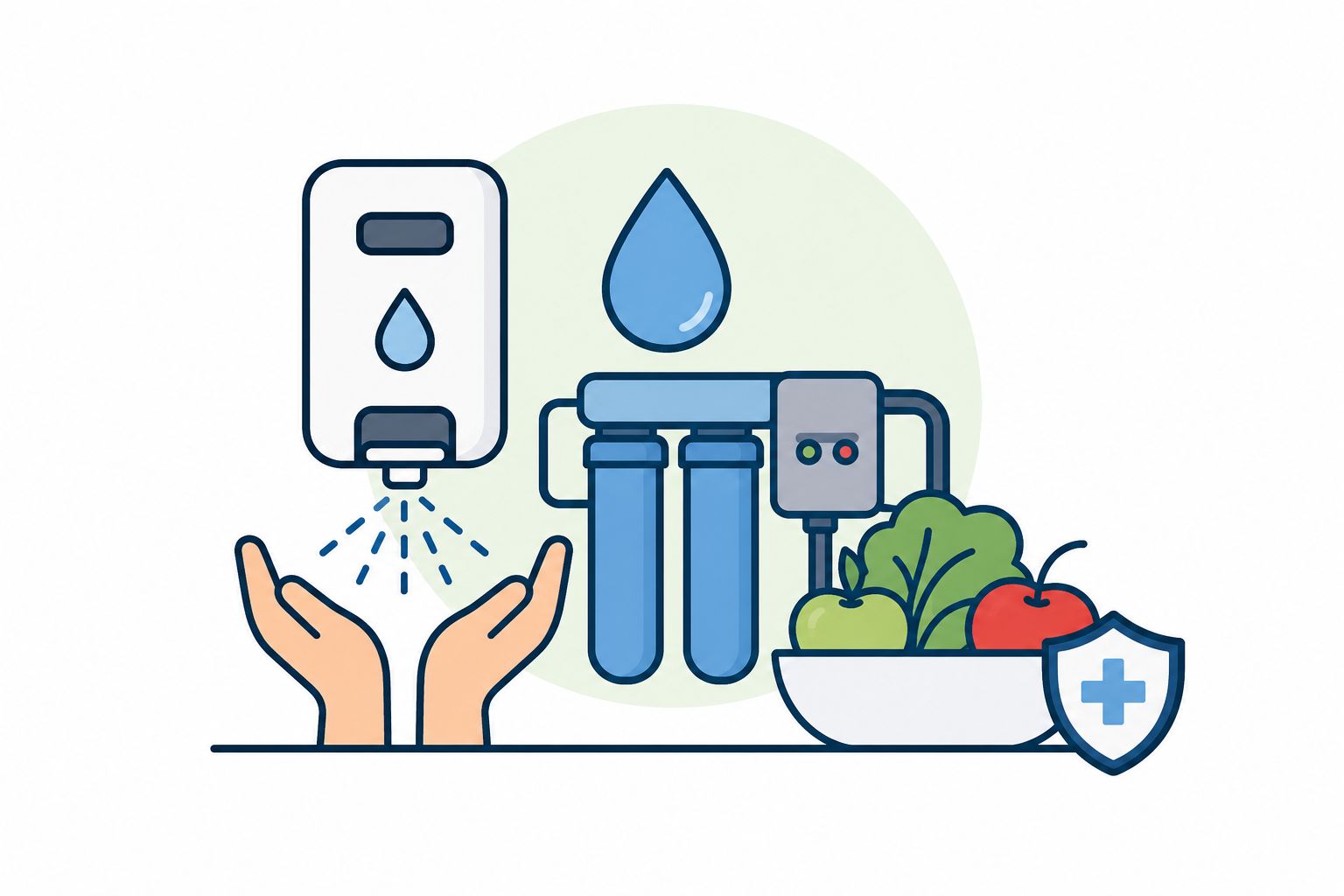
One of the company’s core products is GOassure, an automated hand-hygiene station. Unlike a regular sanitizer dispenser, the system is designed to monitor compliance, automate dispensing, and reduce overuse of water and sanitizing chemicals. During the COVID-19 pandemic, this became the company’s most visible product.
The system combines sensors, automation, and IoT monitoring. In practical use, a worker or visitor places their hands into the device, which automatically dispenses disinfectant or hygiene solution in measured quantities. The company says the system is designed to reduce unnecessary wastage while maintaining standardized hygiene practices. Some versions also include compliance monitoring systems for institutions that need records of hygiene adherence.
MicroGO also built systems for water disinfection and treatment under its GOpure line. These products are aimed at industries and institutions that require microbial control in water systems. According to the company, the systems are designed for “anywhere-anytime” water disinfection and wastewater treatment.
Another area of focus is food safety and post-harvest management. The company’s GOfresh platform uses chlorine-dioxide-based disinfection systems for fruits and vegetables. MicroGO says the system is intended to reduce spoilage and extend shelf life. The company cites the large-scale wastage of fruits and vegetables in India as one of the reasons for developing the technology.
The company also works on sterilization systems for healthcare facilities. According to its solutions page, the products are aimed at reducing infection transmission through improperly sterilized surgical instruments and healthcare equipment.
MicroGO became more widely known during the pandemic when it deployed hygiene systems across Indian airports.
MicroGO’s positioning is somewhat different from consumer sanitizer brands or standard cleaning-equipment companies. The company combines microbiology with engineering systems and monitoring infrastructure. Its products are meant to function as operational systems rather than standalone cleaning supplies.
Globally, MicroGO operates within the broader water, sanitation, hygiene, and infection-prevention technology sector. This category expanded rapidly after COVID-19 forced governments, hospitals, airports, and factories to rethink hygiene infrastructure.
Large multinational companies such as Ecolab, Diversey, and SteriTech work in industrial sanitation, disinfection, and infection-control systems. In India, companies such as Re Sustainability and startups focused on healthcare sanitation and water treatment also operate in related spaces, though with different technologies and business models.
The broader industry is moving toward monitored hygiene infrastructure instead of manual compliance systems. Hospitals increasingly use digital compliance tracking for hand hygiene. Food supply chains are adopting post-harvest microbial treatment systems to reduce spoilage losses. Airports and public buildings are using automated sanitation systems that reduce human intervention and standardize cleaning cycles.
A major challenge in this industry is proving measurable outcomes. Companies in sanitation technology are increasingly expected to show reductions in infection rates, water usage, operational costs, or spoilage levels rather than simply selling cleaning equipment. This is one reason why monitoring and IoT layers are becoming important in hygiene systems globally.
MicroGO’s work reflects another trend in Indian deep-tech manufacturing: building applied industrial systems around microbiology and public-health infrastructure instead of purely software products. Many Indian startups in recent years have focused on healthcare software, logistics, or fintech. MicroGO instead sits closer to industrial biotech and public-health engineering.
- Our correspondent