Electrocardiogram machines are among the most widely used tools in cardiac care. But traditional ECG systems are usually large, clinic-based machines connected with wires, electrodes, and trained operators. In smaller clinics, ambulances, villages, or homes, access to these systems can still be limited.
Noida-based Agatsa was founded to shrink that process into a handheld device.
The company develops portable cardiac diagnostic devices that allow users to record medical-grade ECG readings through a smartphone-connected device small enough to fit into a pocket. Its flagship product line, SanketLife, is designed for use not only in hospitals and clinics, but also in homes, ambulances, rural health programs, and remote monitoring environments.
Agatsa was founded by Rahul Rastogi and Neha Rastogi, both electronics and telecommunications engineers. Rahul previously worked at Samsung’s R&D division in Noida, where he led large engineering teams, while Neha worked in enterprise software development roles before the company was started.
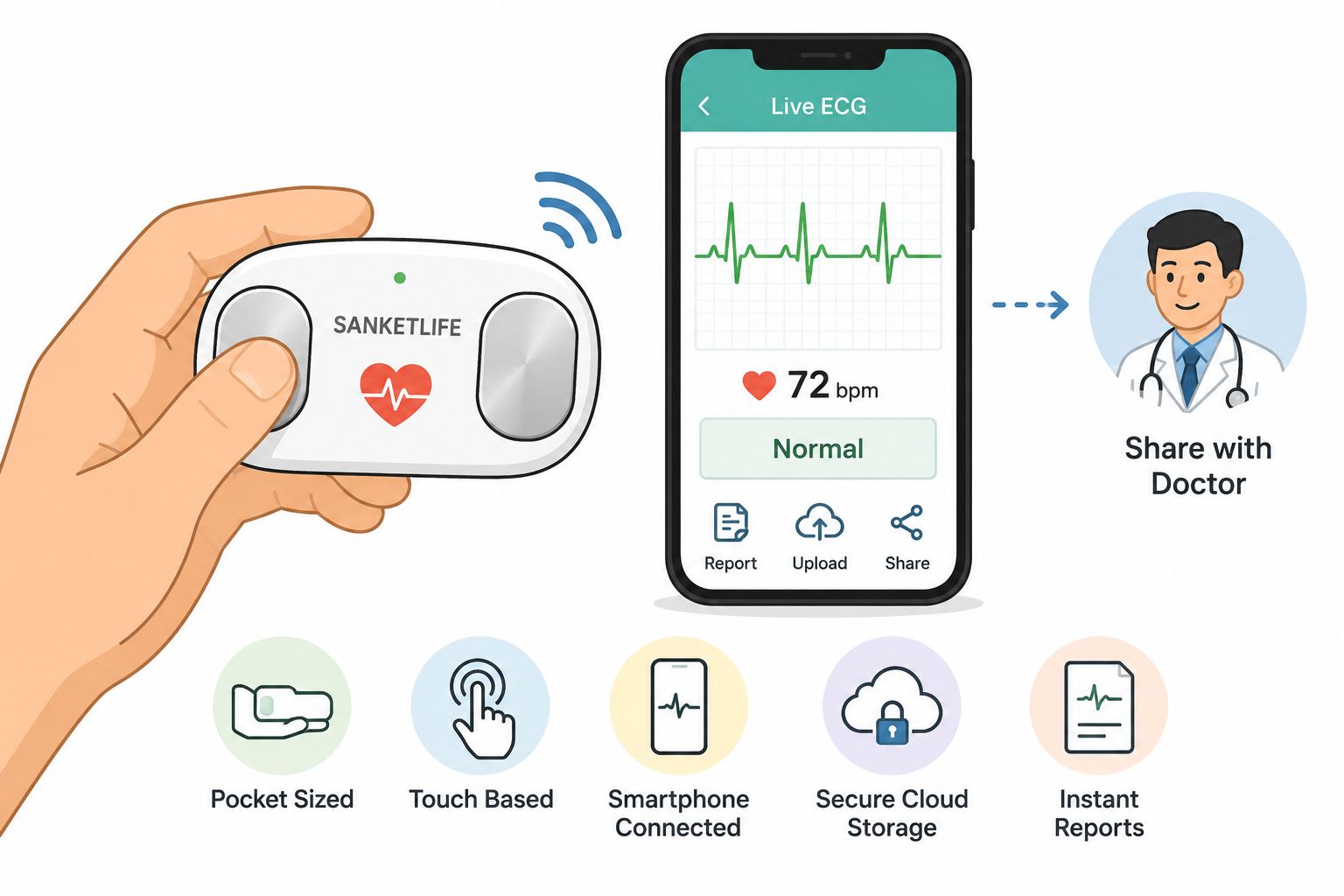
The company’s flagship device, SanketLife, is essentially a portable ECG machine connected to a smartphone application.
Unlike traditional ECG systems that use multiple wired leads attached to the chest, the device uses touch-based sensors placed on different parts of the body to capture ECG signals. The data is transmitted to a mobile app, where ECG graphs, reports, and interpretations can be viewed and shared instantly with doctors.
According to Agatsa, the device can perform single-lead, six-lead, and twelve-lead ECG recordings depending on how it is used. The company describes it as the world’s first portable leadless 12-lead ECG monitor.
The workflow is designed to reduce dependence on large diagnostic equipment.
Agatsa says the device is intended both for medical professionals and consumers.
According to Agatsa, its software platform includes algorithms capable of analyzing ECG patterns and generating first-level interpretations through smartphone applications. The company has also discussed integrating AI and blockchain systems into future versions of its products.
One important operational goal has been simplifying ECG usage for non-specialists.
Traditional ECG systems often require trained technicians, gel electrodes, wires, and clinical setups. Agatsa’s devices instead aim to make ECG recording possible in homes, remote clinics, ambulances, or field programs with minimal training.
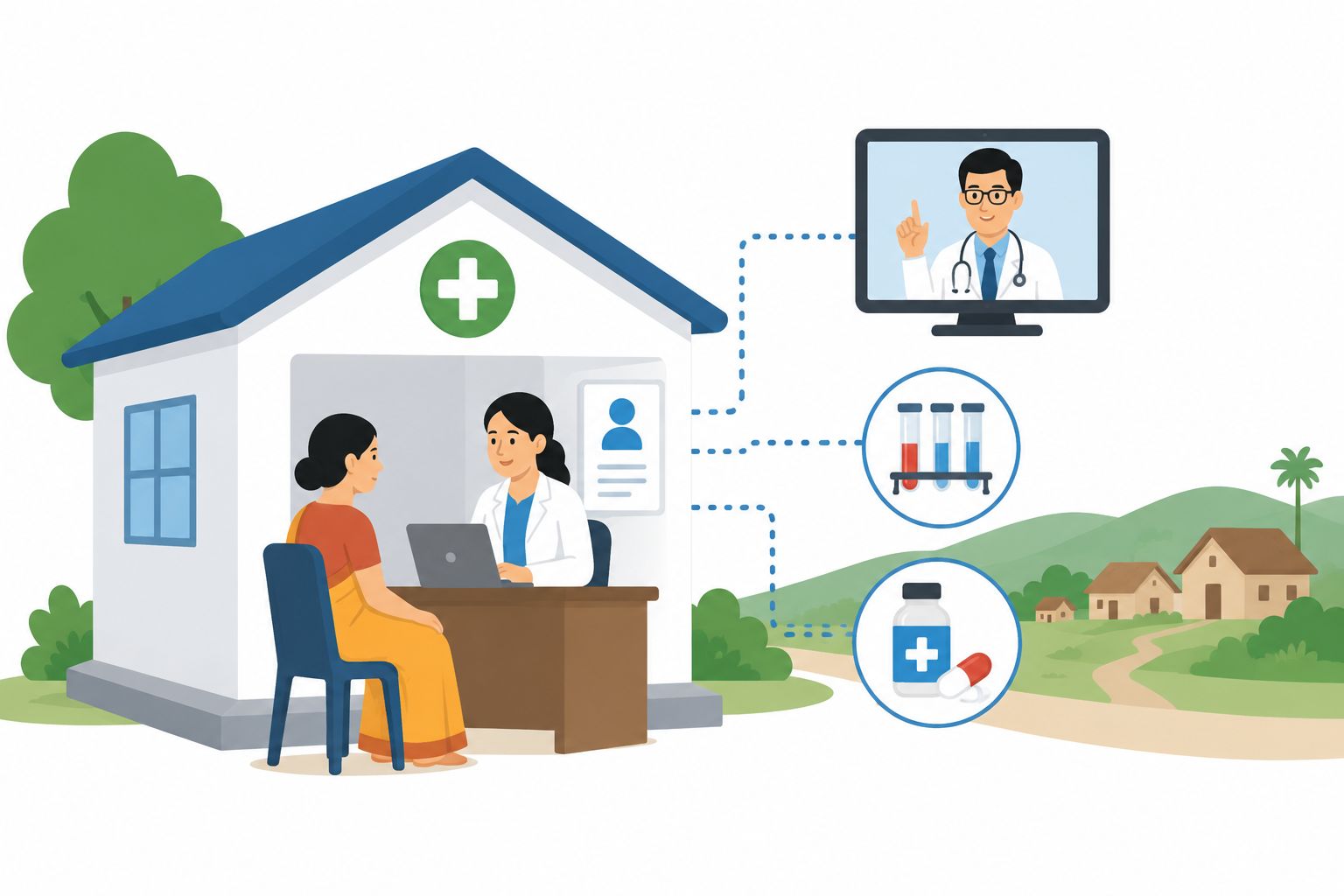
The company has also participated in public-health and institutional deployments.
Agatsa devices have been used in screenings at AIIMS Delhi and AIIMS Jodhpur, and through primary healthcare initiatives in Tripura supported by Tata Trusts and programs in Rajasthan supported by the Wadhwani Foundation.
In 2019, Agatsa raised approximately $1 million from Indian Angel Network and the Technology Development Board under the Government of India. In 2022, the company raised another INR 125 million from a group of investors that included cardiologists and healthcare industry veterans such as Dr. Ramakant Panda and Dr. Tejas Patel.
Globally, Agatsa operates in the growing market for portable diagnostics and remote cardiac monitoring.
Several companies worldwide are trying to move cardiac diagnostics away from centralized hospital infrastructure toward portable and connected systems. Devices such as AliveCor’s KardiaMobile in the United States and portable ECG wearables in Europe and Asia reflect a broader shift toward home-based and mobile cardiac monitoring.
What differentiates Agatsa is its emphasis on low-cost, touch-based ECG systems designed specifically for emerging-market conditions, including smaller clinics, rural health systems, and smartphone-first workflows.
The company also operates in a market where cardiovascular disease is increasing rapidly.
India has one of the world’s largest burdens of cardiac disease, while access to cardiologists and advanced diagnostics remains uneven outside major urban centers. Portable ECG systems are increasingly being explored as frontline screening tools in primary healthcare systems and telemedicine networks.
The challenge for Agatsa is scaling beyond device sales into sustained healthcare integration.
Portable diagnostics alone do not solve larger healthcare issues involving follow-up treatment, specialist access, emergency response systems, and long-term patient management. There is also increasing competition in portable diagnostics from both global device manufacturers and digital-health startups.
Even so, the broader direction of healthcare technology is moving toward smaller, connected, real-time monitoring systems.
- Our correspondent