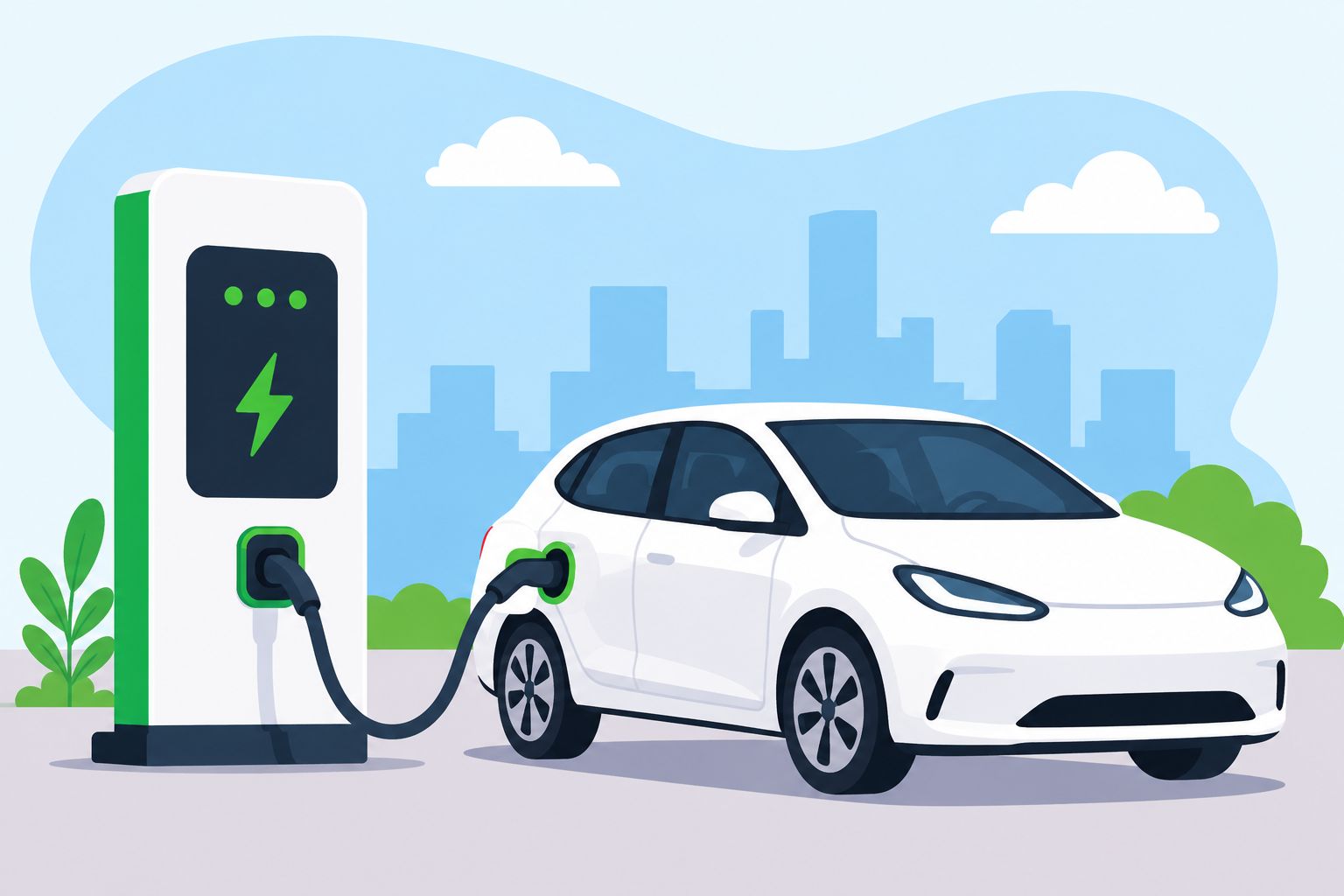
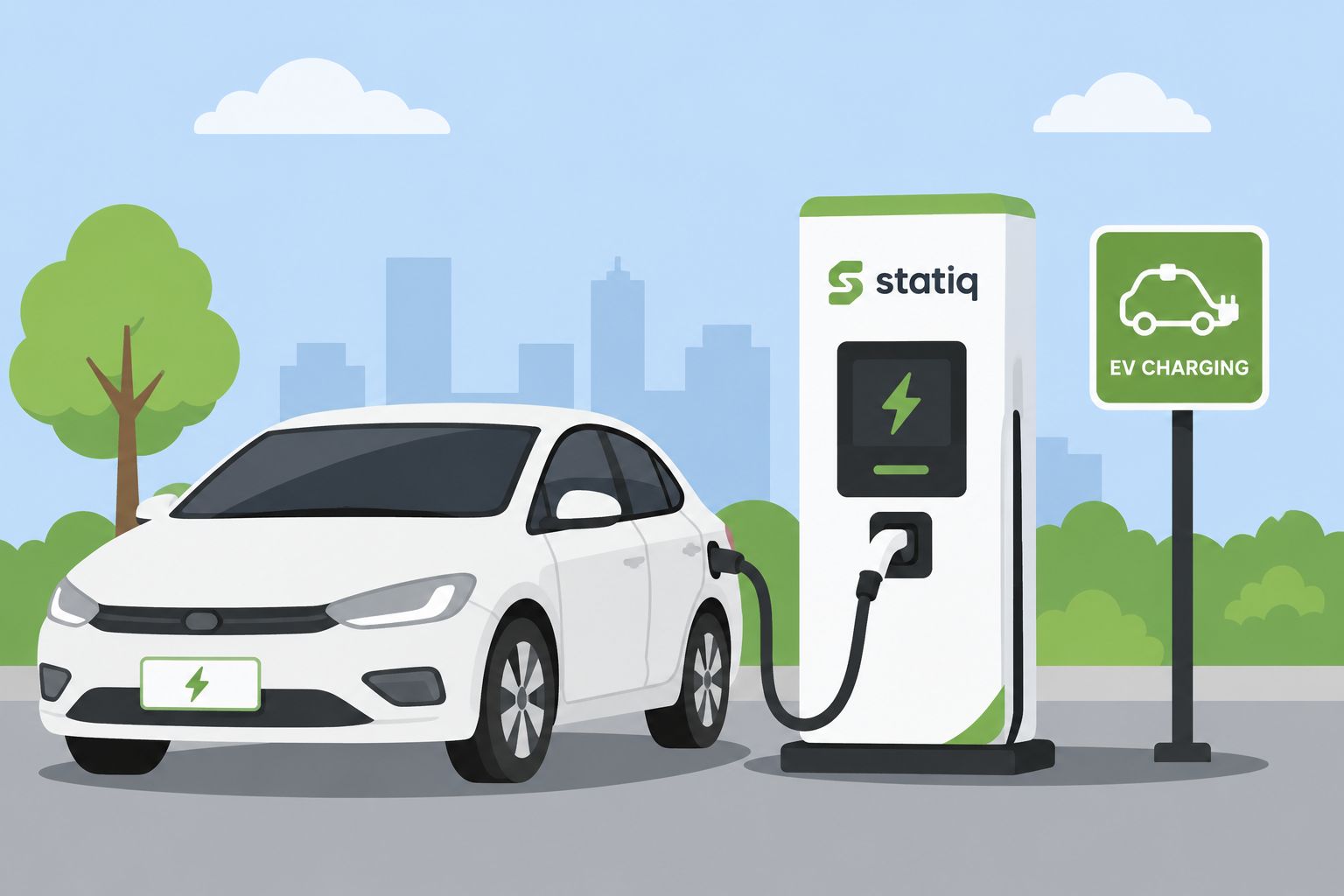
One of the biggest barriers to electric vehicle adoption in India is not the vehicle itself, but charging access.
Drivers worry about whether chargers will be available, whether they will work reliably, how long charging will take, and whether charging stations exist outside major cities. These concerns become even more important for apartment residents, commercial fleets, and highway travel.
Gurugram-based Statiq was founded to address that infrastructure gap.
The company builds and operates EV charging infrastructure across India, combining charging hardware, software systems, mobile applications, and network management tools into a single platform. Its charging stations are deployed across highways, malls, hotels, offices, residential complexes, parking facilities, and commercial properties.
Statiq was founded in 2020 by Akshit Bansal and Raghav Arora. Bansal is an electrical engineer who has described himself as focused on sustainable mobility and clean-energy infrastructure. Arora, the company’s CTO, leads the technology and software side of the business.
The founders started the company during a period when India’s EV market was still relatively early-stage. Electric two-wheelers were beginning to scale, EV policies were expanding under government incentive programs, and automakers were increasing investment in electric cars. However, public charging infrastructure remained limited and fragmented.
Instead of focusing only on charger manufacturing or only on software aggregation, Statiq chose a full-stack approach.
The company builds both AC and DC charging systems, operates charging stations, manages network software, and runs a consumer-facing mobile application. EV owners can use the app to locate chargers, check availability, reserve charging slots, monitor sessions, and make payments digitally.
The platform also aggregates third-party charging stations in addition to Statiq’s own infrastructure. According to Fortune India, the company integrates multiple charging networks into its app rather than restricting users only to proprietary stations.
The company’s infrastructure covers several charging categories.
AC chargers are generally used for slower charging at homes, offices, apartments, hotels, and destination locations where vehicles remain parked for longer durations. DC fast chargers are designed for quicker charging at highways and commercial transit locations.
One operational challenge in EV charging infrastructure is uptime.
Charging stations frequently face problems involving power supply, connectivity, maintenance, payment systems, and hardware failures. Statiq says it uses IoT-based monitoring systems and centralized network management tools to monitor charger performance and improve operational reliability.
The company also operates through a partnership-heavy expansion model.
In recent years, the company has expanded into a FOCO model — Franchise Owned, Company Operated. Under this structure, investors or partners fund charging infrastructure deployment while Statiq manages operations and software systems.
The scale of deployment has increased rapidly.
The company has increasingly focused on highway charging corridors, which are important for long-distance EV travel.
In 2025, Tata.ev partnered with charging operators including Statiq to deploy high-speed MegaChargers along Indian highways. The company has also expanded into Tier II cities instead of concentrating only on metros.
In 2022, Statiq raised approximately $25.7 million in a Series A round led by Shell Ventures. In 2026, the company raised another approximately $18 million through a mix of equity and debt funding led by Tenacity Ventures, with participation from Shell Ventures, Y Combinator, and RCD Holdings.
India’s EV charging ecosystem now includes companies such as ChargeZone, Tata Power EZ Charge, Ather Grid, Bolt.Earth, Kazam, and several oil-marketing companies building charging infrastructure. Automakers themselves are also increasingly partnering with charging providers to improve customer confidence around EV adoption.
Globally, the EV charging industry includes major players such as Tesla Supercharger, ChargePoint, EVgo, Ionity, and several Chinese charging operators.
What differentiates Statiq is its attempt to combine hardware manufacturing, charging operations, software aggregation, and property partnerships into a unified platform rather than focusing on only one layer of the ecosystem.
The company also operates in a market with several India-specific constraints.
Public charging utilization in India is still developing because EV penetration remains lower than in China or Europe. Many stations initially operate below full capacity, which affects profitability. Infrastructure deployment also involves power-distribution approvals, parking negotiations, maintenance logistics, and interoperability challenges across vehicle models.
There is also a geographical problem.
India’s EV demand is spread unevenly across cities, and reliable charging access remains limited in smaller towns and highway stretches. Building infrastructure ahead of demand requires long investment cycles.
Even so, the broader direction of the industry is becoming clearer.
As EV sales increase, charging networks are increasingly shifting from being experimental infrastructure to becoming a routine utility layer similar to fuel stations, telecom towers, or payment networks.
Statiq’s long-term strategy appears aimed at becoming one of the operating systems behind that transition — managing not just charging hardware, but also the software, payments, network intelligence, and operational infrastructure needed to keep EV charging functioning at scale across India.
- Our correspondent