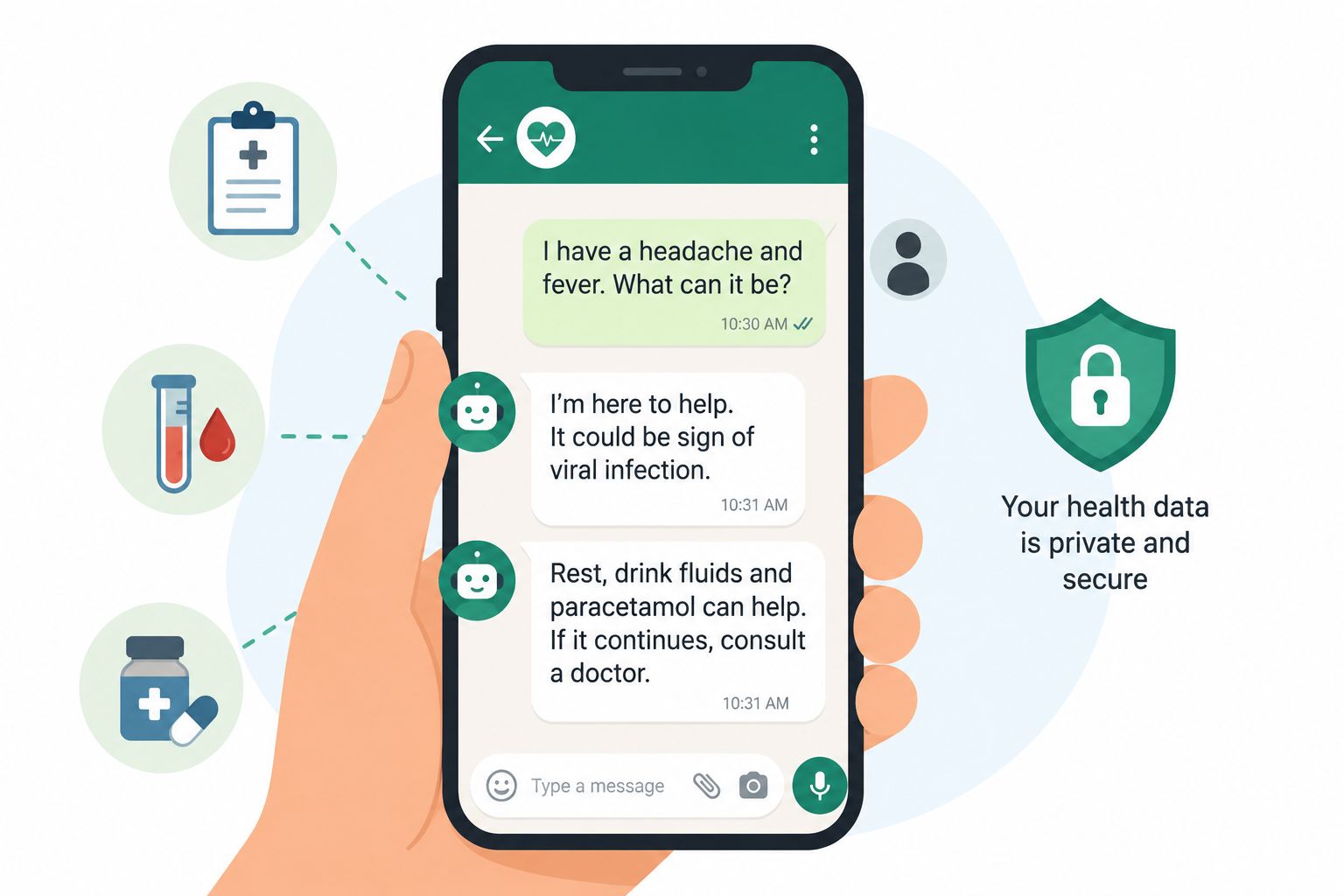
For many people in India, the first step after feeling unwell is not visiting a doctor. It is searching symptoms online, forwarding lab reports to friends, or trying to understand medical terms through random internet searches.
Bengaluru-based startup August is trying to turn that fragmented process into a conversational AI health assistant that works directly through WhatsApp.
The company describes August as a “24/7 Health AI” that helps users understand symptoms, lab reports, medications, and general health questions using artificial intelligence.
According to the company, the system is designed to provide fast, personalized health guidance while maintaining privacy and long-term medical context.
Founded in 2022, August operates from Bengaluru and positions itself as an AI-first healthcare information platform rather than a conventional telemedicine app. The company is building a “personal AI health assistant” that gives users direct answers to complicated health questions through conversational interaction.
Unlike many healthcare apps that mainly connect users to doctors or hospitals, August focuses on helping users interpret and organize health information themselves. The system allows users to upload medical reports, ask questions in natural language, and receive AI-generated explanations and guidance.
One reason the company chose WhatsApp as its primary interface is accessibility. In India, WhatsApp is already deeply integrated into daily communication across urban and rural areas. Building on top of that existing behavior reduces friction for users who may not want to install specialized medical apps or navigate complicated healthcare portals.
According to Microsoft’s AI First Movers program, August securely stores lab reports, scan results, and conversation history in long-term memory so the system can deliver more personalized responses over time. The company says this allows the AI assistant to maintain continuity instead of treating every interaction as an isolated query.
In practical terms, the workflow is designed to feel similar to messaging another person. Users can send text questions, upload photographs of prescriptions or reports, and ask follow-up questions conversationally. The system then generates responses intended to explain medical information in simpler language.
August says its symptom analysis system outperforms traditional symptom checkers by 25%. The broader problem the startup is targeting is real. Healthcare systems in many countries, including India, remain heavily overloaded. Specialist access can be limited, appointment wait times are long, and many patients struggle to understand medical terminology even after receiving reports from hospitals or diagnostic centers.
This creates a large gap between obtaining medical information and actually understanding it.
Traditional symptom-checker apps have existed for years, but most operate through rigid questionnaires and static rule-based systems. Newer AI models can instead handle open-ended conversations, contextual follow-up questions, and more complex report interpretation.
That shift became possible largely because of advances in large language models and multimodal AI systems capable of processing both text and images.
August is part of a rapidly growing global category often called AI health assistants or AI health companions. Companies worldwide are now building systems designed to help users navigate healthcare information conversationally using generative AI.
Internationally, companies such as Ada Health, K Health, and Google Health are working on AI-assisted symptom analysis and healthcare guidance systems. Microsoft, OpenAI, and Google have also increasingly entered healthcare-focused AI workflows.
But the Indian healthcare environment presents different challenges. Patients frequently switch between public and private healthcare providers, medical records are fragmented, and language diversity creates additional complexity. Many people also rely heavily on informal advice networks before seeking professional care.
August appears to be positioning itself as an intermediary layer between patients and the healthcare system rather than a replacement for doctors.
That distinction is important because healthcare AI remains highly sensitive from both regulatory and ethical perspectives. AI-generated medical advice can create serious risks if systems hallucinate, misinterpret symptoms, or provide overconfident responses.
The company’s app store listings explicitly frame the system as a wellness and guidance tool rather than a medical diagnosis platform.
Still, the category itself faces major challenges. Medical AI systems require high reliability because incorrect responses can directly affect patient decisions. Even advanced language models can generate inaccurate or misleading medical explanations. Healthcare systems also involve complex legal and regulatory obligations around diagnosis, liability, and patient data handling.
There is another challenge as well: trust. Many users may experiment with AI healthcare assistants for convenience, but still hesitate to rely on them for serious health decisions.
Healthcare AI is increasingly moving away from isolated symptom checkers toward persistent conversational systems that remember context, interpret reports, and interact more like digital health companions.
- Our Correspondent