In many parts of India, people with diabetes do not get regular retinal screening until vision problems become severe. By then, treatment becomes more difficult, expensive, and in some cases irreversible.
Bengaluru-based health-tech company Artelus is building artificial intelligence systems designed to detect eye diseases earlier, especially diabetic retinopathy, using automated image analysis tools.
Founded in 2015, Artelus develops AI-based medical screening systems that analyze retinal images and other medical scans to identify signs of disease.
The company operates under the legal name Artificial Learning Systems India Private Limited and focuses mainly on preventive screening and diagnostic support for healthcare providers.
The startup’s central idea is relatively simple: use machine learning systems to help doctors screen more patients quickly and identify high-risk cases earlier. In India, where specialist doctors are unevenly distributed and patient volumes are extremely high, the company argues that automated screening tools can help reduce delays in diagnosis.
Artelus was founded by Pradeep Walia, Vish Durga, Rajarajeshwari K, and Lalit Pant, according to startup databases and company information.
Publicly available information about the founders’ detailed backgrounds is limited. However, the company’s own positioning and product development history indicate a team focused on artificial intelligence, medical imaging, and diagnostic automation. Over the past decade, the startup has gradually expanded from research-oriented image analysis systems into deployable healthcare screening products.
The company’s best-known platform is called DRISTi. According to Artelus, the platform uses deep-learning models to analyze retinal scans for diabetic retinopathy and other eye conditions. The company says the system can identify more than 19 ophthalmic pathologies from retinal imaging data.
Diabetic retinopathy is one of the major medical problems the company is targeting. The disease damages blood vessels in the retina and is a common complication of diabetes. If not detected early, it can lead to partial or complete blindness. India has one of the world’s largest diabetic populations, which has created growing demand for scalable screening systems.
Traditionally, retinal screening requires trained ophthalmologists to manually examine retinal photographs or conduct dilated eye examinations. That process is time-consuming and difficult to scale in smaller towns and primary healthcare centers where specialists may not be available.
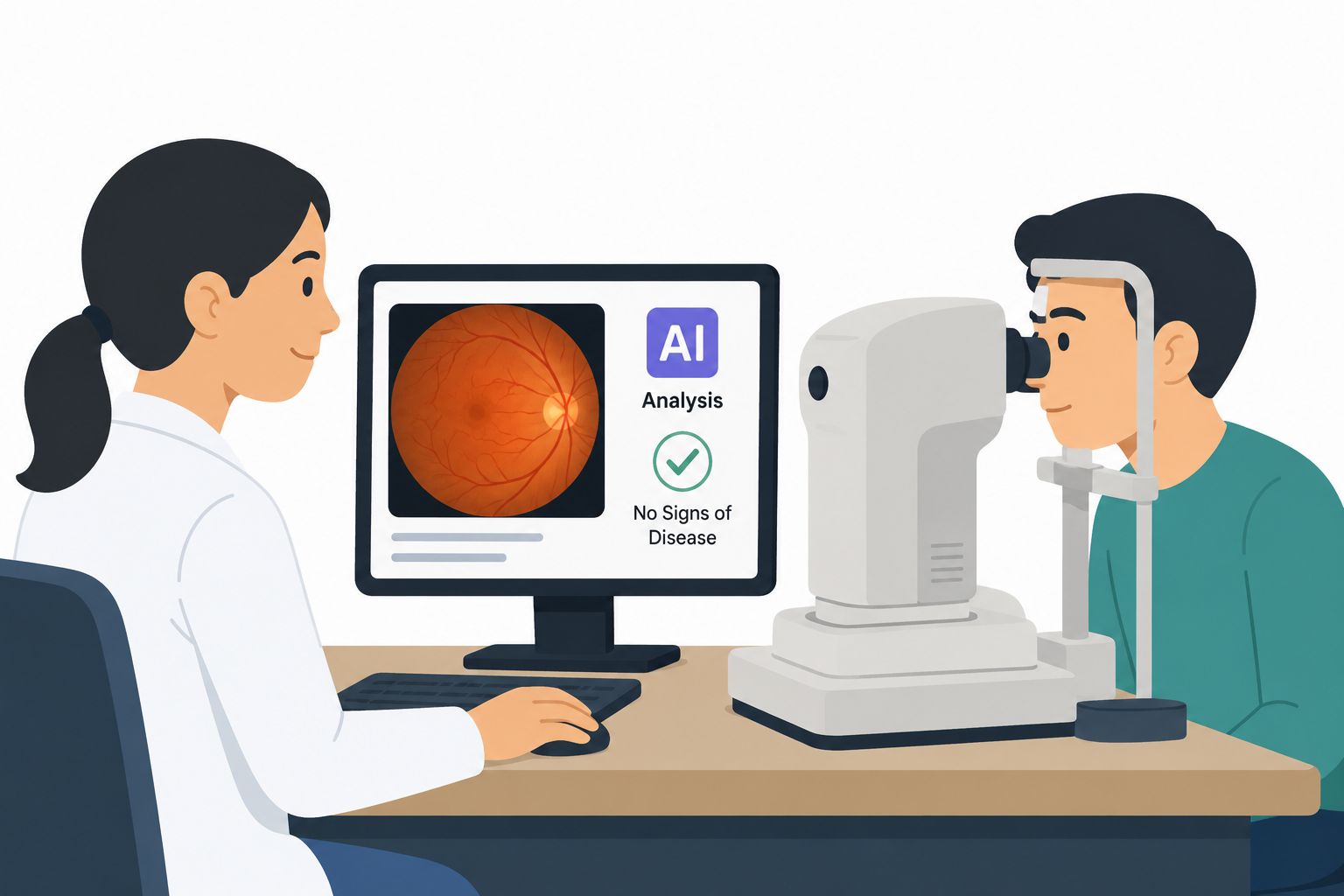
Artelus’ system attempts to automate the first layer of this process. A retinal image is captured using a fundus camera, after which the AI model analyzes the image for abnormalities linked to diabetic retinopathy and related eye disorders. The system then categorizes patients based on risk indicators so that urgent cases can be referred to specialists more quickly.
According to company-linked coverage, the screening process can be completed in under five minutes. The company has also worked on other medical imaging and AI-assisted diagnosis systems. Startup databases and company descriptions reference products such as Hansanet and Sahastra alongside DRISTi.
One important aspect of Artelus’ positioning is that it focuses on screening support rather than replacing doctors. The system is designed as a diagnostic-assistance layer for healthcare workflows, especially in high-volume environments where specialist availability is limited.
That distinction matters because medical AI systems face strict scrutiny around reliability and clinical validation. AI-generated diagnosis alone is usually not accepted as a replacement for medical judgment. Most healthcare AI systems are therefore deployed as triage or screening tools that assist clinicians rather than independently prescribing treatment.
The startup has received recognition through healthcare and AI innovation programs. In 2019, Artelus won the Qualcomm Design Challenge in India.
More recently, the company won the LVPEI Startup Challenge 2023 organized through the L V Prasad Eye Institute innovation ecosystem.
In 2026, Artelus won the healthcare category at the India AI Impact Summit after evaluation by IndiaAI and MeitY-linked programs.
The broader healthcare AI market that Artelus operates in has expanded rapidly over the last decade. Globally, companies are increasingly using deep learning systems for radiology, pathology, retinal screening, and diagnostic workflow support.
In ophthalmology specifically, AI screening systems have become one of the most commercially mature categories in medical AI because retinal imaging data is highly visual and relatively structured compared to many other medical datasets.
Internationally, companies such as Digital Diagnostics, Eyenuk, and Google Health have developed AI systems for diabetic retinopathy detection and retinal image analysis.
India has also become an active market for this category because of its combination of large diabetic populations and specialist shortages. Indian startups including Qure.ai, Niramai, and Artelus are all working on different forms of AI-assisted medical imaging.
What differentiates Artelus is its concentration on ophthalmology screening and retinal diagnostics. The company also emphasizes deployment in lower-resource healthcare environments where specialist access may be inconsistent.
That creates both opportunity and operational difficulty. AI systems deployed in real clinical environments must handle variations in image quality, camera hardware, patient movement, and inconsistent operating conditions. Screening tools also require integration with referral systems, hospitals, and clinicians rather than functioning as standalone apps.
Even so, the company reflects a larger shift happening across healthcare technology in India. Earlier generations of Indian health-tech startups focused mainly on telemedicine, appointment booking, and digital records. Newer startups are increasingly working on diagnostic AI systems designed to assist doctors directly inside clinical workflows.
- Our correspondent