For decades, India’s coaching industry has depended on a simple formula: large classrooms, standardized lectures, and expensive physical coaching centers concentrated in a few cities. Students in smaller towns often had access only through recorded videos or overcrowded local tuition centers.
Bengaluru-based startup Arivihan is trying to rebuild that model around artificial intelligence instead of live teaching. The company says it is building India’s first fully automated AI tutor platform — a system that delivers personalized coaching, doubt solving, and study planning without depending on large numbers of human teachers.
Arivihan was founded by IIT Roorkee alumni Ritesh Singh Chandel and Sonu Kumar, along with mathematics educator Rushabh Kothari. The founders were working on the idea from 2021, while the company was formally founded in 2024.
The origins of the company are closely tied to the founders’ own experiences with India’s uneven education system. Co-founder Ritesh Singh has described growing up outside major coaching ecosystems and struggling with access to high-quality preparation resources. That experience shaped the company’s focus on students from Tier II and Tier III cities rather than elite metropolitan coaching markets.
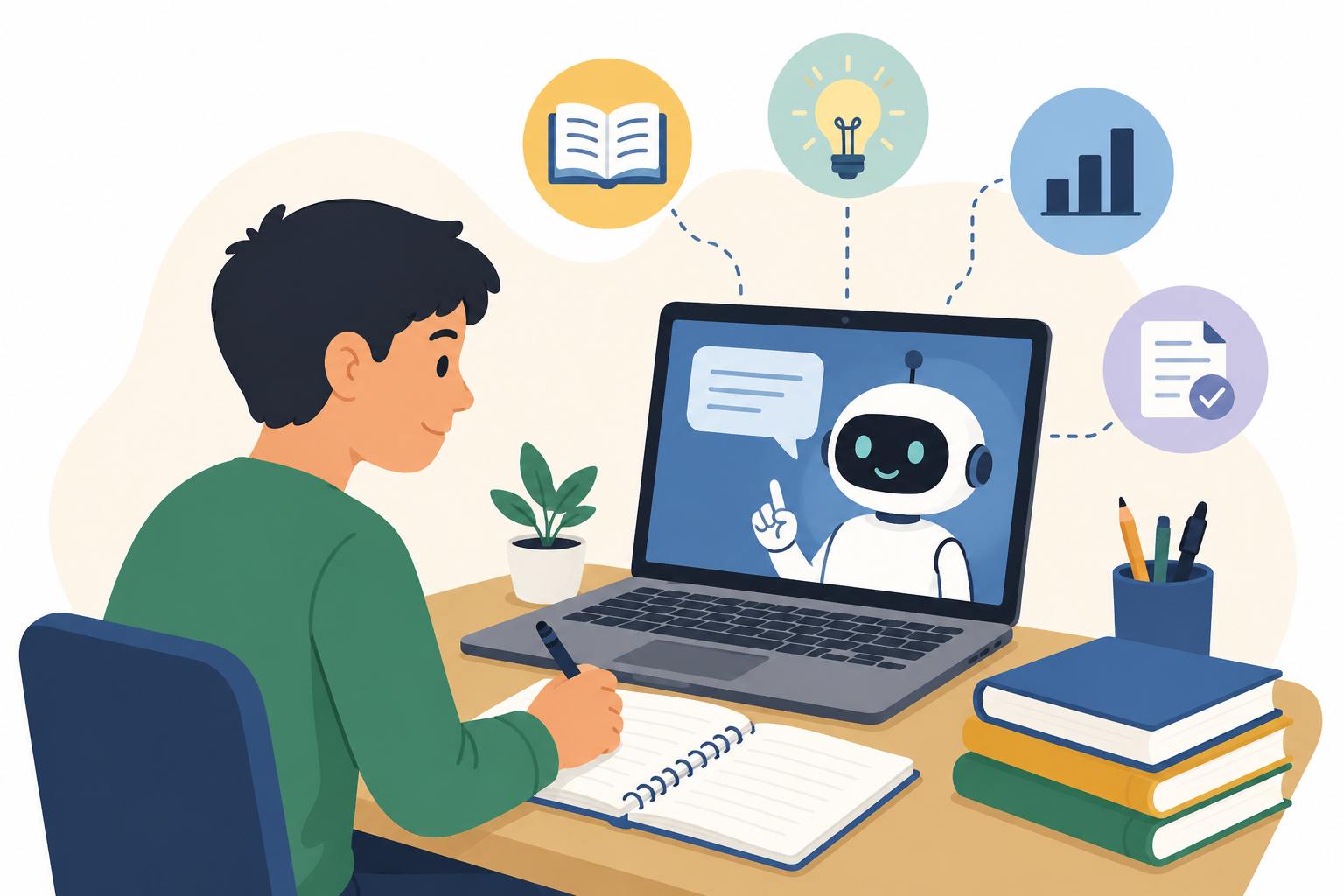
Arivihan’s product is built around a central idea: replacing many functions of a conventional coaching institute with AI-generated and AI-managed learning systems. According to the company, the platform combines interactive video lessons, automated doubt solving, adaptive study plans, and personalized practice systems into a single tutoring workflow.
In practical terms, the platform works more like an individualized tutor than a static recorded course. Instead of showing the same lecture sequence to every student, the system attempts to adapt based on learning speed, mistakes, and exam preparation goals. The company says its AI generates personalized study plans and dynamically responds to student questions.
The startup currently focuses on Class 12 board preparation, CBSE curriculum support, and competitive exams such as NEET. Its primary target audience is students in smaller towns and semi-urban markets where access to premium coaching remains limited.
One of Arivihan’s biggest claims is cost and scalability. Traditional coaching models require large teacher networks and physical infrastructure. Arivihan argues that a fully AI-driven tutoring system can scale much faster while lowering costs for students. The founders have publicly stated that the platform is designed to be “10x more scalable” than conventional coaching structures because it removes dependence on live teachers for most routine instruction and doubt resolution.
That positioning has attracted investor interest at a time when artificial intelligence has become a major focus area for venture capital firms. In July 2025, Arivihan raised $4.17 million in a Pre-Series A funding round led by Prosus Ventures and Accel, with participation from GSF Investors.
Before this round, Arivihan had also raised $750,000 through Accel’s Atoms early-stage program.
AI tutoring systems remain controversial in parts of the education sector. Many educators support adaptive learning tools but remain skeptical about replacing teachers entirely. Critics argue that AI systems still struggle with emotional support, nuanced explanations, motivation, and long-term mentoring — areas where human teachers remain important.
Arivihan appears aware of this debate, but its approach is more aggressive than most traditional edtech companies. Rather than positioning AI as a supplementary classroom tool, the startup is presenting AI as the primary tutoring layer itself.
Technically, the company belongs to a fast-growing category often called AI-native edtech. Globally, this market has expanded rapidly after advances in generative AI and large language models. Companies across the United States, China, and Europe are experimenting with AI tutors, automated grading systems, conversational learning agents, and adaptive testing platforms.
Internationally, firms such as Khan Academy’s Khanmigo, Duolingo Max, and Squirrel AI are building AI-assisted learning systems that personalize instruction using machine learning models.
The company also other Indian players such as Embibe, Vedantu, ConveGenius, and iPrep have already experimented with adaptive learning, AI-assisted practice systems, and personalized recommendation engines.
What differentiates Arivihan is the extent to which it is attempting to automate the teaching workflow itself.
The company’s long-term challenge will be proving that fully AI-driven tutoring can consistently deliver better educational outcomes at scale. Education systems are harder to automate than many other industries because learning is affected by language, confidence, motivation, family support, and social context — not just information delivery.
For now, the company represents a broader shift happening inside Indian edtech. The industry is moving away from the earlier model of celebrity teachers and large physical coaching operations toward software-driven, AI-native learning systems that attempt to scale personalized instruction digitally.
- Our correspondent