Every day, more than 20 million people travel on trains operated by Indian Railways.
The system is vast, stretching across deserts, mountains, and dense urban corridors. It is also old in parts, heavily used, and under constant pressure to do more with less. Safety, in such a system, is not a static goal but an ongoing challenge.
For decades, railway safety in India has relied largely on periodic inspection. Engineers walk tracks, examine bridges, and assess wear and tear based on scheduled checks.
While this system has evolved, it still carries a fundamental limitation: it often detects problems only after they have already begun to develop. In a network of this scale, even small delays in detection can have serious consequences.
It is this gap—between emerging risk and visible failure—that a Bengaluru-based startup, L2M Rail, is trying to close.
Origins
Emerging from the ecosystem of the Indian Institute of Science, L2M Rail represents a different kind of startup. It does not build apps or platforms.
Instead, it builds systems designed to quietly monitor infrastructure, detect early signs of stress, and prevent accidents before they happen. Its name, “Lab to Market,” captures its central idea: taking advanced scientific research out of controlled environments and applying it to complex, real-world problems.
In India, the timing of such an approach is significant. Railway modernisation is underway at multiple levels, from electrification and faster trains to the rollout of safety systems like Kavach.
These initiatives are improving signalling and collision avoidance, but infrastructure monitoring remains a more difficult problem. Tracks, bridges, and tunnels are exposed to constant stress from heavy loads, extreme weather, and shifting terrain. Many of these stresses are gradual and invisible, building up over time until they cross a critical threshold.
L2M Rail’s approach is to make those invisible changes visible.
How it works
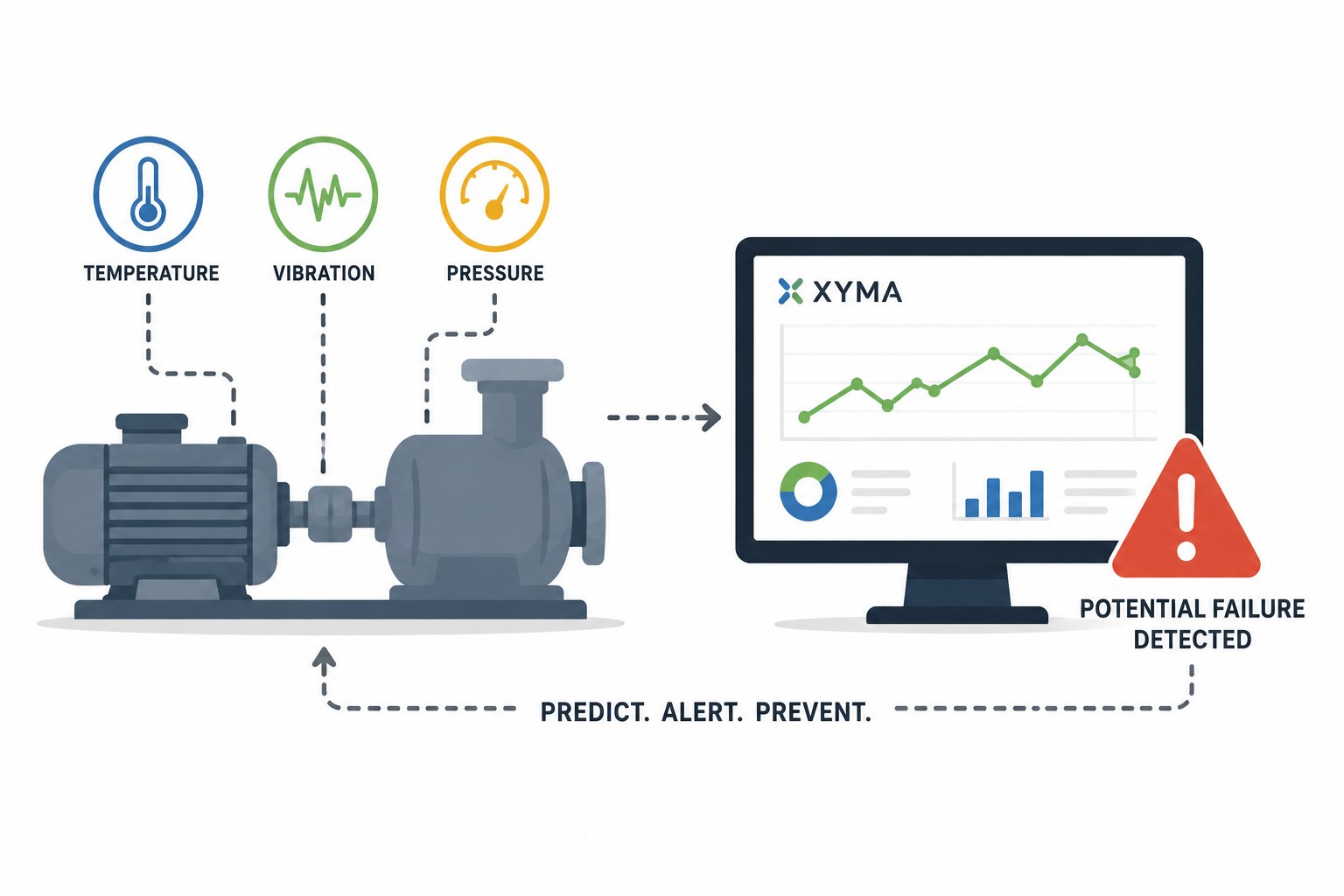
At the core of its technology is a sensing system based on Fiber Bragg Grating, a photonics-based method capable of detecting minute changes in strain and temperature. These sensors can be embedded directly into railway infrastructure, allowing continuous monitoring of structural health. Instead of relying on periodic inspection, railway operators can receive real-time data on how assets are performing. If a bridge begins to experience unusual stress, or if a section of track shows early signs of deformation, the system can flag it before it becomes dangerous.
This shift—from inspection to monitoring—is subtle but transformative. It changes safety from a reactive process into a predictive one.
What makes this particularly relevant in India is the environment in which such systems must operate. Infrastructure here is not uniform. It passes through flood-prone regions, areas with unstable soil, and zones exposed to extreme heat.
Any monitoring system must be adaptable, cost-effective, and capable of working alongside existing infrastructure rather than replacing it entirely. L2M Rail’s solutions are being developed with these constraints in mind, which is why their deployments in regions like Kerala, where rainfall and terrain create additional stress on railway systems, are especially important.
Global context
At the same time, the problem L2M Rail is addressing is not uniquely Indian. Around the world, railway systems are undergoing a similar transition. In Europe and parts of Asia, companies like Siemens Mobility, Alstom, and Hitachi Rail are investing heavily in predictive maintenance technologies. These systems combine sensors, connectivity, and data analytics to monitor infrastructure in real time and anticipate failures before they occur.
The underlying shift is clear. Railways are moving away from scheduled maintenance toward condition-based maintenance, where decisions are driven by live data rather than fixed timelines. This not only improves safety but also reduces costs by allowing targeted interventions instead of broad, periodic overhauls.
Challenges
However, most global solutions are designed for relatively standardised systems with higher budgets and more controlled operating environments. India’s railways present a different set of constraints, and that creates space for homegrown innovation. By designing systems specifically for these conditions, L2M Rail is not only solving a domestic problem but also developing technologies that could be relevant to other emerging markets facing similar challenges.
Another dimension of railway safety that often receives less attention is the safety of workers on the tracks. Maintenance crews operate in environments where trains continue to run, and visibility or communication gaps can lead to dangerous situations.
L2M Rail’s work in this area focuses on creating systems that provide real-time alerts and predictive warnings, helping ensure that workers are aware of approaching trains in time to move to safety. It is a reminder that railway safety is not just about infrastructure and machines, but also about the people who keep the system running.
In sectors like railways, where reliability and safety are critical, such approaches may be more valuable than incremental improvements. The ability to detect a structural weakness early, or to prevent a worker from stepping into harm’s way, may not be visible to the average passenger, but it fundamentally changes how the system operates.
Globally, infrastructure is entering a phase where resilience is becoming as important as expansion. As networks grow and usage intensifies, the tolerance for failure decreases. Technologies that can monitor, predict, and prevent disruptions are becoming central to how infrastructure is designed and managed.
In a country where railways are lifelines, that shift is not just technological. It is structural.
- Our correspondent