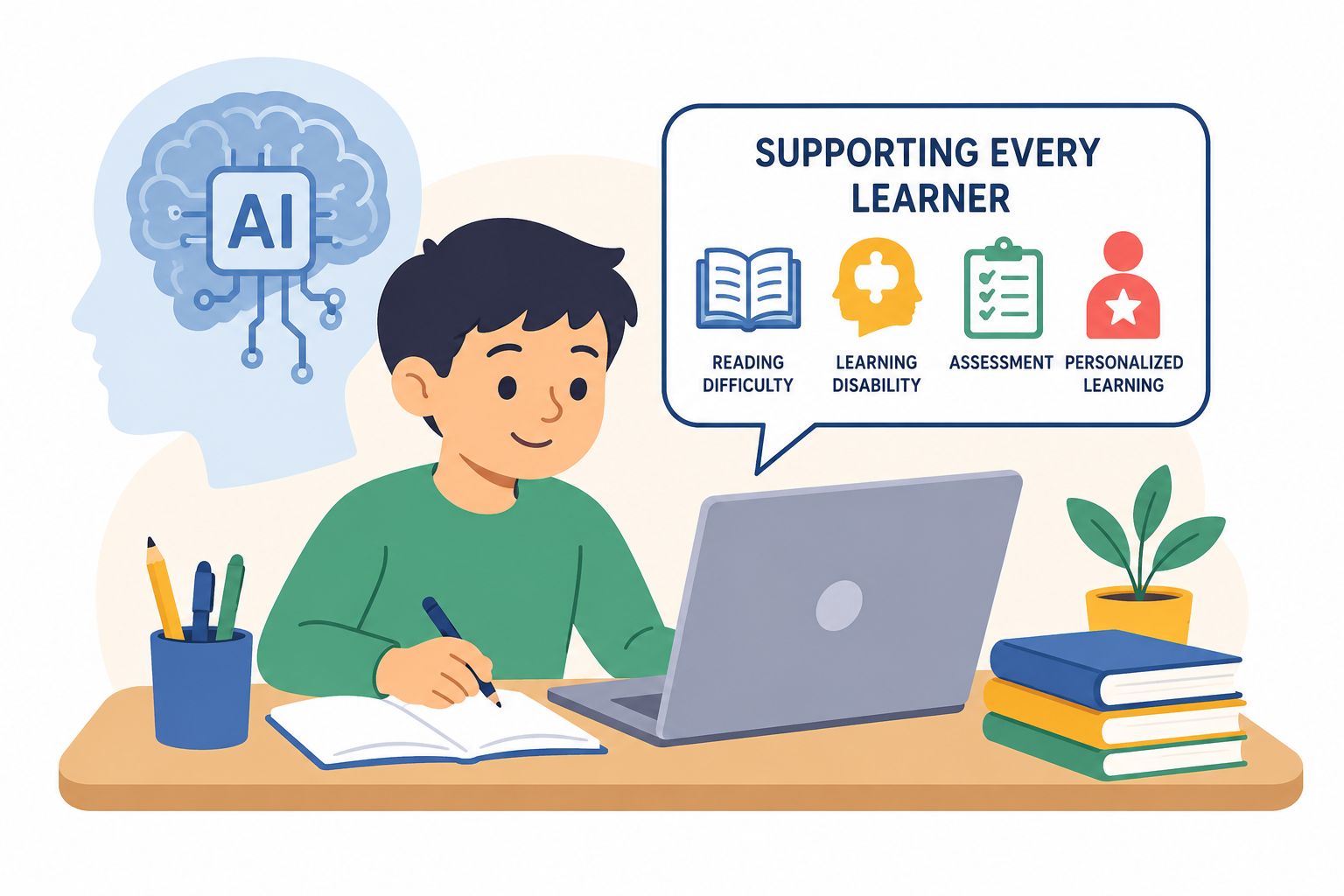
A young Indian edtech startup called Daira Edtech is trying to solve a problem that most mainstream learning platforms still barely address: how to identify and support students with learning difficulties using technology that schools can realistically use.
Founded in 2024, Daira Edtech is a browser-based edtech platform and research lab focused on “learning challenges through research, technology, and inclusive design.” It works across areas including learning disabilities, education access, and employability.
The startup sits at the intersection of AI, special education, and accessibility — an area that has historically received far less attention than mainstream test-prep or online tutoring businesses.
Daira Edtech was founded by Rishikesh Amit Nayak, Shrawani Choudhary, and Susan Elias. The company is legally registered as Daira Edtech Private Limited and is based in Dharwad, Karnataka.
The company’s broader positioning suggests it is attempting to combine educational research with practical software tools.
Unlike many Indian edtech startups that focus on exam preparation, recorded classes, or tutoring marketplaces, Daira appears to be concentrating on students who are often underserved by conventional classrooms and digital learning systems. This includes students with specific learning disabilities, neurodiverse learners, and children who may require adaptive teaching support.
That distinction matters because identifying learning disabilities in India remains difficult, especially outside major urban schools. Many schools lack trained counselors or psychologists, and assessments can be expensive or inaccessible. In practice, students with dyslexia, ADHD, processing disorders, or other learning challenges are often identified very late — or not at all.
Daira Edtech has been supported by V-NEST, the startup incubation center associated with VIT University.
Inclusive education technology is still a relatively small category compared to mainstream K-12 edtech or workforce learning platforms. But globally, interest in AI-assisted learning support systems has been growing steadily. Schools and researchers are increasingly exploring how machine learning can help identify patterns linked to learning difficulties, personalize lesson delivery, and support educators handling diverse classroom needs.
In the United States and Europe, companies such as Lexplore, CogniFit, and Microsoft Reading Progress have experimented with AI-assisted literacy screening, reading analysis, and adaptive learning systems. Some platforms use eye-tracking, speech analysis, or behavioral pattern recognition to identify possible learning issues earlier.
India’s edtech market, however, has largely evolved in a different direction. Over the past decade, the country’s biggest education startups focused primarily on scale-oriented segments such as test preparation, online tutoring, and school digitization. Companies like LEAD Group and Disprz built large learning and workforce training systems, but inclusive learning-disability-focused platforms remain relatively uncommon. (TechCrunch)
That creates both an opportunity and a challenge for startups like Daira. The opportunity is clear: millions of students may need some form of learning support that current systems do not adequately provide. But the challenge is equally significant because inclusive education tools require careful validation, educator training, and sustained collaboration with schools and specialists.
There are also ethical and operational questions around AI-driven educational screening. Most experts caution that AI systems should assist educators and specialists rather than function as standalone diagnostic tools. Incorrect screening or overreliance on automated systems can create risks for students if not handled carefully.
Learning disability support remains one of the least digitized and least commercially attractive segments in education technology, particularly in developing markets.
Building software for this space requires slower product cycles, deeper research involvement, and close coordination with educators and psychologists. It also requires balancing accessibility with affordability because most schools in India cannot afford expensive specialized systems.
Whether Daira can scale beyond the research-and-early-product stage will depend on several factors: validation of its technology, partnerships with schools and specialists, long-term funding, and evidence that its systems can improve learning outcomes in real classroom environments.
- Our correspondent