In many parts of India, pregnant women still miss critical health information during pregnancy and early childcare.
The problem is often not the absence of hospitals or frontline workers alone, but gaps in communication. Women may not know when to seek medical attention, why iron tablets matter, when breastfeeding should begin, or how to identify danger signs during pregnancy.
Mumbai-based non-profit ARMMAN has spent more than a decade building technology systems around that problem.
Founded in 2008 by Dr. Aparna Hegde, ARMMAN works on maternal and child health using mobile-based communication systems, voice messaging platforms, training tools for health workers, and more recently, AI-driven engagement systems. The organization’s name stands for “Advancing Reduction in Mortality And Morbidity of Mothers, Children And Neonates.”
Dr. Hegde is a urogynecologist trained at institutions including Stanford University and the Cleveland Clinic. According to ARMMAN, the organization emerged from her experiences during medical residency in Mumbai public hospitals, where she saw women dying from preventable pregnancy complications despite visiting healthcare facilities earlier in pregnancy.
In public talks and interviews, Hegde has repeatedly described one particular case involving a woman named Rupa, whom she had treated earlier during pregnancy but who later arrived at the hospital in critical condition. The experience became a trigger for building systems that could continue engaging women outside hospitals rather than relying only on short clinical interactions.
ARMMAN has received support from multiple philanthropic and research partners over the years, including Google.org, Google Research, academic institutions, and public-health collaborators. The organisation has also worked closely with India’s Ministry of Health and Family Welfare on national-scale deployments.
The core idea behind ARMMAN’s work is relatively straightforward: use mobile phones to deliver preventive healthcare information at scale.
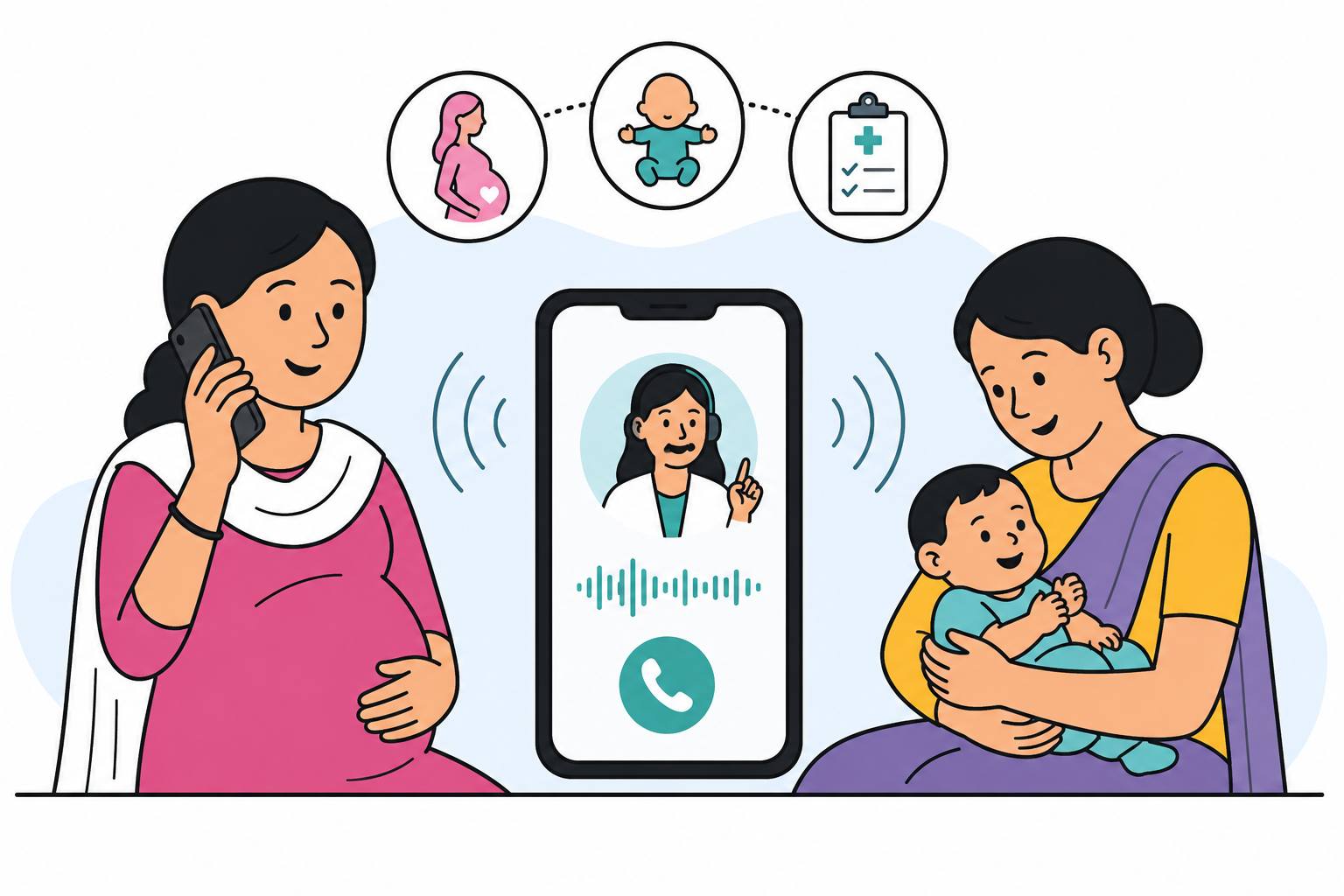
Its flagship program, mMitra, began in 2013. The service sends free voice calls to pregnant women and new mothers, delivering time-specific health guidance during pregnancy and through the child’s first year. Messages are scheduled according to the stage of pregnancy or infancy. A woman in her fifth month of pregnancy receives different guidance from a mother with a six-month-old child.
The system was designed specifically for low-income and low-literacy users. Instead of depending mainly on smartphone apps or text-heavy interfaces, mMitra uses voice calls in local languages. According to ARMMAN, women can choose preferred language and call timings. The system also retries failed calls multiple times and includes missed-call support systems.
The organization says the service was initially deployed across urban poor communities and later expanded into multiple Indian states including Maharashtra, Karnataka, Gujarat, Rajasthan, Bihar, Uttar Pradesh, Delhi, Haryana, and Madhya Pradesh.
ARMMAN’s work later expanded significantly through a partnership with the Government of India.
In 2018, the Ministry of Health and Family Welfare invited ARMMAN to implement Kilkari, a national maternal messaging service that the organization describes as the world’s largest maternal mobile messaging program.
Kilkari delivers stage-based audio messages to pregnant women and mothers across India. ARMMAN also manages Mobile Academy, a complementary mobile training program for frontline health workers such as ASHAs.
The scale of these systems is large by public-health technology standards.
According to figures shared during a Harvard School of Public Health event in 2024, ARMMAN’s programs had reached more than 47 million women and children and trained over 367,000 health workers across 21 Indian states.
Older public reports show steady scaling over time. A 2021 report by The Borgen Project cited ARMMAN data saying the organization had already reached more than 26 million women and trained over 212,000 health workers at that stage.
The organization has also published outcome data tied to mMitra.
Google Research publications tied to ARMMAN’s work reported additional behavioural outcomes associated with consistent engagement. One study cited a 36 percent increase in awareness regarding iron tablet use among participants regularly listening to messages. The organization’s more recent work has increasingly focused on engagement prediction and AI-assisted interventions.
One operational problem ARMMAN encountered was that many women gradually stopped listening to calls over time. According to Google Research, nearly 40 percent of beneficiaries reduced engagement with the system.
Calling every low-engagement participant manually was operationally expensive. To address this, ARMMAN collaborated with Google Research and IIT Madras to build machine-learning systems that predict which users are most likely to disengage and therefore should receive targeted human support calls.
Research papers published through AAAI and arXiv describe how these systems analyze historical call data, listening behaviour, demographic patterns, and interaction histories to identify high-risk users.
Another large-scale study involving more than 23,000 participants reported measurable improvements in program engagement after AI-assisted intervention scheduling was introduced.
ARMMAN’s AI work has also drawn attention internationally because it focuses on operational healthcare delivery rather than diagnostic AI.
Most systems are built around resource allocation problems: deciding which beneficiaries should receive calls, when support staff should intervene, and how to prioritize limited outreach capacity. Several academic papers associated with the project describe the use of reinforcement learning and “restless multi-armed bandit” models to optimize intervention scheduling.
The organization’s work sits within a broader global category often referred to as digital public health or mobile health infrastructure.
Globally, maternal-health messaging systems have been deployed in countries across Africa and Asia using SMS, IVR, WhatsApp, and voice-based models. Programs such as MomConnect in South Africa and MOTECH in Ghana also use mobile communication systems to support maternal healthcare access. However, ARMMAN’s deployments stand out because of the scale of integration with India’s national public-health infrastructure.
Unlike many digital-health startups focused on apps for urban users, ARMMAN’s systems are designed around unreliable connectivity, shared phones, low literacy, and multilingual populations.
That design choice shapes nearly every operational decision the organization makes — from voice-first communication to repeated call retries to AI systems focused on predicting dropout risk rather than maximizing app engagement.
For now, the organization represents one of India’s largest attempts to combine public health, mobile infrastructure, and AI-driven engagement systems into a national-scale maternal-health platform.
- Our correspondent