Factories, refineries, power plants, and heavy industrial sites generate enormous amounts of operational data every day.
Cameras monitor workers and machinery. Sensors track pressure, heat, and vibration. Engineers conduct inspections and maintenance checks across large facilities that may run continuously for months.
Most of this information is still difficult to process in real time. Industrial companies often rely on manual inspections, fragmented reporting systems, and delayed incident reviews.
Detect Technologies, a Chennai-based industrial AI company, is building software systems intended to automate much of this monitoring process using computer vision, machine learning, sensors, and industrial analytics.
The company was founded in 2016 and incubated at IIT Madras. Public company information identifies Daniel Raj David and Tarun Mishra as founders.
Daniel Raj David currently serves as CEO. The founding team comes from engineering and industrial technology backgrounds and initially focused on solving operational problems in asset-heavy industries such as oil and gas, metals, petrochemicals, and energy.
Over time, the company expanded from inspection and monitoring systems into a broader industrial AI platform covering safety, operations, predictive maintenance, and productivity analytics.
Detect Technologies develops software systems that combine AI models, camera feeds, industrial sensors, and cloud-based analytics. The company’s core idea is relatively straightforward: use existing industrial infrastructure and combine it with AI systems that continuously monitor operations in real time rather than depending entirely on manual supervision.
One major product area is workplace safety monitoring.
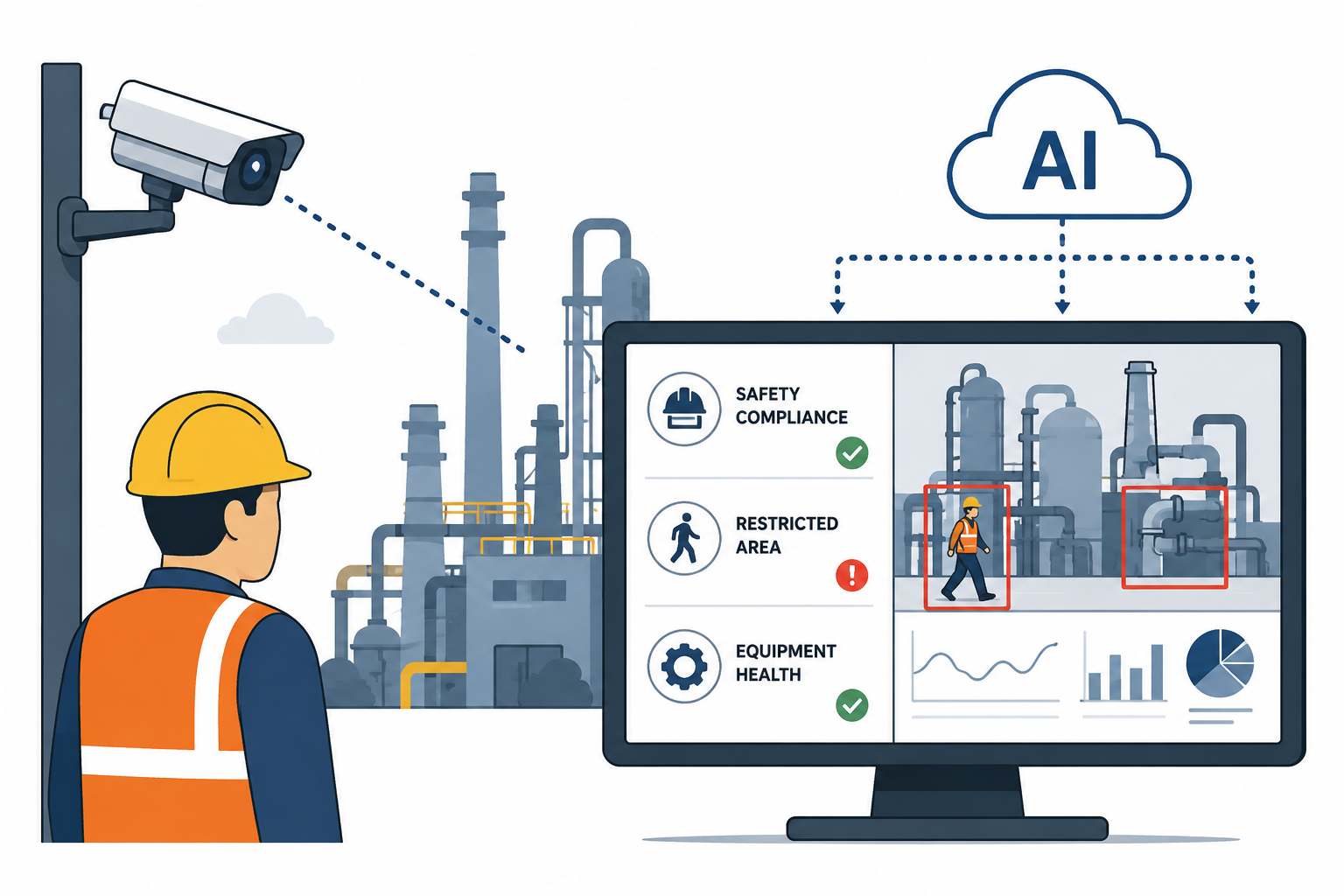
Industrial sites typically have hundreds or thousands of workers spread across large areas. Safety compliance checks are often manual. Detect’s platform uses computer vision systems connected to existing CCTV cameras to identify events such as missing safety gear, unsafe worker positioning, restricted-zone violations, or operational hazards.
For example, the system can detect whether workers are wearing helmets, gloves, or harnesses. It can also monitor whether people enter hazardous zones during machinery operation. Instead of requiring supervisors to continuously monitor camera feeds, the AI system generates alerts automatically.
The company says its systems are designed to provide “actionable intelligence” rather than only passive surveillance. In practical terms, this means industrial operators receive alerts, dashboards, and incident reports that can be acted upon quickly.
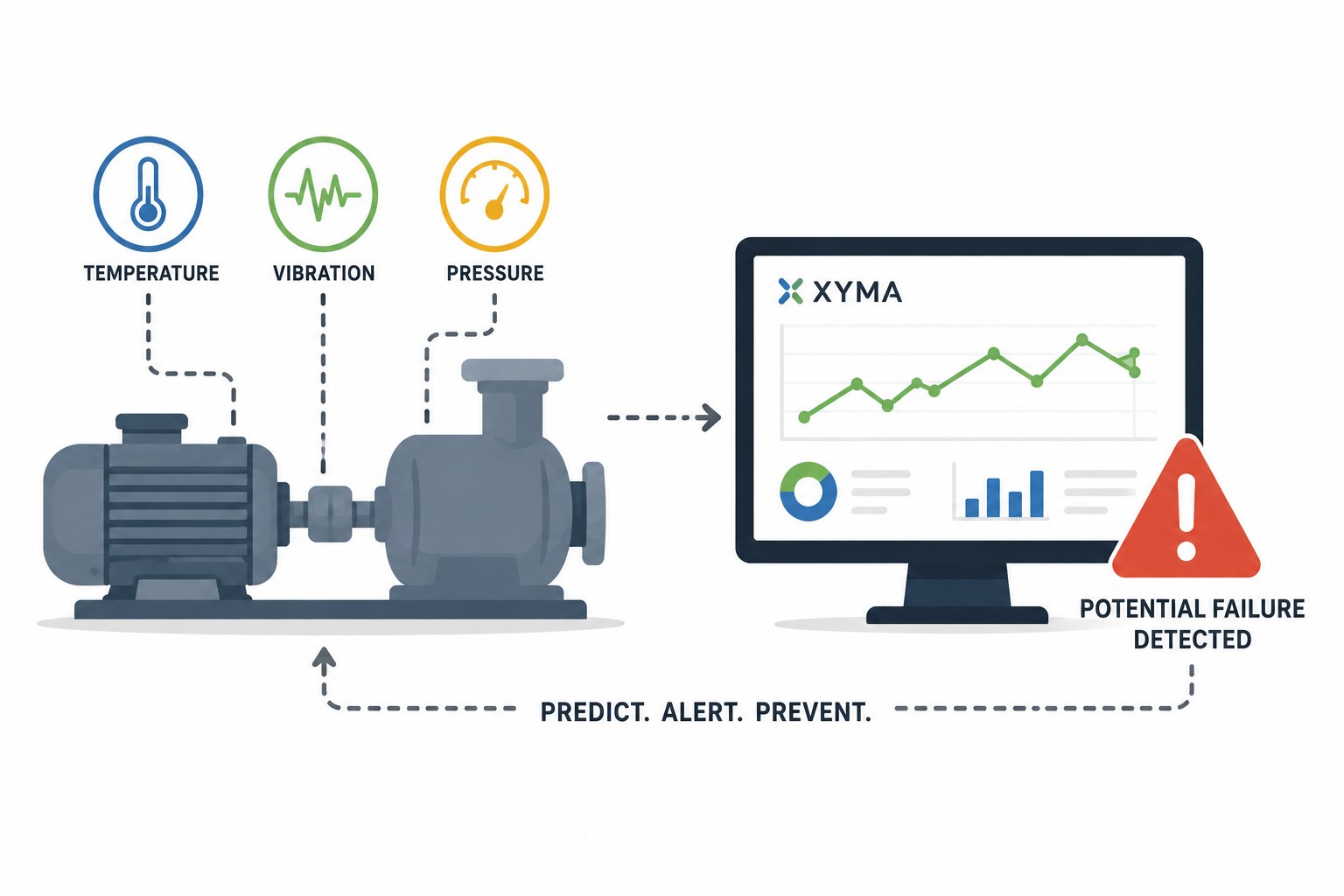
Another major area is industrial asset monitoring. Factories and refineries contain large equipment systems that are expensive to shut down unexpectedly. Detect Technologies uses machine learning and sensor data to identify patterns that may indicate equipment failure or operational problems before breakdowns occur.
The company’s software is intended to monitor equipment health, operational efficiency, and maintenance requirements across industrial facilities. Detect’s systems help automate industrial inspections and predict operational faults in real time.
The company also works on project execution and operations management systems. Its software includes AI-powered schedule tracking, occupancy management, inventory monitoring, and operational analytics.
One practical use case is construction or industrial project management. Large industrial construction projects often involve thousands of workers, contractors, machines, and supply-chain dependencies. Delays in one section can affect entire timelines. Detect’s platform attempts to provide live operational visibility using AI-driven analytics.
Unlike many enterprise AI startups focused mainly on software workflows, Detect operates heavily in industrial environments where systems must work continuously under difficult conditions. Refineries, mines, power plants, and petrochemical facilities generate dust, vibration, noise, weather exposure, and complex operating conditions that make automation more difficult than standard office software deployment.
The company says its customers include Shell, ExxonMobil, Reliance Industries, Vedanta, Indian Oil, GAIL, Adani Group, Hindustan Petroleum, Cipla, and Aditya Birla Group.
In June 2021, Detect Technologies raised $12 million in a funding round led by Accel with participation from Elevation Capital, Bharat Innovation Fund, BlueHill Capital, Axilor Ventures, and Stride Ventures.
The company later raised an additional $28 million in Series B funding in July 2022 led by Prosus Ventures. Existing investors Accel, Elevation Capital, Shell Ventures, Bharat Innovation Fund, and Bluehill Capital also participated.
Investor commentary around the company has focused on the size of the industrial automation market.
Large industrial companies increasingly want software systems that can reduce unplanned shutdowns, improve worker safety, and optimize maintenance cycles. Industrial downtime can cost millions of dollars per incident in sectors such as oil and gas, power generation, chemicals, and manufacturing.
Several international companies operate in related categories.
US-based Uptake builds industrial AI systems for predictive maintenance and asset-performance management. US company Verdigris Technologies focuses on AI-driven industrial energy monitoring and operational analytics.
Large industrial conglomerates such as Siemens, Honeywell, GE Digital, and Schneider Electric also offer industrial AI and digital-twin systems for factory operations and predictive monitoring.
Detect Technologies differs from many pure software firms because it combines AI systems with operational deployment in heavy industrial environments. The company’s positioning is closer to industrial intelligence infrastructure rather than general enterprise AI.
India itself has become an increasingly active market for industrial AI.
Many industrial operators across energy, manufacturing, mining, and infrastructure are now digitizing operations, partly due to rising safety requirements and pressure to improve operational efficiency. Industrial companies are also under pressure to reduce downtime and improve ESG reporting around worker safety and environmental compliance.
The growth of AI-powered camera systems has accelerated this trend because companies can retrofit existing industrial CCTV infrastructure instead of rebuilding entire monitoring systems from scratch.
Detect Technologies still operates in a technically difficult market. Industrial AI systems must work reliably across changing environments, poor visibility conditions, different factory layouts, and highly varied equipment configurations. A system that works well in one refinery or power plant may require major retraining or adaptation elsewhere.
What makes Detect Technologies notable within India’s deep-tech ecosystem is that it is building industrial infrastructure software rather than consumer applications. Its products are designed for environments where operational errors can shut down plants, damage equipment, or create worker safety risks. That creates a very different type of software business from traditional enterprise SaaS or consumer internet companies.
- Our correspondent