India has one of the world’s largest diabetic populations.
One of the most serious complications linked to diabetes is peripheral neuropathy, a condition in which nerve damage gradually reduces sensation in the feet. Patients may not notice cuts, pressure injuries, burns, or infections until the damage becomes severe. In many cases, untreated ulcers eventually lead to amputations.
Bengaluru-based medtech company Yostra Labs has spent the last decade building devices designed specifically for this problem.
The company develops portable diagnostic systems for diabetic neuropathy screening and wound-healing devices for chronic diabetic foot ulcers. Its products are already being used in hospitals, clinics, and diabetic care programs across India.
Yostra Labs was founded in 2014 by Vinayak Nandalike, Maruthy KN, Ram Mohan Rao, and Sanjay Sharma. The founders started the company after identifying the lack of affordable and portable diabetic-foot diagnostic systems in India’s healthcare network.
The founding team comes from engineering, product development, and healthcare technology backgrounds.
The company first gained attention through its work on diabetic peripheral neuropathy screening systems. Yostra participated in the CAMTech Diabetes Hackathon conducted in partnership with Marico Innovation Foundation in Hyderabad in 2015. The company conceptualized an early version of its neuropathy screening device during the program.
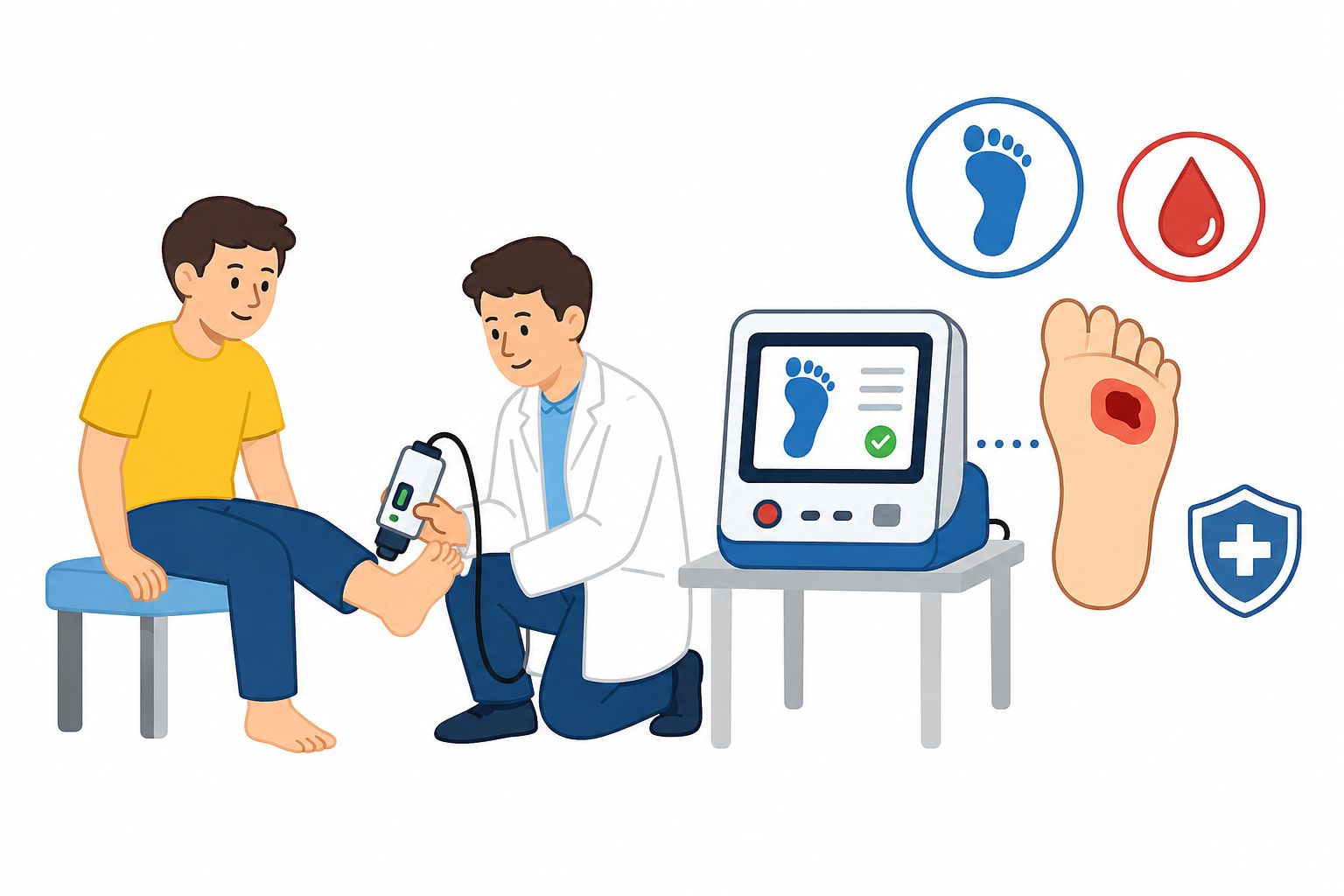
Over time, Yostra built two core product lines: NEURO TOUCH for diagnosis and VELOX Care for chronic wound treatment. Its flagship diagnostic system, NEURO TOUCH, is a portable device designed to help clinicians detect diabetic peripheral neuropathy earlier and more consistently.
Traditionally, diabetic neuropathy testing in smaller clinics often depends on separate handheld tools and manual interpretation. A doctor may use a monofilament to test touch sensation, another instrument to assess vibration, and separate methods for temperature perception or circulation assessment. These tests are sometimes performed inconsistently across facilities.
Yostra combines multiple assessments into one portable digital device.
According to the company, NEURO TOUCH integrates five tests into a single unit: vibration perception testing, digital monofilament testing, hot perception, cold perception, and skin temperature measurement.
The device is designed to assess both large-fiber and small-fiber neuropathy. In simple terms, this means it can help identify different types of nerve damage before ulcers appear.
The system also includes Bluetooth connectivity and digital record management. According to product documentation, clinicians can transfer results to an Android application for storage and analysis.
One practical advantage of the system is portability. The device weighs under 500 grams and can reportedly screen 30–50 patients on a single charge.
The company says its products are intended not only for specialist diabetic hospitals but also for district hospitals and secondary-care facilities.
Yostra’s second major product category focuses on chronic wound treatment. Its VELOX Care platform is a topical warm oxygen therapy system used for diabetic foot ulcers and other chronic wounds.
The treatment process works differently from traditional dressing-based wound management. The wound or affected limb is enclosed inside a therapy bag connected to the device. The system delivers controlled warm oxygen directly to the wound area at temperatures between 37–42°C.
The company positions VELOX Care as a less invasive alternative to more expensive wound-healing approaches such as hyperbaric oxygen therapy. Yostra cites findings from a randomized pilot trial involving its KADAM warm oxygen therapy system, which the company says demonstrated improved wound-healing rates in diabetic foot ulcers.
In August 2022, Yostra announced a seed round led by Indian Angel Network, with participation from Villgro and the Centre for Cellular and Molecular Platforms. Earlier, the company had also received support from Marico Innovation Foundation and Villgro.
Yostra operates in a growing global market focused on diabetic wound care and neuropathy diagnostics. Globally, companies working in related areas include: Podimetrics in the United States, which uses thermal monitoring mats for diabetic foot surveillance, AOTI in Ireland, which develops topical oxygen therapy systems and Neurometrix, known for nerve diagnostics and neurostimulation technologies.
Many of these systems, however, are designed primarily for advanced hospital settings in developed markets.
Yostra’s positioning is different. The company focuses heavily on portability, lower-cost deployment, and smaller clinical environments. Much of its product design appears optimized for high-volume diabetic screening programs and secondary-care hospitals rather than highly specialized wound centers.
The broader diabetic wound-care category is growing rapidly worldwide because diabetes itself is rising sharply. The International Diabetes Federation estimates that hundreds of millions of adults globally now live with diabetes, creating increasing demand for early neuropathy detection and chronic wound management systems.
But over the past decade, the company has managed to move from prototype-stage diabetic screening devices to deployed medical systems used across Indian healthcare settings. In a market where diabetic complications often go undetected until late stages, portable diagnostic and wound-care systems are becoming increasingly important tools for clinicians working outside large metropolitan hospitals.
- Our correspondent