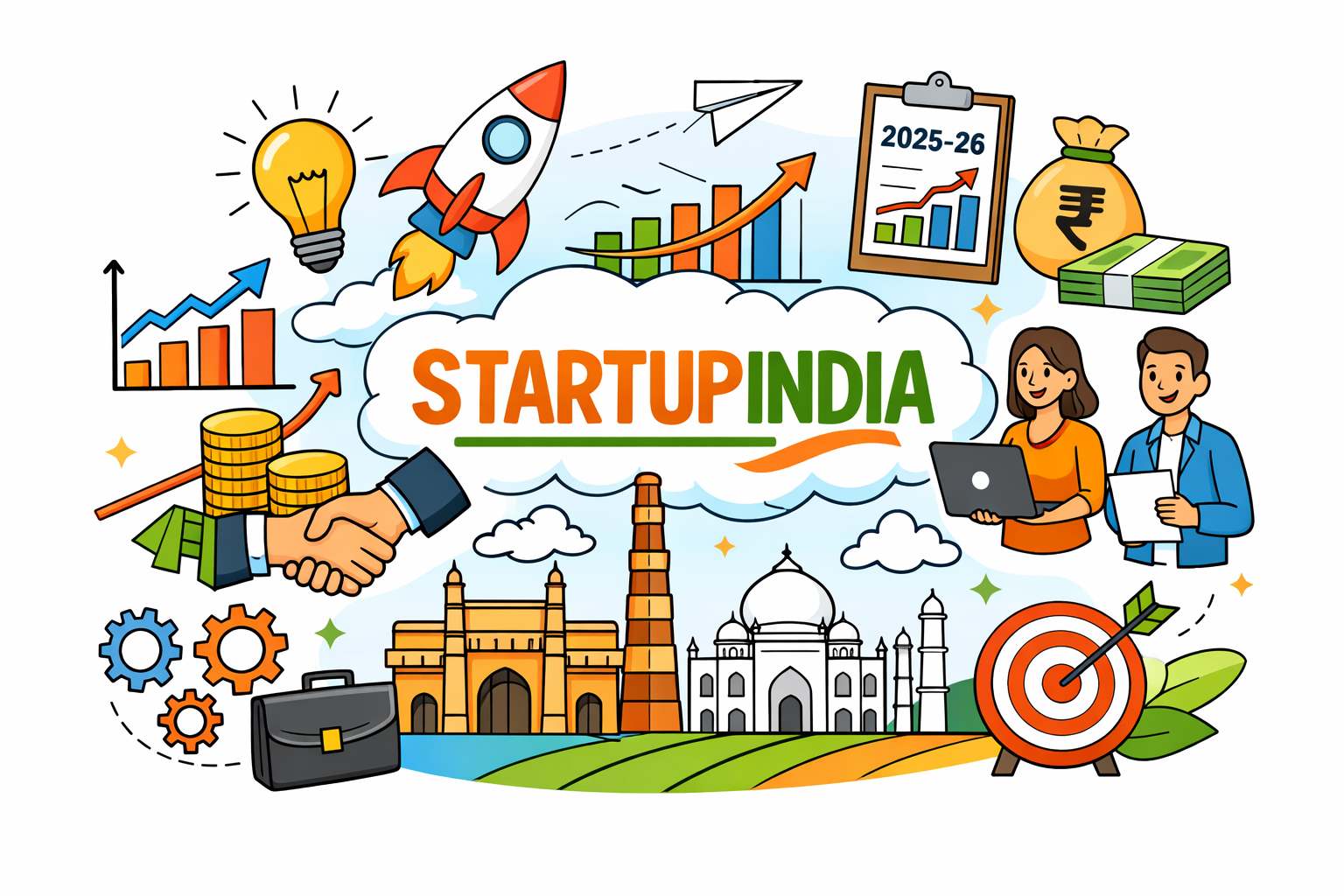
The Government of India’s sustained push to build a vibrant entrepreneurial ecosystem is reflected in the remarkable growth of startups across the country.
In Financial Year 2025–26, more than 55,200 startups were officially recognized—the highest number recorded in a single year since the launch of the Startup India initiative. This milestone underscores the expanding culture of innovation and enterprise that has taken root over the past decade.
Launched on 16 January 2016, the Startup India initiative was designed with a comprehensive action plan to nurture innovation, attract private investment, and provide institutional support to emerging businesses.
Over the years, the government has implemented a wide range of programmes aimed at recognizing, developing, and empowering startups across sectors and regions.
The cumulative impact of these efforts has been substantial. As of 31 March 2026, the total number of recognized startups has crossed 2.23 lakh, collectively generating more than 23.36 lakh direct jobs. Notably, inclusivity has also improved, with over 1.07 lakh startups—approximately 48%—having at least one woman director or partner. This reflects a significant shift toward gender diversity in entrepreneurship.
The growth momentum in FY 2025–26 has been particularly strong. The number of recognized startups increased by 51.6% compared to the previous financial year, while direct employment generated by these startups rose by 36.1%. In absolute terms, startups grew from over 36,400 in FY 2024–25 to more than 55,200 in FY 2025–26, while jobs created increased from approximately 3.66 lakh to nearly 5 lakh.
Geographically, the startup ecosystem has expanded across all States and Union Territories, although certain regions have emerged as clear leaders. States such as Maharashtra, Karnataka, Uttar Pradesh, Delhi, and Gujarat account for a significant share of recognized startups and employment generation. Maharashtra alone hosts over 38,660 startups generating more than 4.13 lakh jobs, followed by Karnataka with over 22,600 startups and 2.46 lakh jobs. Other major contributors include Uttar Pradesh, Delhi, Gujarat, Tamil Nadu, and Telangana, indicating a broad-based but regionally concentrated growth pattern.
To sustain and accelerate this momentum, the government has strengthened financial support mechanisms through flagship schemes. The Fund of Funds for Startups (FFS) continues to play a pivotal role by channeling capital into venture funds. By the end of FY 2025–26, over ₹7,000 crore had been disbursed to more than 135 Alternative Investment Funds, which in turn invested over ₹26,900 crore in more than 1,420 startups. Building on this success, a new Fund of Funds 2.0 with a corpus of ₹10,000 crore has been introduced.
Similarly, the Credit Guarantee Scheme for Startups (CGSS) has been expanded to improve access to debt financing. The guarantee cover per borrower has been increased from ₹10 crore to ₹20 crore, along with enhanced coverage and reduced fees in select sectors. By March 2026, more than 410 loans worth over ₹1,250 crore had been guaranteed under the scheme.
Early-stage startups have also benefited from the Startup India Seed Fund Scheme (SISFS). With 219 incubators selected and a committed corpus of ₹945 crore, the scheme has facilitated funding approvals exceeding ₹605 crore for more than 3,400 startups. Its extension ensures continued support for early-stage innovation.
Beyond funding, startups are increasingly contributing to intellectual property creation. Patent filings by startups rose significantly from over 2,850 in FY 2024–25 to more than 4,480 in FY 2025–26, taking the total number of applications to over 19,400. This surge highlights a growing emphasis on deep innovation and technology development.
Public procurement has also emerged as a key enabler through the Government e-Marketplace (GeM). Over 38,600 startups have been onboarded on the platform, with a steady rise in orders and transaction value. In FY 2025–26 alone, more than 1.4 lakh orders worth over ₹19,000 crore were placed with startups, reflecting increasing trust in their capabilities.
- source – PIB