In India, access to gynaecological care is shaped as much by social barriers as by infrastructure.
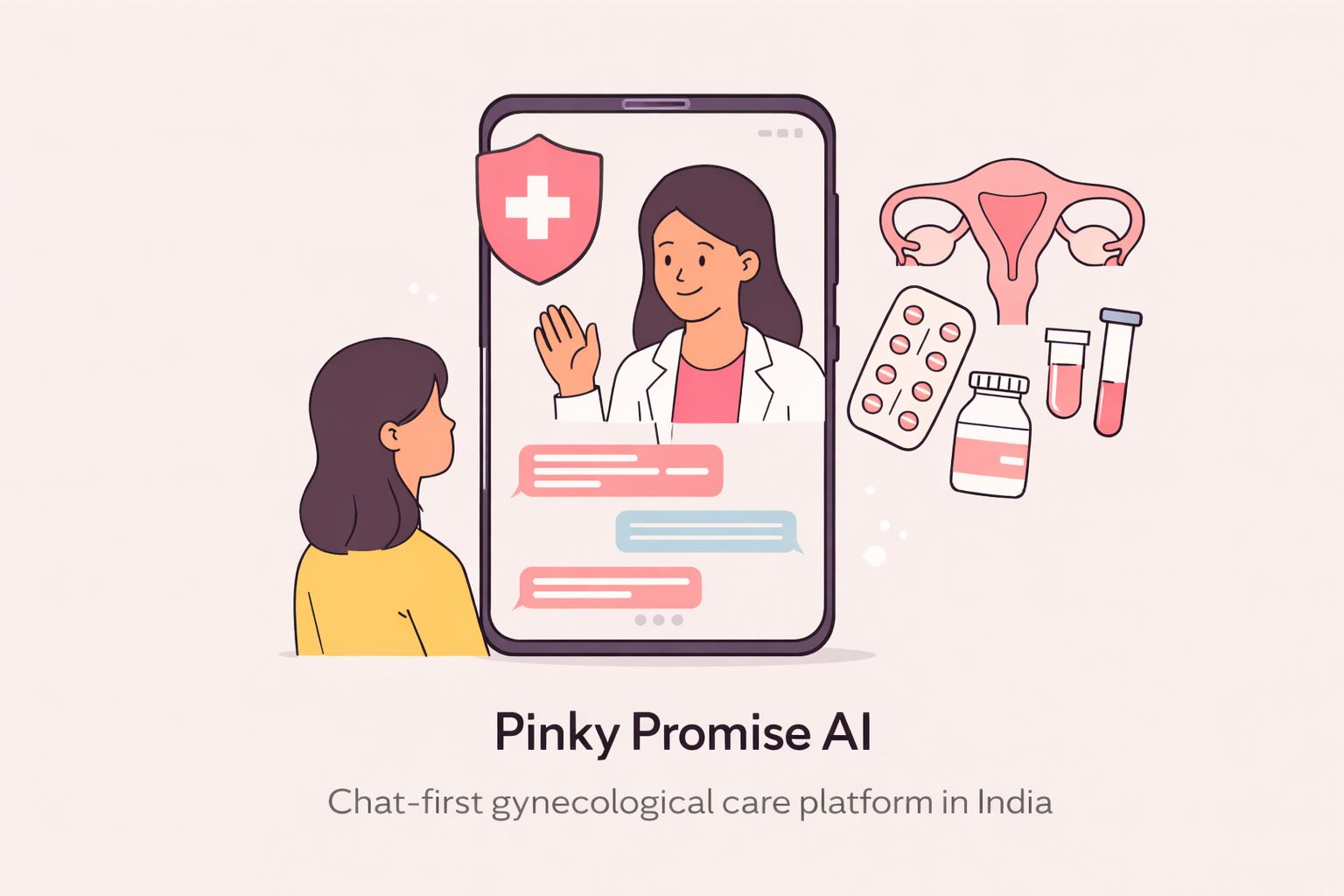
For many women, especially younger and first-time patients, the challenge is not just finding a doctor but feeling comfortable enough to ask questions. Pinky Promise AI is built around a simple shift. Instead of starting with a clinic visit, care begins with a conversation over chat.
Founded in 2022, Pinky Promise is a chat-first, AI-assisted women’s healthcare platform that enables affordable and confidential consultations with licensed gynaecologists.
The model has already reached more than 400,000 women across India, including users in smaller towns and those consulting a gynaecologist for the first time.
Origin
The company was founded by Divya Kamerkar and Akanksha Vyas. Divya Kamerkar, the CEO, is a Yale-trained biologist who has worked on public health systems in India and Sub-Saharan Africa.
Her work has focused on gender-linked health challenges, and her own experience navigating conditions like PCOS shaped her understanding of how women interact with healthcare systems.
Akanksha Vyas, co-founder and CTO, comes from a computer science background and has previously built AI-enabled health products, including systems for customized medical wearables used in international settings.
The founding idea emerged from observing that women tend to share more openly over text than in face-to-face consultations, especially when discussing sensitive symptoms.
Product
The product is designed as a digital clinic where chat is the primary interface. A user starts by messaging the platform through a mobile or web interface. Instead of filling out long forms or booking a slot, the system asks structured questions about symptoms, medical history, and context. This interaction is supported by AI, which helps organize the information before it reaches a doctor.
The system does not replace doctors. Every diagnosis and treatment plan is reviewed and approved by a licensed gynaecologist. The AI handles intake, structuring, and documentation, allowing doctors to focus on clinical decisions. Once the doctor reviews the case, the user receives a diagnosis, prescription, and follow-up plan directly within the chat interface. If needed, the system can escalate to a video consultation or recommend an in-person visit.
In practice, the technology functions as a workflow layer rather than a standalone diagnostic engine. The platform uses structured chat flows combined with AI models to collect consistent medical information, assist in generating clinical notes, and support doctors in forming treatment plans. A retrieval-based system helps bring relevant medical knowledge into the process, but the final decision always rests with the doctor. This setup allows a single doctor to manage a much higher number of consultations compared to traditional formats, as repetitive tasks are handled by the system.
Pricing
Pricing is designed to remove cost barriers. Consultations are priced at around ₹99, significantly lower than typical clinic visits, which can range from ₹800 to ₹2,500. The platform also allows users to ask initial questions for free and continue follow-ups within the same chat thread.
Language support includes English and Hinglish, with efforts underway to expand into additional regional languages. This makes the service accessible to a wider segment of users, including those who are not comfortable with formal medical environments.
The platform has scaled quickly since launch. More than 400,000 women across India have used the service, with coverage extending across urban and rural districts. A significant portion of users are first-time patients seeking gynaecological care. This indicates that the platform is not just shifting existing demand but unlocking new demand that was previously suppressed. The system handles a wide range of conditions, including menstrual health issues, PCOS, infections, fertility concerns, and pregnancy-related queries.
Feedback
Market feedback so far points to a strong fit between product design and user behavior. Women report feeling more comfortable sharing sensitive details over chat, which leads to earlier intervention and more accurate diagnosis.
The combination of affordability, privacy, and continuous access has made the platform particularly useful for users who would otherwise delay care. At the same time, the company is working with academic institutions such as Emory University to evaluate clinical outcomes and ensure that the quality of care remains consistent as the platform scales.
What is new
What sets Pinky Promise apart is not a new medical breakthrough but a different way of structuring care delivery. Most telemedicine platforms replicate the traditional clinic model through video calls. Pinky Promise changes the entry point entirely by starting with chat, which aligns more closely with how users already seek information. The addition of AI makes this approach scalable without removing clinical oversight.
In the broader market, digital health platforms have taken multiple approaches, including video consultations, symptom-checking apps, and remote monitoring tools. Few have built a system where chat is the central layer and is tightly integrated with clinical workflows. Pinky Promise sits between these categories, combining elements of telemedicine, AI assistance, and continuous care into a single system.
Global context
Globally, this category can be understood as AI-assisted primary care. The focus is on using AI to handle intake, documentation, and routine tasks, allowing doctors to operate more efficiently. In many markets, this is being applied to general healthcare. In India, the combination of social stigma, cost constraints, and high mobile usage makes a chat-first model particularly effective for women’s health.
- Our correspondent