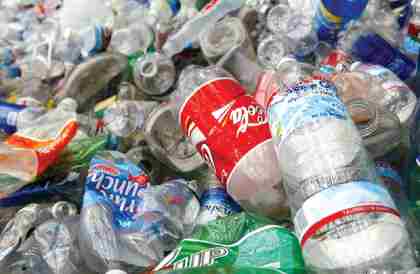
In a country where waste is everywhere but systems are invisible, Recykal began with a simple but powerful insight: India does not lack people working on waste—it lacks coordination. Or more accurately, it lacks a way for all these efforts to connect.
Recykal was founded in 2016 by Abhay Deshpande along with co-founders including Abhishek Deshpande and Anirudha Jalan. The founding team did not begin with a polished business plan. Instead, they spent nearly two years studying India’s waste ecosystem on the ground—landfills, scrap yards, and informal networks of waste pickers. They often refer to this period as their “MBA in waste management.” And it shows in how the company thinks about the problem.
What they discovered was not just inefficiency but fragmentation. Waste in India moves through a complex chain: households, kabadiwalas, aggregators, recyclers, and finally manufacturers. Each operates in isolation. There is little data. Almost no traceability. And very limited accountability. Valuable recyclable material often ends up in landfills—not because it cannot be processed, but because the system does not “talk” to itself.
Recykal’s founding idea emerged from this gap: if you cannot fix every physical part of the system, connect them digitally. It sounds obvious in hindsight. It wasn’t at the time.
What Recykal actually built
At its core, Recykal is a digital marketplace for waste. But that description is a bit too neat to capture what is really going on.
The platform connects waste generators (brands, businesses), collectors (aggregators, informal workers), and recyclers into a single network. It enables transactions, tracks movement of waste, and creates a digital record of what happens to it. In a system where records barely existed, this alone is a shift.
Over time, this evolved into three major layers. First is the marketplace, where waste is bought and sold with better price discovery and transparency. Second is compliance infrastructure—particularly around Extended Producer Responsibility (EPR), where brands are legally required to ensure their waste is recycled. Third is behavioral systems like deposit-refund models that incentivize consumers to return packaging.
This is the part that’s easy to miss. Recykal does not move waste physically. It moves information. And in a system where information is missing, that may actually be the more valuable layer.
Growth, scale, and funding
Recykal’s journey from a small startup to a significant climate-tech player has been steady, though not necessarily linear. It has raised roughly $37–45 million over multiple funding rounds, with investors including Circulate Capital and Morgan Stanley-backed funds.
But funding only tells part of the story. Operational scale is where things get more interesting. The company has built a network of hundreds of brands, recyclers, and thousands of businesses across India. By 2023–24, it had channelled close to or over a million metric tonnes of waste back into the recycling ecosystem.
To put that more simply: a meaningful amount of waste that might have ended up in landfills was redirected into reuse. Not all of it, of course—but enough to show the model works.
What makes the solution unique
Many companies in waste management focus on collection, processing, or recycling technologies. Recykal’s uniqueness lies in treating waste as a data problem rather than just a logistics problem. That shift, while subtle, changes how the entire system behaves.
First, it creates traceability. A brand can track whether its plastic packaging was actually recycled—or just claimed to be recycled. This matters more than it sounds, because compliance in India has often been paperwork-heavy and trust-light.
Second, it begins to formalise an informal sector. India’s waste system relies heavily on informal workers—rag pickers and small aggregators. By bringing them onto a digital platform, Recykal gives them visibility, better pricing, and access to larger markets. Though, to be fair, adoption here is still uneven and depends heavily on local dynamics.
Third, it enables policy to work in practice. Regulations like EPR exist on paper, but enforcement is difficult without data. Recykal, in many cases, becomes the infrastructure that allows these rules to actually function.
Finally, it nudges behaviour. Through deposit-refund systems—where consumers get money back for returning bottles or packaging—it turns recycling from a moral act into an economic one. And that shift in incentives is probably doing more work than awareness campaigns ever did.
Pilots, performance, and real-world impact
One of Recykal’s more visible implementations has been India’s first digital deposit refund system in Uttarakhand, particularly around pilgrimage routes like Kedarnath. This system rewarded people for returning plastic waste and helped reduce litter in ecologically sensitive areas. Not perfectly, but noticeably.
The company has also worked with hundreds of brands to manage their EPR obligations and has partnered with urban local bodies to improve municipal waste tracking.
Market feedback has generally highlighted two things. Large enterprises value the compliance and traceability layer, especially as environmental regulations tighten. Meanwhile, recyclers and aggregators benefit from better price discovery and more consistent supply—though margins and trust still remain ongoing concerns.
There has also been skepticism, especially early on. Traditional players often saw waste as a purely physical business. As one anecdote captures, recyclers initially questioned why anyone would “bring the internet into garbage.” It’s a fair question. Over time, though, that skepticism seems to have softened into adoption.
Recykal in the “tech for good” landscape
Recykal sits at the intersection of climate tech, civic tech, and marketplace platforms. Its impact is not just environmental but systemic—though that word can sometimes feel overused.
From a “tech for good” perspective, it addresses three core problems. It reduces environmental harm by diverting waste from landfills. It improves livelihoods by integrating informal workers into formal value chains. And it strengthens governance by making compliance measurable and, at least to some extent, transparent.
Unlike many sustainability solutions that rely on consumer goodwill, Recykal aligns incentives. Brands comply because they must. Recyclers participate because it improves business. Consumers engage because there is a financial return. That alignment is probably the only reason this model holds together.
In India, the broader space includes companies like Banyan Nation, Nepra, and Gravita, which focus more on recycling processes and material recovery. Recykal complements rather than directly competes with many of them by acting as a digital layer above these operations.
Globally, the closest parallels are platforms that enable circular economy tracking and compliance. Companies in Europe and the US are building digital waste tracking systems, carbon accounting tools, and reverse logistics platforms. Most of them, however, operate in more formalised ecosystems.
What makes Recykal distinctive is that it operates in one of the most complex and informal waste systems in the world—and still attempts to digitise it. That’s not a trivial challenge.
The global context: why this model matters
The world is moving toward a circular economy, where materials are reused rather than discarded. But this transition requires visibility. You cannot recycle efficiently if you do not know where materials are, who has them, and where they should go.
In developed markets, some of this visibility is already embedded into supply chains. In emerging markets, it largely isn’t. That is the gap Recykal is trying to fill.
Globally, there is increasing regulatory pressure on companies to account for their environmental impact. This creates demand for platforms that can track waste, prove recycling, and enable compliance. Whether all of this translates cleanly across markets is still an open question.
In that sense, Recykal is not just solving an Indian problem. It is building a model that could be relevant across emerging economies—especially where waste systems are fragmented and largely informal. How far that model travels, though, is something we’ll only see over time.
- Our correspondent