Blindness caused by retinal degeneration remains one of the most difficult problems in ophthalmology. In many retinal disorders, the cells responsible for processing light gradually die, and once those cells are lost, the human body cannot naturally regenerate them.
Existing treatments can slow progression in some cases, but for several advanced retinal diseases there are limited options to restore lost vision.
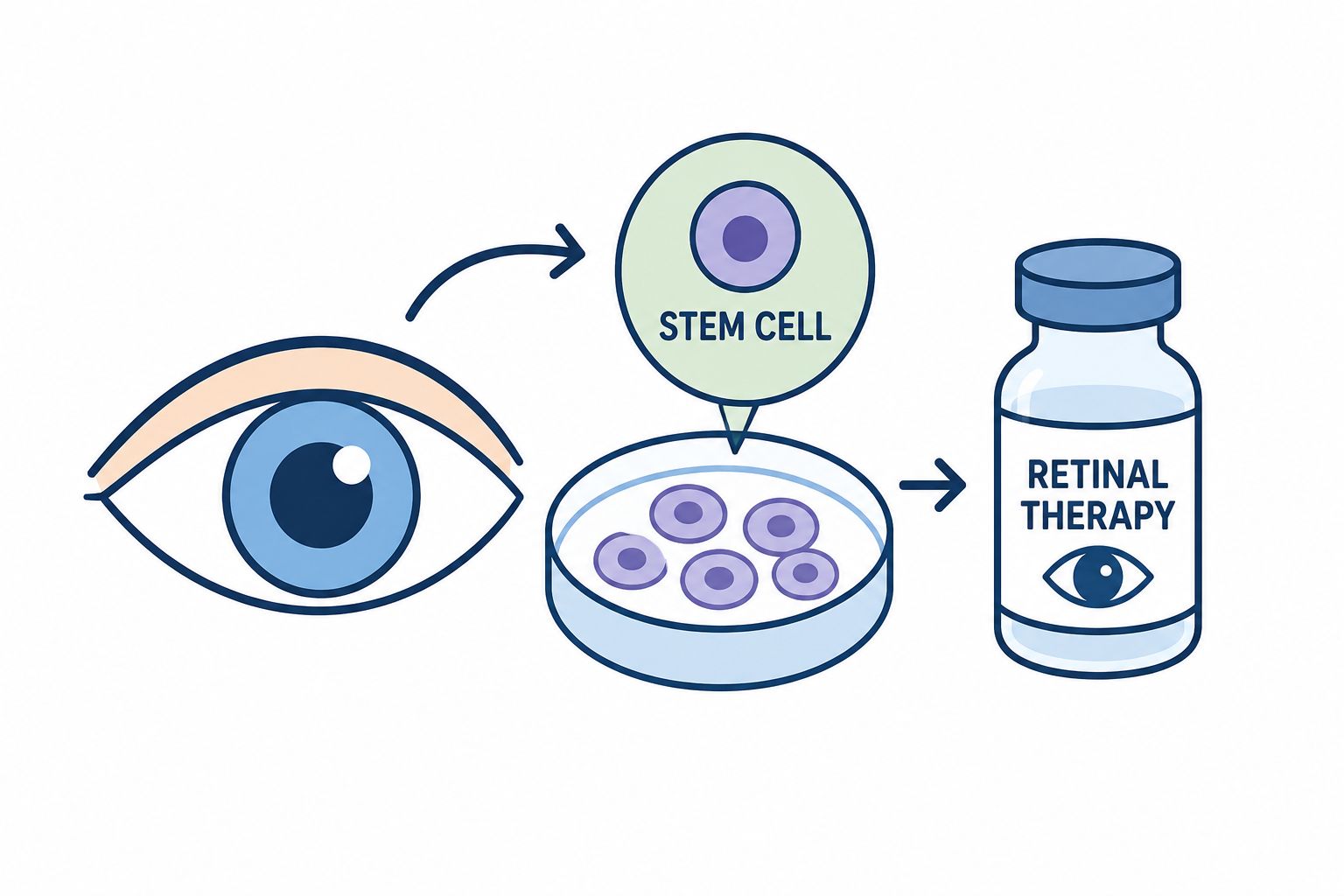
Bengaluru-based Eyestem Research is working on a different approach. Instead of managing symptoms or slowing degeneration, the company is developing stem cell-based therapies designed to replace damaged retinal cells. Founded in 2020, Eyestem focuses on regenerative treatments for retinal diseases including geographic atrophy and retinal pigment epithelium (RPE) degeneration.
The company was founded by Dr. Jogin Desai and Dr. Rajani Battu. Both founders bring experience from different parts of the healthcare ecosystem. Desai previously founded Pandorum Technologies, a tissue engineering and regenerative medicine company known for its work in bioengineered tissues. Before becoming an entrepreneur, he worked in pharmaceutical research and drug development. Battu is an ophthalmologist and vitreoretinal surgeon with extensive clinical experience in retinal diseases.
Eyestem emerged from India’s growing regenerative medicine ecosystem, where advances in stem cell science have begun moving from laboratory research into clinical development. The company focuses specifically on retinal diseases because retinal cell loss is often irreversible, making the field a strong candidate for cell replacement therapies.
In 2021, Eyestem raised approximately $6.4 million in seed funding. The round was led by Endiya Partners and included participation from Kotak Alternate Asset Managers, Anicut Capital, and several angel investors. According to investor disclosures, the funding was intended to support preclinical development and manufacturing infrastructure.
In 2023, the company raised an additional $6.5 million in a Series A funding round led by the Biotechnology Industry Research Assistance Council (BIRAC)-supported Biotechnology Development Fund through Kotak Alternate Asset Managers. Existing investors including Endiya Partners and Anicut Capital also participated.
The company’s lead product is called Eyecyte-RPE. To understand what it does, it is important to understand the disease it targets. Behind the retina lies a layer of cells known as the retinal pigment epithelium. These cells support the retina by supplying nutrients, clearing waste, and maintaining photoreceptor function. When RPE cells die, photoreceptors begin deteriorating, eventually leading to vision loss.
Geographic atrophy, an advanced form of dry age-related macular degeneration (AMD), is one of the conditions associated with RPE degeneration. According to global ophthalmology research, geographic atrophy affects millions of patients worldwide and has historically lacked effective restorative treatments.
The company has developed a manufacturing platform called EyeCyte Plus. According to Eyestem, the platform is designed to generate large quantities of retinal cells while maintaining quality and consistency across batches. Manufacturing consistency is particularly important in cell therapy because variations in cell quality can affect both safety and treatment outcomes.
One of the technical challenges in regenerative medicine is scalability. Many cell therapies are expensive because they require customized production for individual patients. The company’s progress has moved beyond laboratory research. In 2024, Eyestem received approval from India’s Central Drugs Standard Control Organisation (CDSCO) to begin a first-in-human clinical trial of Eyecyte-RPE for geographic atrophy secondary to dry age-related macular degeneration. According to company announcements, the study marked one of India’s early clinical evaluations of an induced pluripotent stem cell-derived retinal therapy.
Eyestem’s work has attracted attention because retinal regenerative medicine remains a relatively small but globally important field. Internationally, companies such as Lineage Cell Therapeutics, BlueRock Therapeutics, Opsis Therapeutics, and jCyte are developing stem cell-based approaches for retinal diseases. Several groups are working on retinal pigment epithelium replacement, while others focus on photoreceptor replacement or retinal progenitor cells.
Japan has become one of the most active countries in retinal stem cell research due to its early investment in induced pluripotent stem cell technologies. The United States and Europe have also seen multiple clinical-stage programs targeting retinal degeneration. Despite significant scientific progress, the sector still faces major challenges involving manufacturing, long-term safety, immune response management, and durable clinical outcomes.
Within India, Eyestem is among the few biotechnology companies pursuing advanced retinal regenerative therapies at clinical stage. Most Indian ophthalmology companies focus on diagnostics, surgical devices, pharmaceuticals, or hospital services rather than cell replacement technologies.
What distinguishes Eyestem today is its focus on converting stem cell research into retinal disease treatments that can move through regulated clinical pathways. Eyestem has already become one of the more visible examples of India’s growing participation in regenerative medicine and cell therapy development.
- Our correspondent