For most urban Indians, rooftop solar remains difficult to access.
Apartment residents often do not control their rooftops. Renters cannot justify long-term installations. Commercial tenants may occupy buildings where solar deployment decisions are made by landlords. Even where rooftop solar is technically possible, installation costs, approvals, maintenance, and space constraints can become barriers.
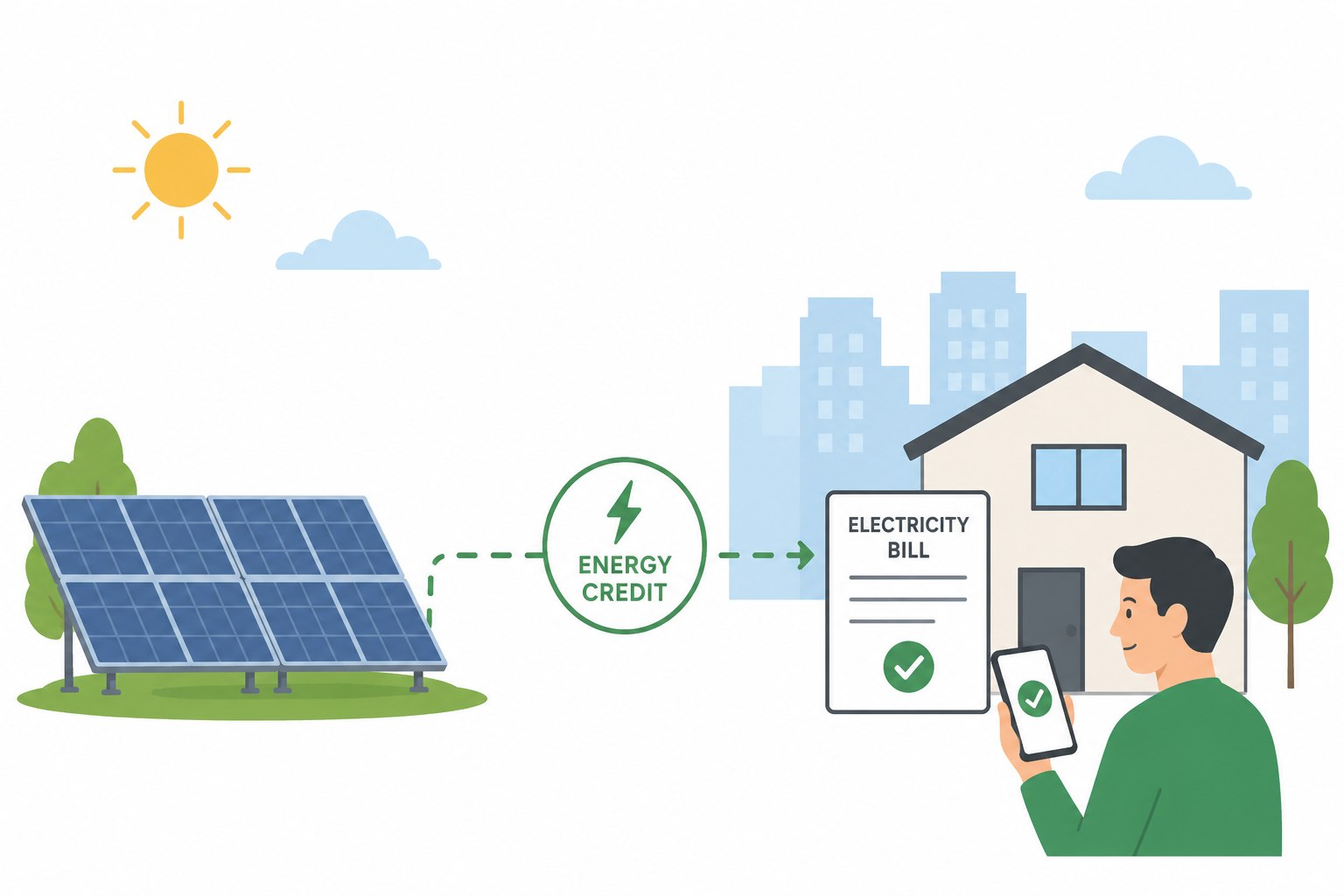
Bengaluru-based SundayGrids is building a different model. Instead of asking users to install solar panels on their own buildings, the company allows them to reserve capacity from solar plants located elsewhere and use the resulting energy credits to reduce their electricity bills.
The company calls this model “Digital Solar.” Users can reserve portions of community solar projects through its platform and receive bill credits linked to the electricity generated by those installations.
SundayGrids was founded by Mathew Samuel, Naseer Sathyala, and Tarun Joseph. The founders began with a simple observation: millions of urban consumers wanted access to solar energy but could not practically install rooftop systems. The problem was especially visible in apartments, rental housing, and dense urban neighbourhoods where roof ownership and access are fragmented.
The company’s solution works more like reserving a share of a larger solar asset than installing a personal rooftop system.
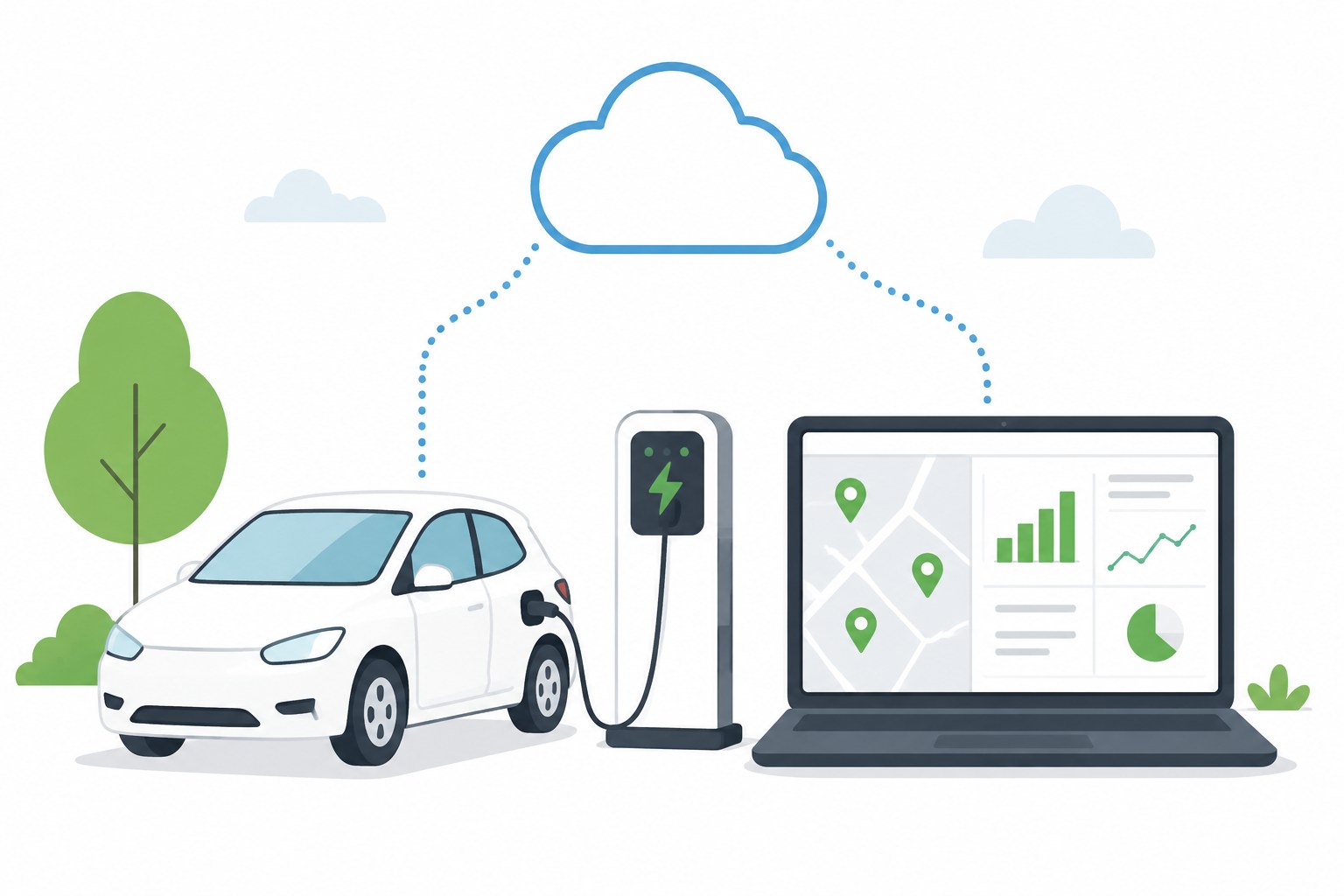
Users select and reserve solar capacity from a community solar project listed on the SundayGrids platform. The company tracks the electricity generated from that reserved capacity and converts it into bill credits. Those credits can then be used to offset electricity bills through supported utility providers. According to the company, the platform currently supports more than 70 electricity providers across India.
In practical terms, customers are not physically receiving electricity from a remote solar plant through a dedicated wire connection. Instead, the energy generated by their reserved solar capacity is translated into credits that reduce their electricity expenses.
The company describes the process in three stages. First, users reserve solar capacity from an active project. Second, they link their electricity bill accounts through the platform. Third, they use accumulated credits to offset monthly electricity bills. According to SundayGrids, credits do not expire and can be applied across multiple bills.
One feature the company highlights repeatedly is portability. Unlike rooftop solar systems, which are tied to a specific building, users can continue using their solar reservations even if they move homes, provided the new utility provider is supported on the platform.
SundayGrids argues that this model is particularly useful for renters and apartment residents. The company also states that users do not need installation approvals, net-metering paperwork, or additional hardware because the solar infrastructure exists elsewhere.
SundayGrids announced a seed investment of ₹2.7 crore from Rainmatter Climate, the climate-focused investment initiative backed by Zerodha founders.
Rainmatter’s involvement also brought visibility to the company. Zerodha co-founder Nithin Kamath publicly described the platform as a way for people without rooftop access to participate in solar energy adoption. He noted that the company allows customers to reserve capacity in remote solar plants and receive credits against electricity bills.
More recent figures published by NITI Aayog’s Frontier Tech Hub in 2026 indicate that the platform had scaled to roughly 3.5 MW of managed solar capacity. The report also states that SundayGrids had helped offset more than 18,000 electricity bills and facilitated nearly two crore units of power credits across India.
The company’s solar projects are typically hosted by external developers rather than owned directly by customers. For example, one project listed on the platform, called Wenger 156, is operated by renewable-energy developer PeriUrja. SundayGrids functions as the platform and service layer connecting consumers to these solar assets.
The company has also introduced mechanisms intended to reduce performance concerns. According to its project disclosures, systems are covered through warranties and insurance. SundayGrids additionally describes a “secured generation” framework where users receive compensation credits if generation drops below specified thresholds.
The broader category in which SundayGrids operates is often described globally as community solar, shared solar, virtual net metering, or distributed energy participation.
In the United States, community solar programs allow consumers to subscribe to portions of solar farms and receive utility bill credits without installing rooftop panels. Similar models have emerged in parts of Europe and Australia, particularly in dense urban regions where individual rooftop ownership is limited.
What makes the Indian context different is the combination of apartment-heavy cities, fragmented property ownership, uneven rooftop access, and rapidly growing electricity demand. These factors create conditions where remote participation models may become attractive if supported by regulators and utilities.
SundayGrids is now expanding beyond simple bill-offset programs. According to NITI Aayog’s Frontier Tech Hub, the company is exploring peer-to-peer energy trading, digital batteries, distributed energy infrastructure, and integration with future energy-stack frameworks being developed around India’s evolving electricity ecosystem.
The company has also worked with organizations including BESCOM and state-level energy stakeholders on distributed-energy discussions and pilots.
SundayGrids is betting that solar energy can become something people subscribe to, reserve, and manage digitally rather than something they physically mount on their roofs. If that model continues scaling, the company could represent a broader shift in how distributed renewable energy is consumed in Indian cities.
- Our correspondent