Hyderabad-based Planys Technologies began as an underwater robotics company.
For years, the startup was known for building remotely operated vehicles (ROVs) used for underwater inspection of ports, dams, bridges, offshore structures and industrial assets. But in recent years, the company expanded into a different sector: agricultural drones.
The shift reflects a broader trend in Indian deep-tech startups. Engineering teams that originally developed robotics, navigation systems and autonomous vehicles for industrial use are increasingly applying those capabilities to agriculture, where demand for automation is growing rapidly.
Planys is one of the companies attempting to build an indigenous drone platform for Indian farming conditions rather than adapting imported systems.
The company was founded in 2015 by a team from the Indian Institute of Technology Madras. The founding team included Dr. Deepak Murthy, Vikneshwaran Muthusamy and Karthik Atmakuri.
Dr. Deepak Murthy serves as CEO and has a background in mechanical engineering, robotics and underwater systems. Before starting Planys, he was associated with research and development work involving autonomous systems and marine inspection technologies.
The founding team’s original focus was infrastructure inspection using underwater robots capable of operating in environments that are difficult or dangerous for human divers.
For much of its early life, Planys built inspection systems for maritime and industrial sectors. Its underwater robots were deployed for inspection of ship hulls, ports, dams, bridges and offshore assets. These systems reduced the need for manual underwater inspection while generating digital inspection data.
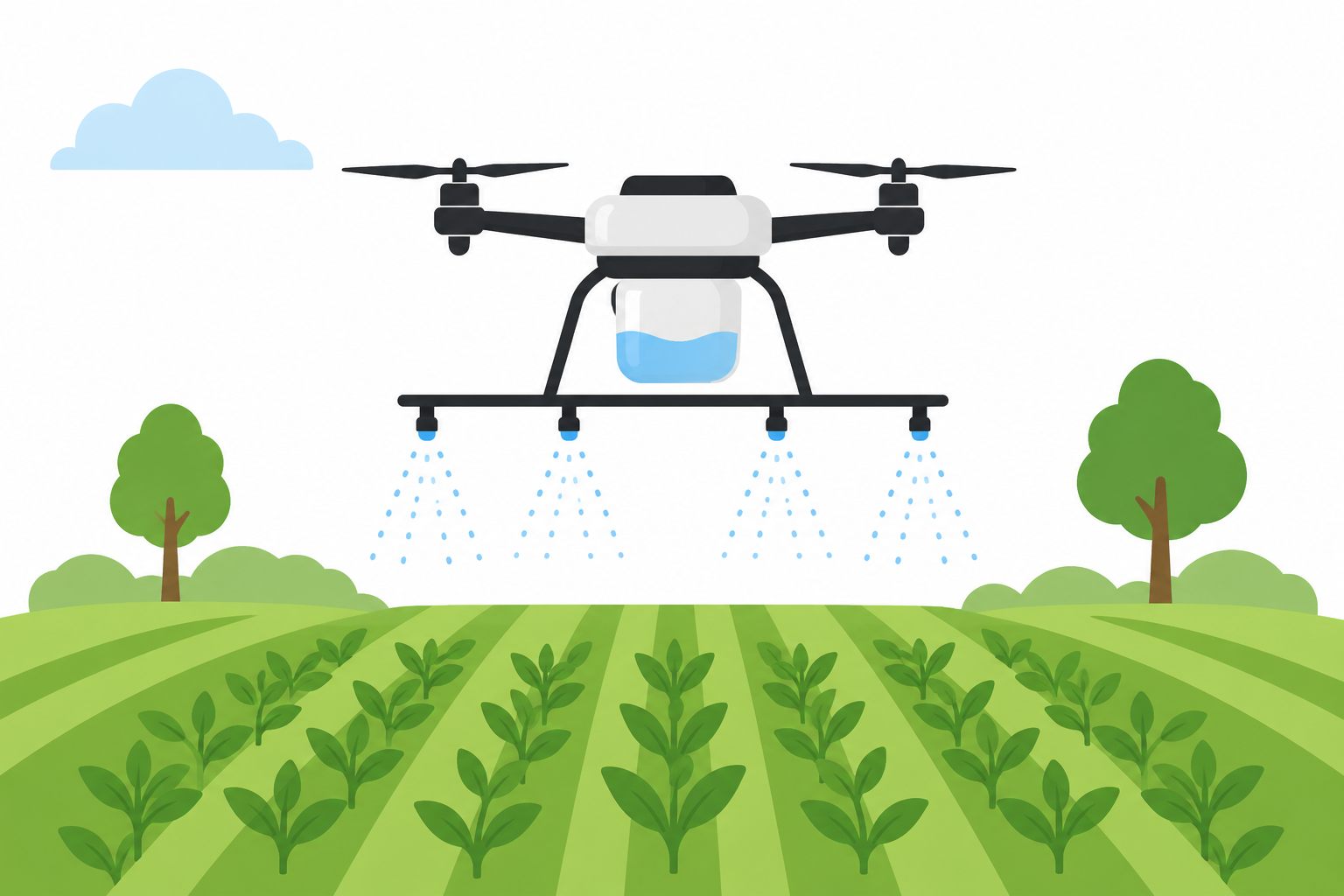
The company’s move into agriculture came through its drone division. Planys developed a platform called the Unmanned Aerial Spraying System (UASS), designed specifically for agricultural spraying operations. Unlike consumer drones used for photography, agricultural spraying drones are built to carry liquid payloads and distribute fertilizers, pesticides or crop-protection chemicals over fields.
The basic problem these drones address is operational efficiency. In many parts of India, pesticide and fertilizer spraying is still done manually. Workers walk through fields carrying backpack sprayers or use tractor-mounted systems where terrain allows. This can be time-consuming, labour-intensive and potentially hazardous because workers are directly exposed to agricultural chemicals.
Planys’ agricultural drone is intended to automate that process. According to the company, the drone carries a liquid tank, flies autonomously over a predefined route and sprays crops using controlled nozzles. The operator first maps the field and defines flight parameters. The drone then follows a programmed path while maintaining altitude and spray coverage.
The company states that its system is capable of spraying approximately one acre in seven to ten minutes under suitable operating conditions. Planys says the drone is designed to reduce water usage compared with conventional spraying methods because the chemical mixture is applied in a more targeted way. The company also states that drone spraying can reduce direct human exposure to pesticides by removing the need for workers to physically enter treated fields during application.
The agricultural platform incorporates several technologies that originated from the company’s robotics work. These include autonomous navigation, route planning, sensor integration and remote operations. Rather than building a simple remote-controlled aircraft, Planys positions the system as a robotics platform capable of automated field operations.
Planys received backing from investors including the Indian Angel Network and Bharat Innovation Fund. The company has also secured support through government innovation programs and deep-tech initiatives.
The agricultural drone market itself has grown rapidly in India since regulatory changes simplified drone operations. Government initiatives such as the Drone Rules 2021 and subsidy programs for agricultural drone adoption have encouraged domestic manufacturing. Several Indian startups now compete in this segment.
Companies such as Garuda Aerospace, IoTechWorld Avigation, General Aeronautics and Marut Drones have all developed agricultural spraying platforms. These firms differ in payload capacity, software systems, service models and target customers. Some focus on selling drones directly to farmers and service providers, while others operate drone-as-a-service networks. Planys enters this market from a robotics background rather than from agricultural equipment manufacturing.
Globally, agricultural drones have become an important segment within precision agriculture. Countries such as China, Japan and the United States have seen increasing use of drones for spraying, crop monitoring and field mapping. Chinese manufacturer DJI dominates much of the global agricultural drone market through its Agras series. Japanese companies have long used unmanned systems for crop spraying, particularly in rice cultivation. Large agricultural equipment manufacturers such as John Deere are also investing in autonomous aerial systems and precision agriculture platforms.
The broader industry is moving beyond simple aerial spraying. Modern agricultural drones increasingly combine imaging systems, multispectral sensors, crop-health analytics and farm-management software. The goal is not only to apply chemicals but also to generate data about crop conditions and optimize agricultural inputs.
Planys’ public materials currently emphasize spraying operations rather than advanced farm analytics. The company’s differentiation comes more from robotics engineering and autonomous systems expertise than from agricultural software. Its experience building underwater robots gave it capabilities in navigation, automation and industrial-grade hardware, which it is now applying to aerial agricultural platforms.
One notable aspect of the company is that it spans two very different sectors: underwater robotics and agricultural automation. Most startups specialize in one domain. Planys has attempted to build a broader robotics company where core engineering capabilities can be reused across industries.
- Our correspondent