As electric vehicles, energy storage systems, and consumer electronics spread across India, another problem is growing quietly in the background: what happens to used lithium-ion batteries after they stop working?
Most lithium-ion batteries contain materials such as lithium, cobalt, nickel, manganese, copper, and graphite. If these batteries are dumped into landfills or handled improperly, they can create fire risks and release hazardous chemicals. At the same time, the metals inside them are expensive and strategically important for the clean energy industry.
Gurugram-based BatX Energies is building a business around recovering these materials from discarded batteries and feeding them back into the manufacturing supply chain. Founded in 2020 by Utkarsh Singh and Vikrant Singh, the company focuses on lithium-ion battery recycling and extraction of battery-grade materials for reuse in new batteries.
The company positions itself as a “closed-loop” battery recycling business. In practical terms, that means it tries to take waste batteries, extract useful minerals from them, refine those minerals, and return them to battery manufacturers rather than letting them become waste.
Utkarsh Singh and Vikrant Singh started the company as electric mobility adoption in India began accelerating. The founders wanted to address the long-term raw material challenge emerging around electric vehicle batteries.
The timing was significant. India’s EV industry has expanded rapidly in the past few years, especially in two-wheelers, three-wheelers, and fleet vehicles. Every electric vehicle eventually produces end-of-life battery waste. Consumer electronics, telecom equipment, and energy storage systems add even more discarded batteries to the system.
The problem is not only environmental. India imports a large portion of its battery raw materials. Recovering lithium, cobalt, and nickel domestically through recycling could reduce dependence on imported minerals while lowering waste generation.
BatX Energies says it uses a proprietary hydrometallurgical process to recover critical minerals from used lithium-ion batteries. Unlike high-temperature smelting systems, hydrometallurgy uses chemical processes to separate metals from battery waste. According to the company, the process operates at lower temperatures and lower emissions compared to traditional thermal recycling systems.
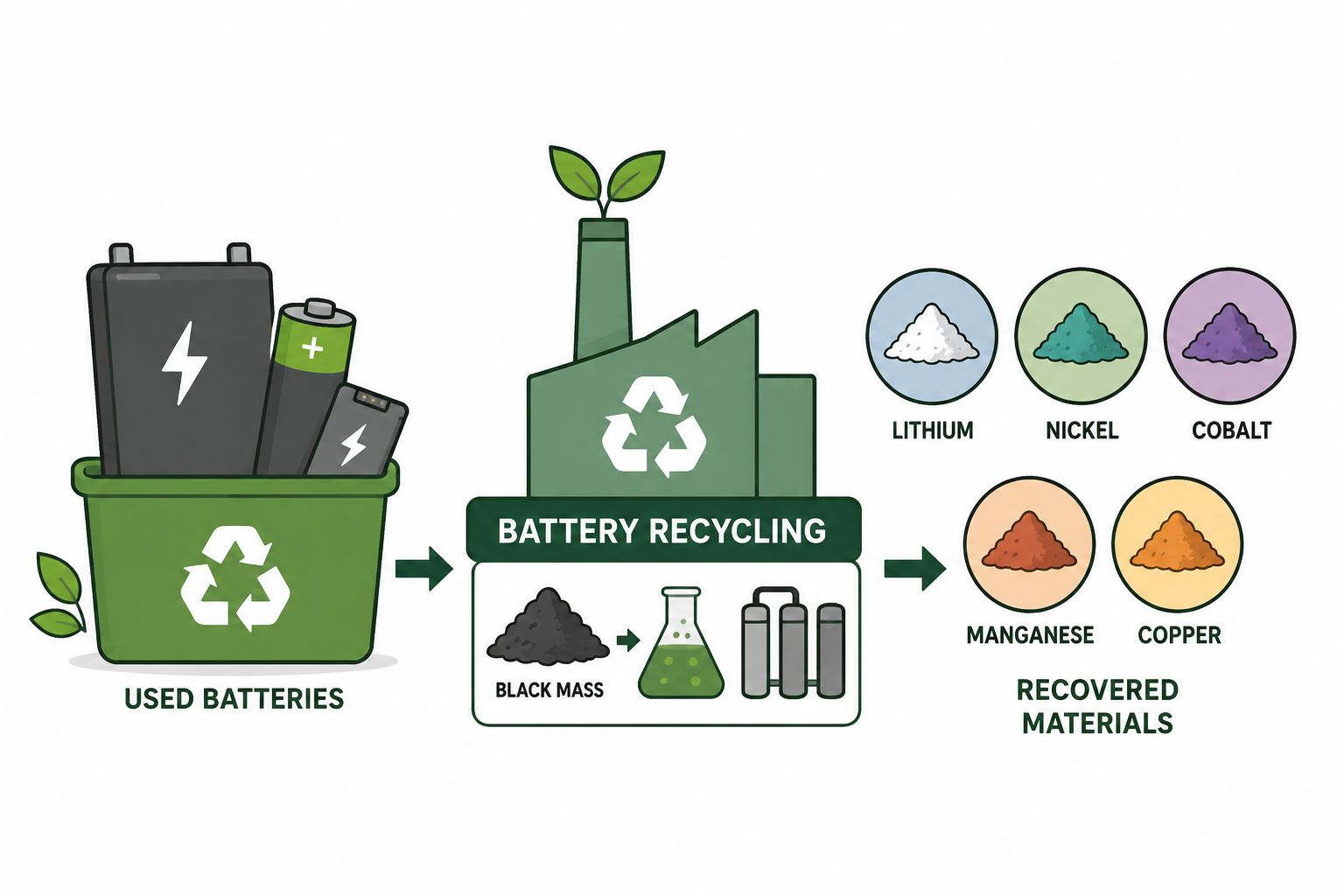
The recycling process begins with collection and dismantling of used batteries. These batteries can come from electric vehicles, consumer electronics, industrial systems, or energy storage applications. After dismantling and shredding, the company extracts what is known in the battery industry as “black mass.” This black powder contains valuable metals from the battery cells.
The black mass is then processed chemically to separate lithium, cobalt, nickel, manganese, and other materials. BatX says the recovered output can reach battery-grade purity levels suitable for reuse in manufacturing.
BatX’s business model depends heavily on scale. Battery recycling economics improve when large volumes of waste batteries can be processed continuously. According to company statements , BatX has built automated and IoT-enabled recycling infrastructure capable of processing thousands of metric tonnes of batteries annually
The Indian government has also begun supporting domestic battery recycling infrastructure. In 2025, the Technology Development Board under the Department of Science and Technology announced financial support for BatX Energies for commercialising indigenous battery recycling technology. The project focuses on generating battery-grade materials through recycling and creating a closed-loop supply chain.
Funding has played a major role in helping the company expand operations. In 2022, BatX Energies raised $1.6 million in a seed round led by JITO Angel Network. Participants included Kamaljyot Investments, linked to Mankind Pharma, along with Haldiram family offices and other investors.
In December 2023, the company raised another $5 million in a pre-Series A funding round led by Zephyr Peacock with participation from Lets Venture and existing investors including JITO Angel Network and family offices associated with Mankind Pharma, Excel Industries, and BluSmart.
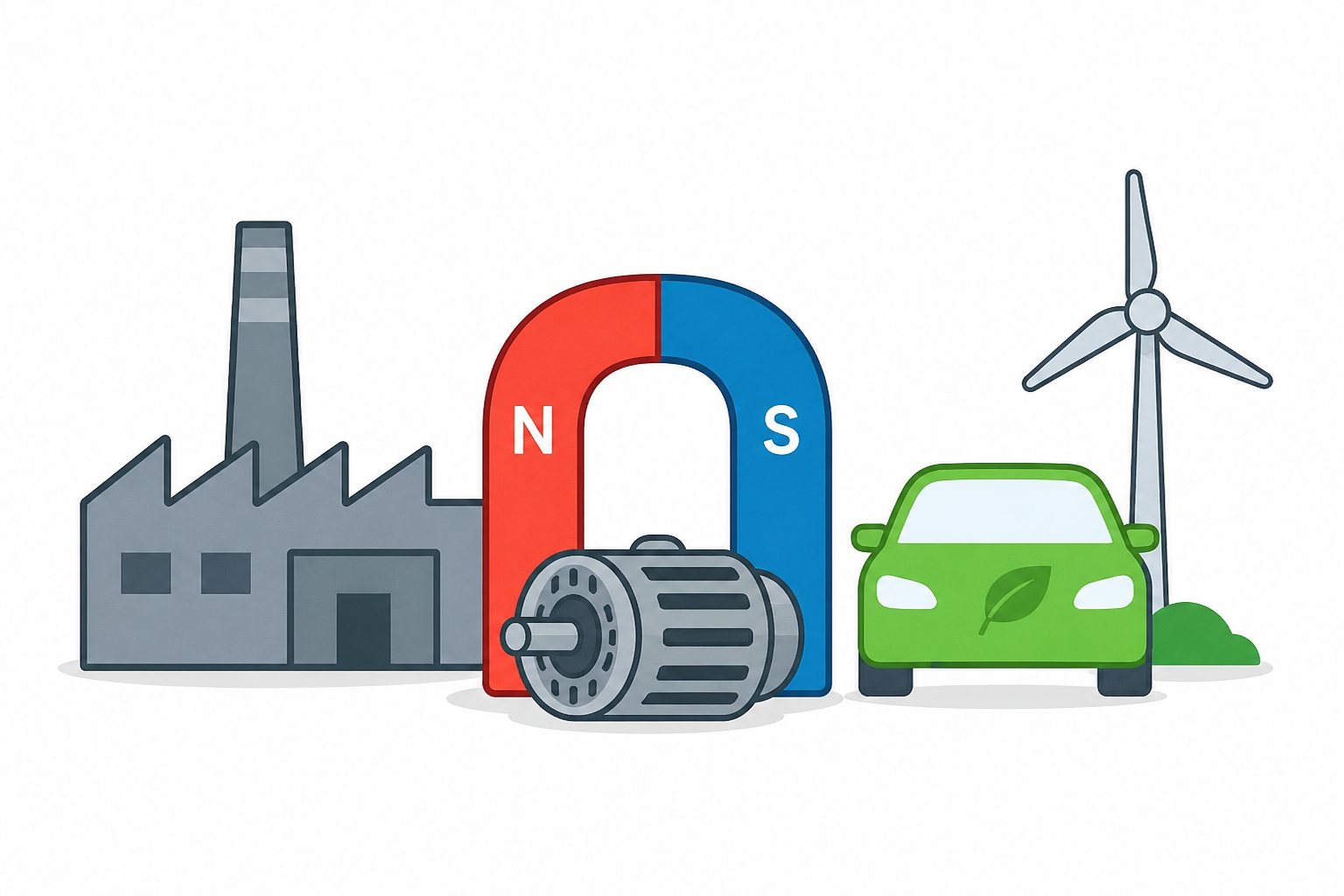
One notable development was in 2025 when BatX partnered with Germany-based Rocklink GmbH to work on rare earth magnet recycling and refining.
The company has also entered into partnerships around EV battery recycling. In 2025, Vietnamese electric vehicle maker VinFast announced a collaboration with BatX for battery recycling and critical mineral recovery in India.
The battery recycling industry globally is expanding quickly because governments and manufacturers increasingly see battery waste as both an environmental risk and a strategic resource opportunity. Countries including China, the United States, and members of the European Union are investing heavily in recycling infrastructure as EV adoption rises.
Several international companies operate in this space. Firms such as Redwood Materials in the United States, Li-Cycle in Canada, and Umicore in Belgium focus on recovering critical minerals from battery waste. Many companies are trying to improve recovery efficiency while lowering energy consumption and emissions.
India’s battery recycling ecosystem is still relatively early-stage compared to China or Europe. Alongside BatX Energies, companies such as Attero, Lohum, and Ace Green Recycling are building lithium-ion recycling operations. Competition is increasing as battery waste volumes grow.
The industry still faces major operational challenges. Collection systems for end-of-life batteries remain fragmented. Transporting damaged lithium-ion batteries can be hazardous. Recycling economics fluctuate depending on global metal prices. Technologies also differ widely in recovery rates, emissions, and cost structures.
At the same time, battery recycling is becoming increasingly important for national supply chains. A large share of future lithium, cobalt, and nickel demand may eventually come from recycled batteries instead of freshly mined materials.
BatX Energies is trying to position itself within that transition by focusing on material recovery rather than only waste disposal. Its growth will likely depend on whether India’s electric vehicle and battery manufacturing ecosystem expands fast enough to create a stable domestic recycling market at industrial scale.
- Our correspondent