A large part of the global livestock and aquaculture industry still depends on fishmeal and soybean-based feed.
Fishmeal production puts pressure on marine ecosystems, while large-scale soy cultivation requires land, water, and chemical inputs. At the same time, enormous quantities of agricultural and food-processing waste are discarded every day.
Bengaluru-based GreenGrahi is trying to connect those two problems.
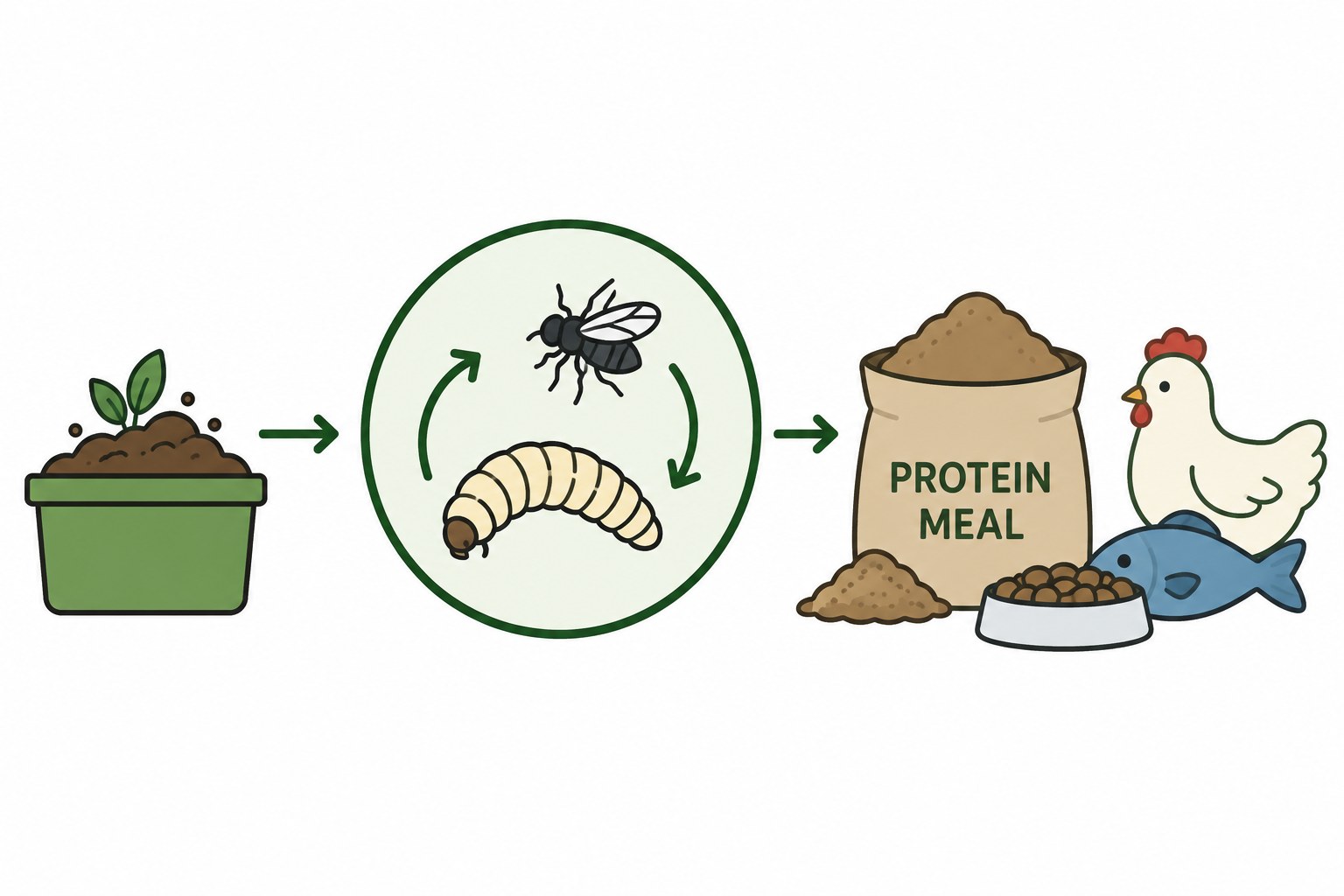
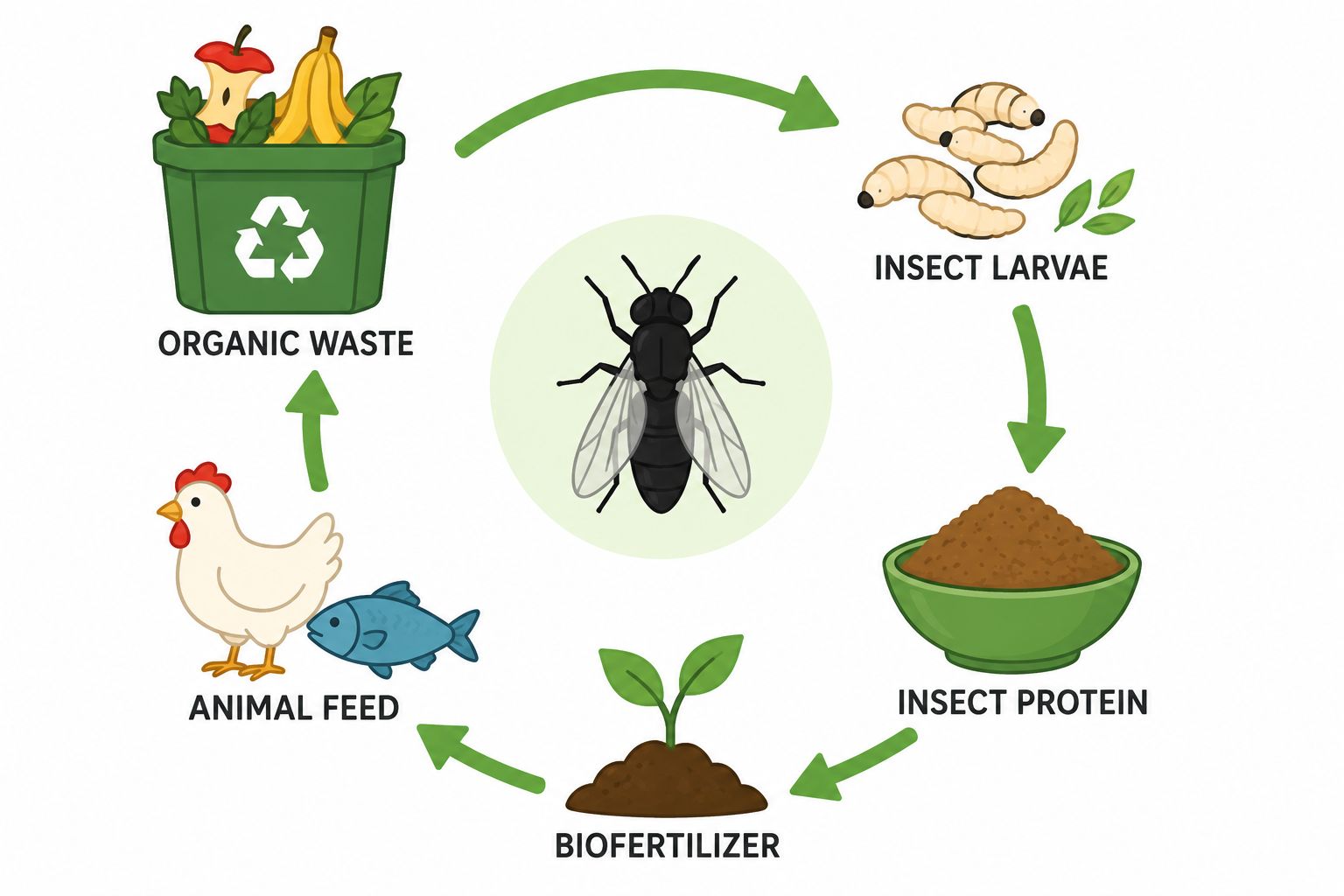
The company uses insect biotechnology — specifically Black Soldier Fly larvae — to convert agricultural and organic waste into protein ingredients, oils, and biological agricultural inputs. Its products are designed for industries such as aquaculture, poultry, pet food, and regenerative agriculture.
GreenGrahi was founded in 2021 by Siddharth Sharma and Shivali Sugand. The founders built the company around the idea of using biological systems rather than traditional industrial processing to create sustainable agricultural inputs.
The company operates in a growing sector often called insect biotechnology or insect protein manufacturing.
The core technology revolves around the Black Soldier Fly, a non-pest insect whose larvae can rapidly consume and break down organic material. These larvae are then processed into protein-rich feed ingredients, oils, and soil products. Globally, Black Soldier Fly systems are increasingly being explored as alternatives to fishmeal and chemical-intensive agricultural products.
GreenGrahi collects organic feedstock and agricultural by-products from food-processing and agri-related industries. According to company-related reports, the larvae consume this waste and convert it into usable biological outputs.
The company produces three broad categories of products.
The first is insect protein meal used in animal nutrition. These proteins are designed for aquaculture, poultry feed, and pet nutrition applications. GreenGrahi says the products are intended to provide more stable pricing and sustainable sourcing compared to conventional feed ingredients such as fishmeal.
The second category is insect-derived oils and hydrolysates. These are functional nutritional ingredients used in feed formulations. The third category is biological agricultural inputs.
GreenGrahi develops biofertilizers, biostimulants, and biopesticide-related products designed to improve soil and plant health while reducing dependence on synthetic agricultural chemicals.
The company positions itself around circular-economy infrastructure rather than just feed manufacturing. Instead of treating agricultural waste as disposal material, the company uses biological conversion systems to generate commercially valuable products. The model is designed to reduce waste while simultaneously producing feed and agricultural inputs.
One reason the market is paying attention to insect protein is pressure on global aquaculture and livestock systems. Fishmeal prices have become volatile because of declining fish stocks and rising demand from aquaculture producers. Soy-based feed also faces criticism linked to land use and deforestation pressures. Companies working on insect protein argue that biological conversion systems can reduce dependence on both.
GreenGrahi says its products are already being used by B2B customers in animal and plant nutrition sectors.
In 2025, GreenGrahi raised approximately ₹32 crore in seed funding led by Avaana Capital. Existing investors including Huddle Ventures, Campus Fund, and Blume Founders Fund also participated in the round.
GreenGrahi is part of a broader push toward climate-resilient agricultural systems and alternative protein infrastructure. Avaana Capital called the company’s platform “category-shaping innovation” in the food and agriculture sector.
The broader market GreenGrahi operates in has expanded rapidly over the past decade.
Globally, insect-protein companies such as AgriProtein have experimented with large-scale Black Soldier Fly production for aquaculture and livestock feed. Europe and Southeast Asia have also seen increasing investment into insect farming for food, feed, and waste-processing systems. However, the industry is still early-stage and operationally difficult.
Scaling insect biotechnology requires consistent feedstock sourcing, biological process control, temperature management, contamination prevention, and stable downstream demand for feed products. Profitability also depends heavily on processing efficiency and regulatory approvals.
In India specifically, the sector is still emerging. Most large-scale animal feed systems continue to rely on traditional inputs, and insect protein adoption remains relatively new. There are also regulatory and market-acceptance challenges around using insect-derived ingredients in feed systems at scale.
GreenGrahi’s strategy appears focused on entering the market through industrial feed and agricultural-input supply chains rather than consumer-facing products.
- Our correspondent