Hyderabad-based ATGC Biotech is one of a small group of biotechnology companies working on an alternative to conventional chemical pesticides.
Instead of killing insects through toxic chemicals, the company develops pheromone-based pest management systems that interfere with insect behavior and reproduction. The idea has existed in agricultural science for decades, but ATGC has focused on making these systems practical and scalable for large agricultural markets.
The company was incorporated in 2011 and operates from Hyderabad, one of India’s major biotechnology clusters.
ATGC emerged from a combination of chemistry, biotechnology and agricultural pest-management research. The company was founded by a team that included Sivarama Lekkala Prasad and Vijaya Bhasker Reddy Lachagari. Later statements identify Dr. Markandeya Gorantla as Executive Chairman and Managing Director and a central figure in the company’s technology development.
Dr. Gorantla’s background spans biotechnology, chemical innovation and agricultural technologies. His professional profiles describe him as a scientist and entrepreneur with patents and commercial products across biotechnology and agricultural applications. He served as co-founder and CTO of ISCA Inc. in the United States, a company known for semiochemical and pheromone technologies.
The company’s core work revolves around semiochemicals. These are chemical signals used by insects and other organisms to communicate. One important category is pheromones, chemicals released by insects to attract mates.
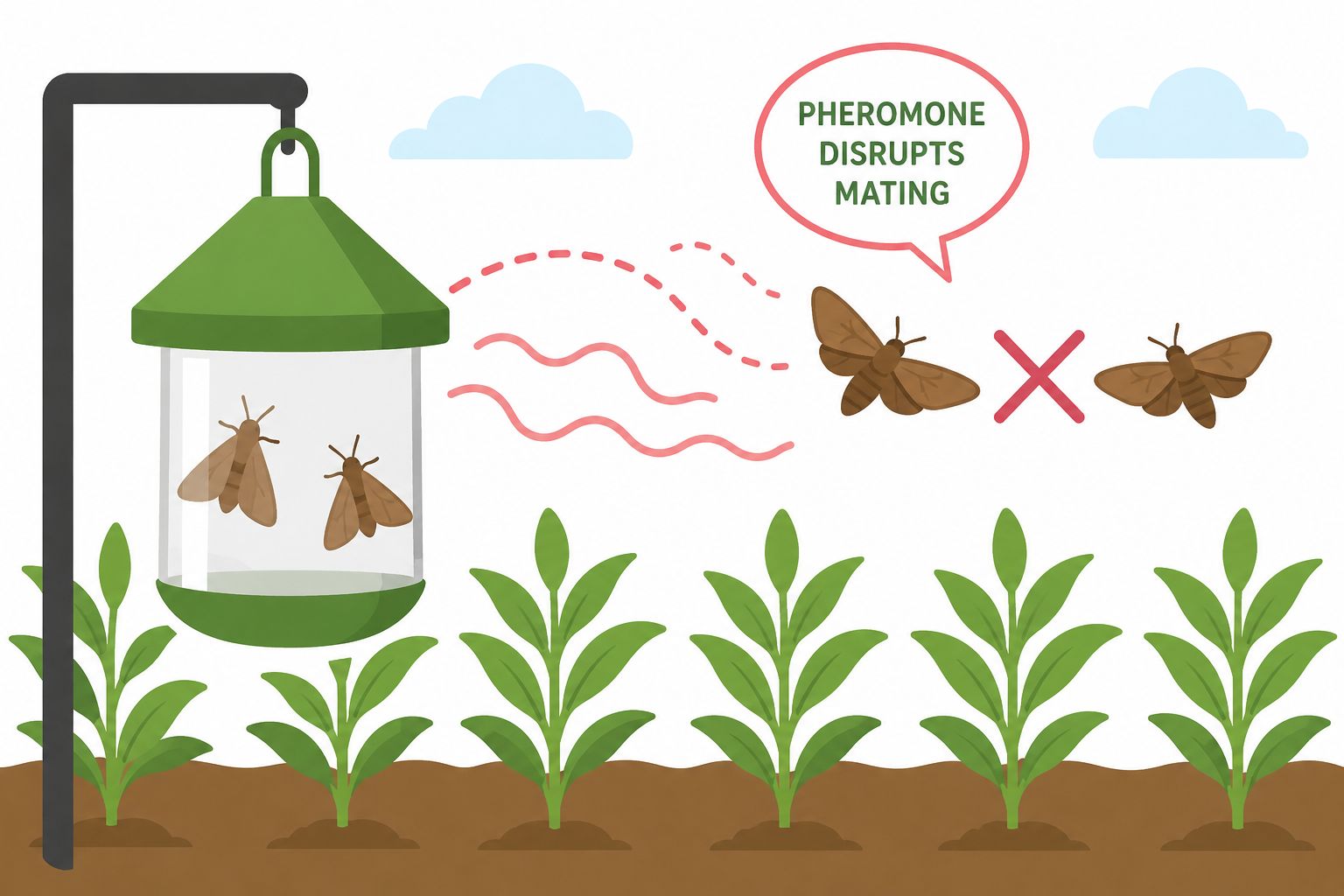
ATGC manufactures synthetic versions of these compounds and formulates them into agricultural products. Instead of spraying insecticides that kill pests directly, farmers deploy pheromone systems that disrupt mating cycles or attract insects into traps. The result is lower pest populations without heavy chemical exposure.
In practice, the system works through several approaches. One is mating disruption. Large numbers of synthetic pheromones are released into fields, making it difficult for male insects to locate females. Another method uses attract-and-kill systems, where insects are lured into traps. These techniques are especially relevant because many agricultural pests have developed resistance to conventional pesticides after decades of exposure. ATGC says its products are designed to reduce pesticide use while maintaining crop protection effectiveness.
The company positions itself around Integrated Pest Management (IPM), a farming approach that combines biological, chemical and monitoring tools rather than depending entirely on pesticide spraying. ATGC’s products are marketed as residue-free pest management solutions that can be integrated into existing agricultural practices.
Dr. Gorantla stated that early support through BIRAC’s Biotechnology Industry Partnership Programme (BIPP) helped the company develop and commercialize its technologies. He describes ATGC’s effort to move away from chemical-intensive pest control toward field-deployable biological solutions.
ATGC’s technologies have reached more than 50 countries.
ATGC operates in a growing global market for biological and semiochemical crop protection products. Around the world, regulators are tightening restrictions on certain pesticides due to environmental and health concerns. At the same time, farmers face increasing resistance among insect populations. This has created demand for alternatives that are more targeted.
Several international companies operate in adjacent areas. US-based ISCA develops pheromone and semiochemical technologies for agriculture. Switzerland-based Syngenta and US-based Corteva have invested in biological crop-protection programs alongside conventional pesticide businesses. Companies such as Provivi in the United States focus specifically on pheromone-based pest management for large-scale agriculture. These firms are working on similar scientific principles, though product portfolios and target crops differ across regions.
India’s broader biotechnology ecosystem provides an important backdrop. Hyderabad’s Genome Valley cluster has become one of the country’s largest biotechnology hubs, hosting research, manufacturing and life-science companies.
The biological crop-protection sector itself remains relatively small compared with the global pesticide industry, but it has attracted growing investment. Research firms and agricultural companies increasingly view pheromones, microbial products and biological controls as complementary tools rather than complete replacements for pesticides. Adoption tends to be strongest in crops where export markets demand lower chemical residues or where resistance problems have become severe.
ATGC’s role within this landscape is focused on the manufacturing and deployment of pheromone-based agricultural technologies. The company’s emphasises scalable production of semiochemicals and practical field applications rather than laboratory research alone.
For farmers, the value proposition is straightforward: manage insect populations with fewer conventional pesticide applications. Whether pheromone-based systems become a mainstream agricultural tool will depend on cost, regulatory approvals, ease of deployment and field performance. ATGC is one of the companies attempting to make that transition from specialized biotechnology to large-scale agricultural practice.
- Our correspondent