In many Indian cities, diesel generators are still widely used during power cuts or as backup electricity systems for offices, malls, hospitals, telecom towers, factories, and apartment complexes.
These generators are reliable, but they also produce large amounts of particulate pollution, especially fine soot particles known as PM2.5.
These microscopic particles are among the most dangerous forms of air pollution because they can enter deep into the lungs and bloodstream. In urban areas with heavy diesel usage, generators contribute significantly to localized air pollution.
Delhi-based Chakr Innovation was founded around this specific problem. The company develops emission-control systems and clean-energy technologies aimed at reducing pollution from diesel generators and industrial combustion systems.
Founded in 2016, Chakr Innovation works in material science, emission control systems, clean energy, and air-pollution technology.
The startup was founded by IIT Delhi graduates Kushagra Srivastava, Arpit Dhupar, and Bharti Singhla.
The idea emerged when the founders noticed thick black soot accumulating on walls near roadside shops using diesel generators. That observation led them to focus on capturing and reducing particulate emissions directly at the exhaust stage.
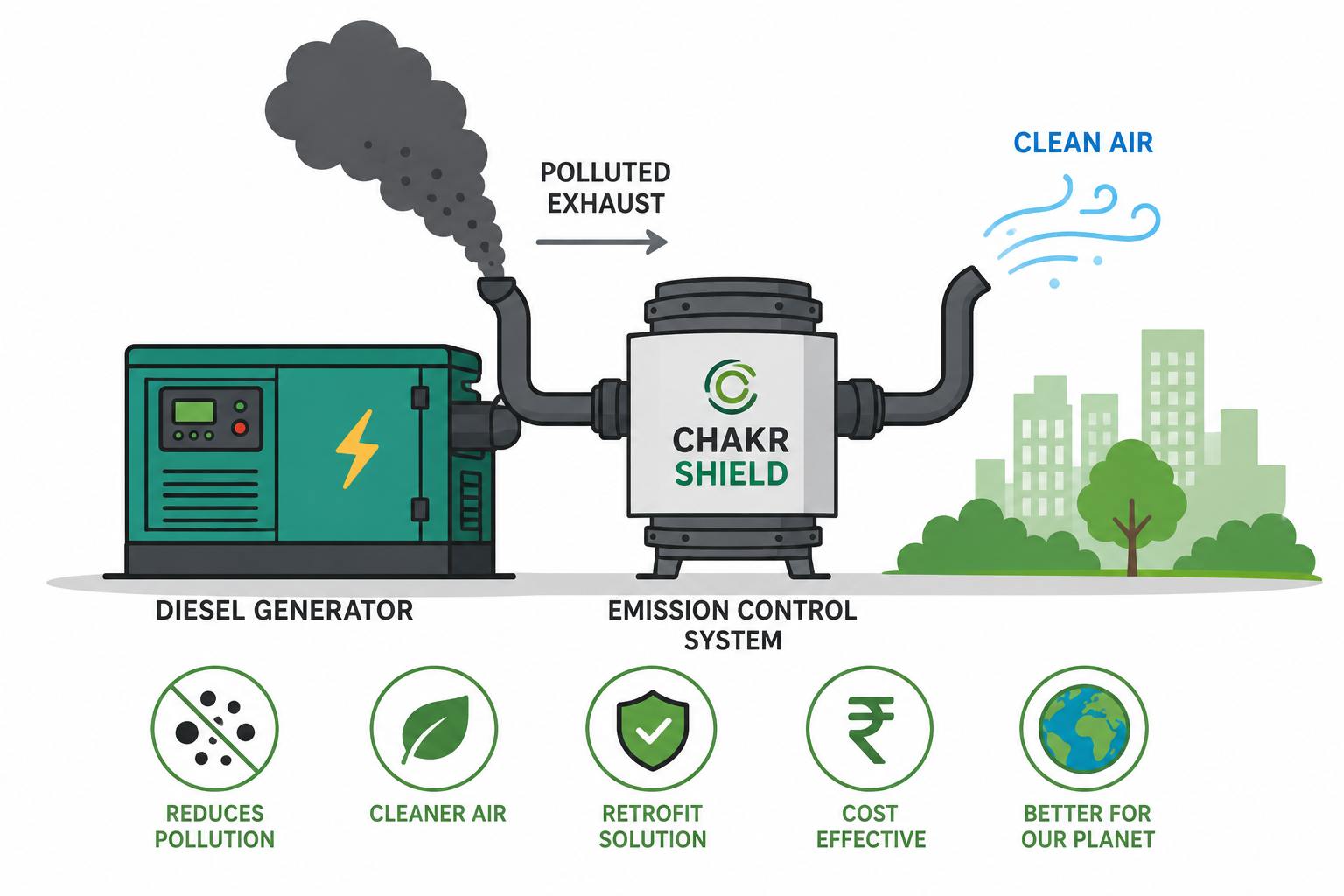
The company’s earliest and best-known product is Chakr Shield, a retrofit emission-control device for diesel generators. Retrofit means the system is attached to existing generators rather than requiring entirely new machines.
The device works by capturing particulate matter from diesel exhaust before it enters the atmosphere. According to the company, Chakr Shield can reduce particulate emissions by more than 80%.
The system is important because India has millions of diesel generators already installed. Replacing all of them immediately is unrealistic and expensive. Chakr’s approach instead focuses on reducing emissions from equipment already in operation.
One practical challenge with diesel pollution is that fine soot particles are extremely difficult to control using low-cost systems. Many traditional industrial filtration systems are expensive or designed for larger industrial plants rather than decentralized generators used in buildings and commercial facilities.
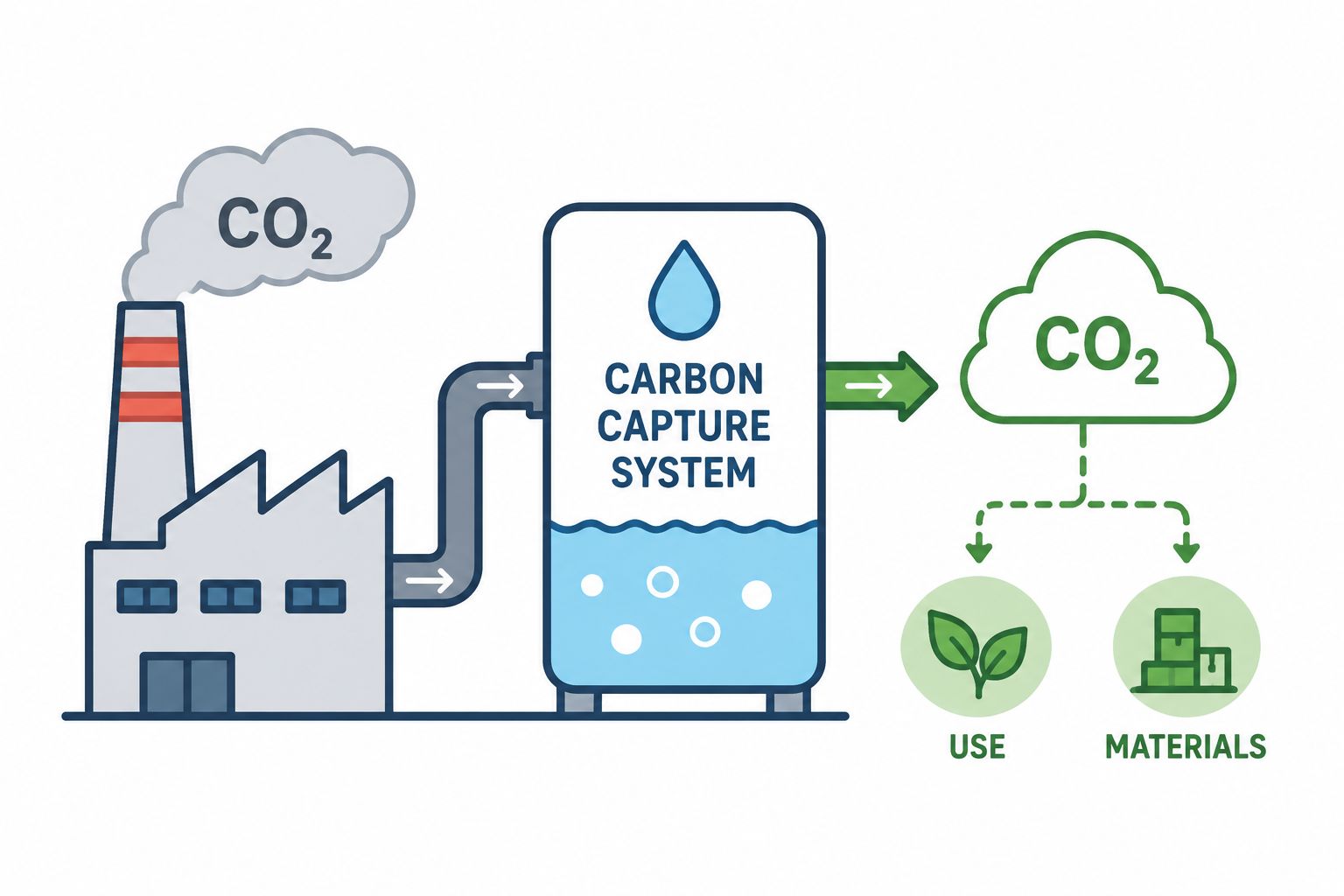
Chakr Innovation initially became known for another unusual idea: converting captured soot into usable ink pigments. Early versions of the company’s technology collected carbon particulate matter from diesel emissions and processed it into black pigment materials for inks and paints.
That concept attracted international attention because it connected pollution control with material reuse. Over time, however, the company expanded beyond soot-to-ink systems into broader emission-control and clean-energy infrastructure.
In 2022, Chakr Innovation became the first company in India to receive type approval certification for a retrofit emission-control device from CPCB-approved labs such as ICAT and ARAI, according to company statements and Business Standard coverage cited in public records.
This matters because emission-control systems for generators must meet regulatory standards before they can be deployed widely in industrial and commercial environments.
The company also developed a Dual Fuel Kit for diesel generators. According to Chakr Innovation, the system allows generators to operate using a combination of natural gas and diesel fuel, reducing diesel consumption and emissions. The company says the system can operate on a fuel mix of roughly 70% natural gas and 30% diesel where gas pipeline access exists.
Over time, Chakr expanded into additional areas including DeNOx systems for nitrogen oxide reduction, IoT-based generator monitoring systems, and decentralized energy technologies.
One of the company’s more ambitious areas is Aluminium-Air battery technology, branded as Al-Air. Unlike lithium-ion batteries, aluminium-air systems generate electricity through reactions involving aluminium, oxygen, and electrolytes. The company positions this as an indigenous alternative to lithium-based energy storage systems.
In 2019, Chakr Innovation raised approximately Rs 19 crore in Series A funding led by IAN Fund along with IDFC-Parampara Fund and investor Jyoti Sagar. According to the company timeline, SBI Capital Ventures later invested around INR 500 million during its Series B phase. In 2025, Chakr Innovation raised $23 million in a Series C round led by Iron Pillar, with participation from SBI Cap Ventures, ONGC, Indian Angel Network, and Inflexor.
Startup databases such as Tracxn estimate total funding above $40 million across multiple rounds.
The broader market for industrial emission-control technology is growing globally because governments are tightening air-pollution regulations around diesel engines, generators, and industrial combustion systems.
Internationally, companies such as Johnson Matthey, Bosch, Cummins, and several industrial filtration firms develop emission-control systems for heavy vehicles and industrial engines. But India’s generator-heavy urban infrastructure creates a somewhat different market compared to countries with more stable electricity grids.
Chakr’s retrofit model is particularly relevant in developing economies where large installed generator fleets already exist and immediate replacement is impractical.
The company’s work also reflects a broader trend in Indian climate-tech startups: moving beyond software and marketplaces into deep-tech hardware and material-science systems.
At the same time, industrial climate technology businesses are operationally difficult. Hardware manufacturing is capital-intensive. Certification processes are slow. Industrial customers demand long reliability testing cycles. Pollution-control systems must also survive harsh operating conditions including heat, dust, vibration, and inconsistent maintenance.
Another challenge is regulatory enforcement. Adoption of emission-control systems often depends heavily on government pollution norms and enforcement intensity. If regulations weaken or enforcement becomes inconsistent, demand can fluctuate sharply.
Chakr Innovation today sits at the intersection of air pollution control, industrial sustainability, and energy transition technologies. What began as an attempt to capture black soot from diesel exhaust has gradually expanded into a broader material-science and clean-energy company working on emission control, cleaner fuel systems, and alternative energy storage technologies.
- Our correspondent