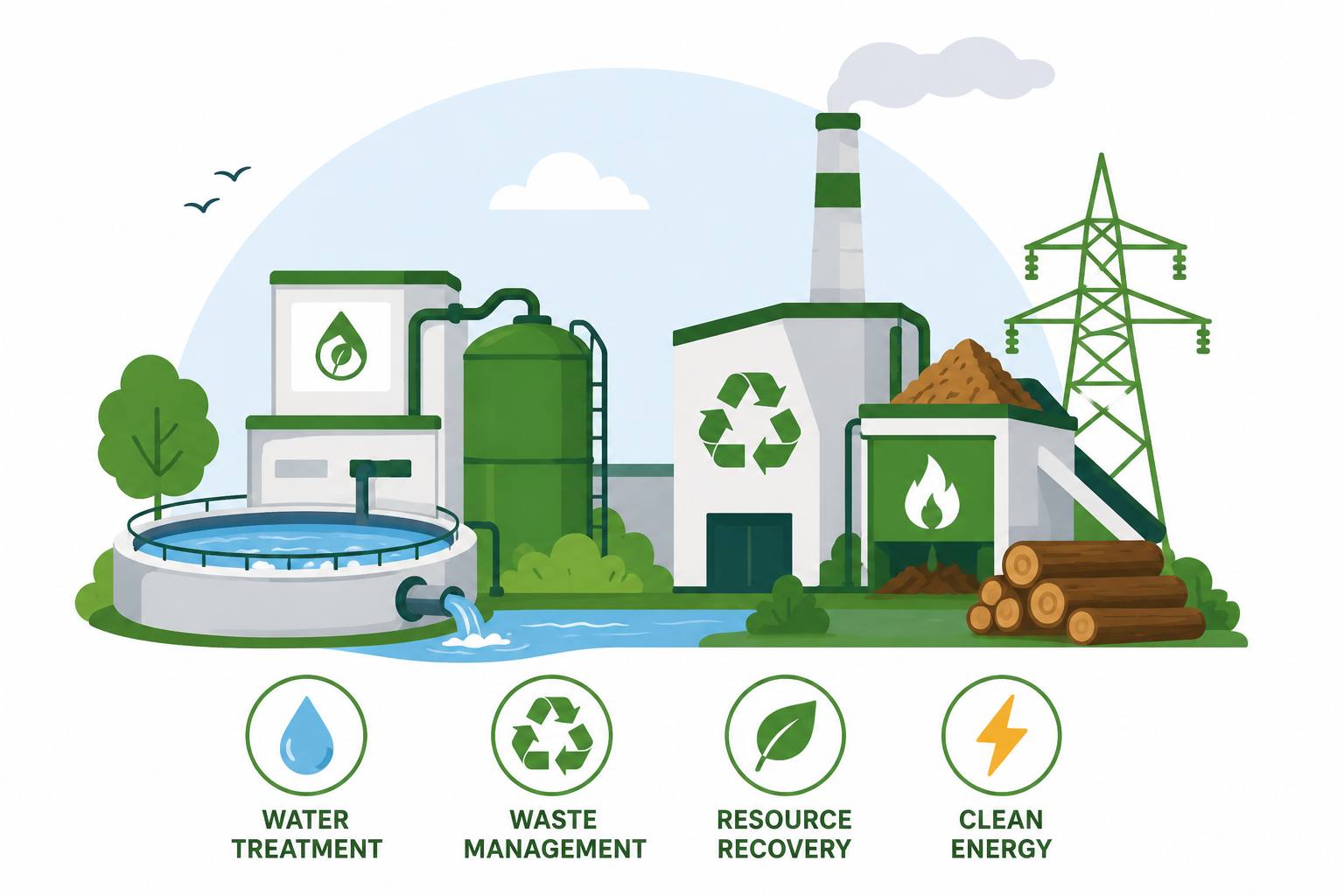
Vihaan Clean & Green Tech operates in a part of the sustainability sector that is usually invisible to the public but critical to industrial operations: wastewater treatment, waste recovery, biomass energy, and environmental infrastructure.
The company works with industries that generate large volumes of wastewater, organic waste, emissions, and industrial residue. Instead of treating these as disposal problems alone, Vihaan positions them as recoverable resources that can be converted into energy, reusable water, or recycled material.
The company is closely associated with HyFun Foods, the Gujarat-based frozen foods company. Managing Director Amit Badlani has described Vihaan as the environmental and sustainability arm connected to HyFun Foods’ larger industrial ecosystem.
Amit Badlani, who leads both Vihaan Clean & Green Tech and Go Green Mechanisms, has worked for years in industrial pollution-control and wastewater-management systems. The company’s strategy is built around creating integrated environmental utilities for industries rather than selling standalone equipment.
The company’s work spans several areas. One major segment is wastewater treatment. Industrial sectors such as food processing, chemicals, and manufacturing generate large quantities of contaminated water that cannot be released directly into rivers or groundwater systems.
Vihaan builds Common Effluent Treatment Plants (CETPs) and Zero Liquid Discharge (ZLD) systems for industrial use. In practical terms, these systems collect wastewater, remove contaminants through physical, chemical, and biological treatment processes, and either safely discharge the treated water or recycle it back into industrial operations.
Zero Liquid Discharge systems are especially important in water-stressed regions because they are designed to minimize wastewater discharge entirely. Instead of releasing treated water outside the facility, the water is recovered and reused internally. This reduces freshwater demand and helps industries comply with environmental regulations.
Another major area is biomass energy.
In April 2026, Vihaan announced the commissioning of a biomass-based boiler plant in Gujarat as part of its expansion efforts. According to Energetica India and Renewable Watch, the project uses agricultural waste as fuel instead of fossil fuels such as LPG or natural gas.
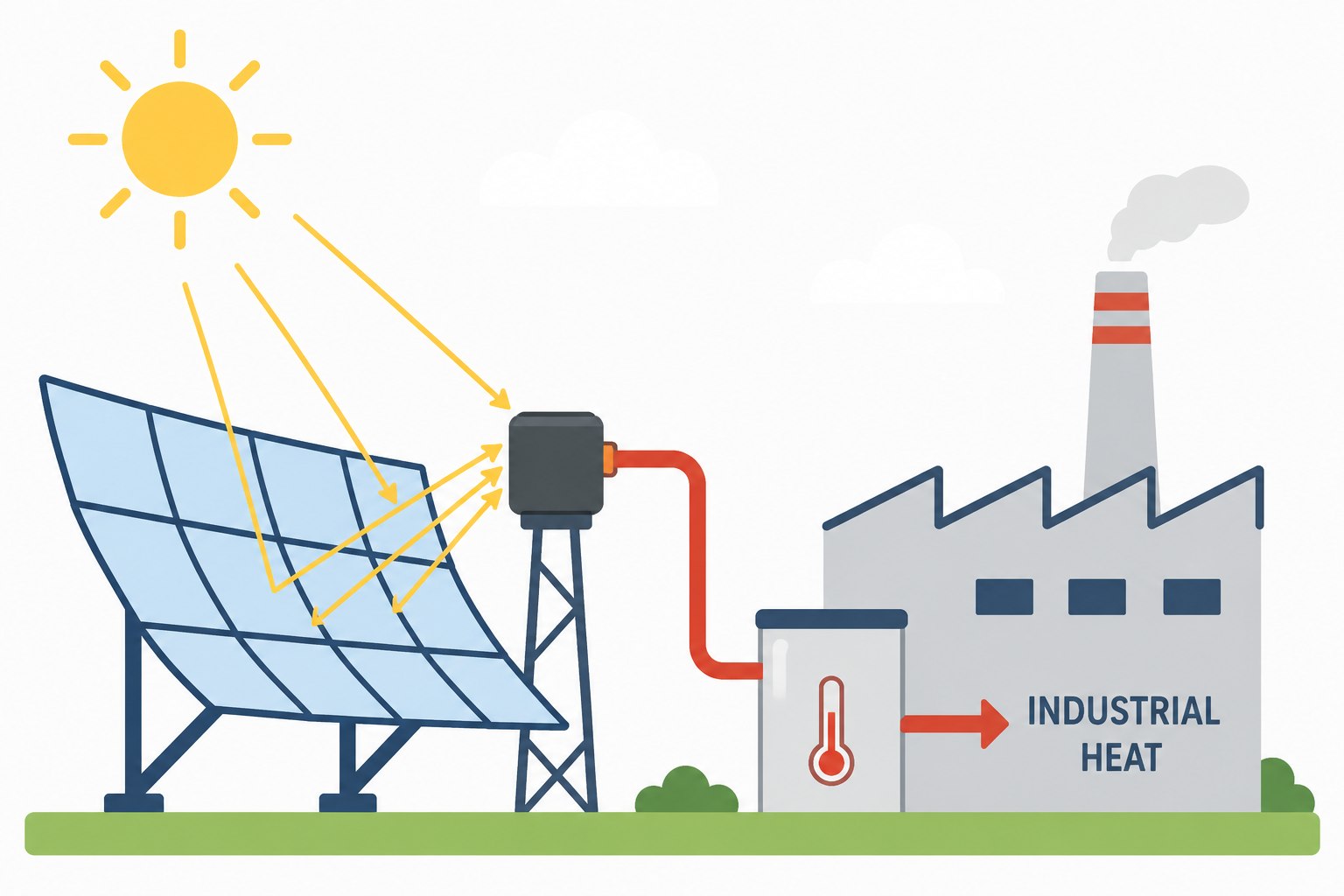
The broader idea behind biomass systems is relatively simple. Agricultural waste such as crop residue, husk, and organic biomass is collected, processed, and burned in controlled industrial systems to generate steam or heat for factories. Instead of allowing crop waste to decompose or burn openly in fields, the material becomes industrial fuel.
This matters in India because agricultural waste burning contributes significantly to seasonal air pollution in several regions. Industrial biomass systems are increasingly being explored as an alternative use for agricultural residue.
Vihaan’s approach also reflects a wider change in how industries view environmental infrastructure. Earlier, pollution-control systems were often treated mainly as compliance expenses. Companies installed treatment plants because regulations required them to do so.
Now, many firms are trying to recover value from waste streams themselves. Wastewater can sometimes be recycled. Organic waste can become energy. Industrial residue can become raw material for another process. Environmental infrastructure is increasingly being treated as operational infrastructure rather than only regulatory infrastructure.
The company says it is building recurring-revenue models around environmental utilities and resource recovery systems. This includes long-term operation and maintenance contracts in addition to infrastructure deployment.
Vihaan operates within a broader global sector focused on circular economy infrastructure, industrial decarbonization, and waste-to-energy systems.
Globally, companies such as Enerkem work on converting municipal waste and biomass into fuels and industrial chemicals. Other companies around the world focus on industrial wastewater recycling, biomass fuel systems, and waste recovery infrastructure.
India itself has seen rapid growth in waste-management and circular-economy startups over the past decade. Companies working on agricultural-waste processing, recycling, decentralized waste management, and pollution-control systems are increasingly tied to climate and ESG investment themes.
For example, Takachar works on converting agricultural residue into usable fuel and carbon products, while Help Us Green focuses on converting temple flower waste into consumer products.
The industrial side of this sector, however, is more infrastructure-heavy and capital-intensive. Wastewater systems, biomass boilers, and recycling plants require engineering expertise, long installation cycles, regulatory approvals, and operational maintenance over many years.
One challenge for companies in this category is proving measurable environmental impact. Industrial clients increasingly want clear numbers around water savings, carbon reduction, waste diversion, and energy efficiency rather than broad sustainability claims.
Another challenge is scale. Environmental infrastructure projects are expensive and often depend on industrial partnerships, policy support, and financing access.
Vihaan appears to be positioning itself as a long-term environmental utilities company rather than a short-term clean-tech startup. Its work sits at the intersection of industrial engineering, resource recovery, wastewater management, and renewable energy infrastructure.
As India’s manufacturing and food-processing sectors continue to expand, the pressure on water systems, waste management, and industrial emissions will also increase. Companies like Vihaan are betting that environmental infrastructure will become a core industrial requirement rather than a secondary compliance layer.
- Our correspondent