Khushi Baby did not begin as a company trying to “digitise healthcare.” It began with a very specific problem: children were missing vaccines because no one had reliable records.
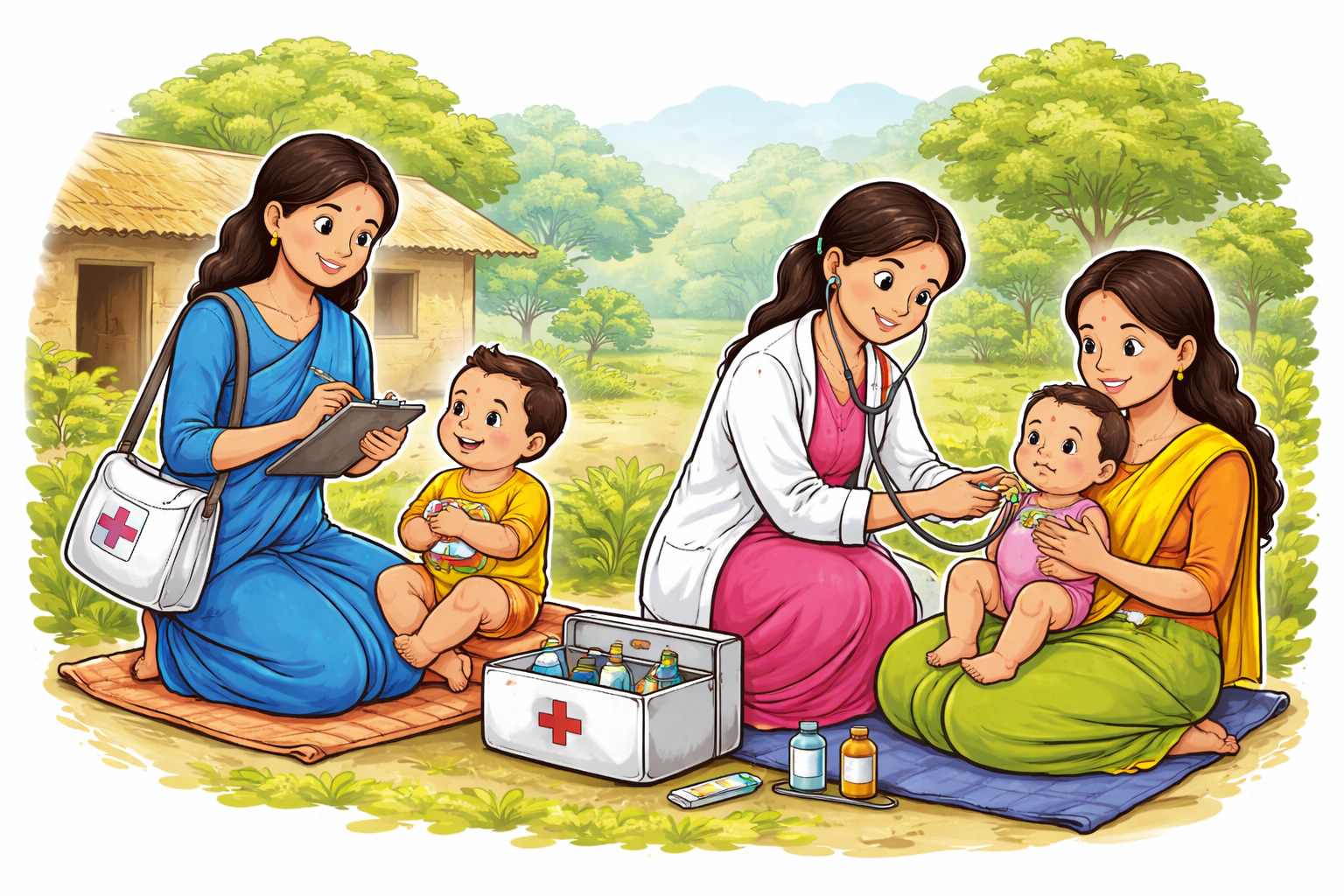
In many parts of rural India, a child’s health history is scattered. Families move between villages, paper records get lost, and frontline health workers—ASHAs and ANMs—struggle to track who received what care. The result is not just poor data. It is missed vaccinations, untreated conditions, and delayed interventions.
Khushi Baby’s journey is about solving this exact problem—and then expanding that solution into a full digital infrastructure for public health.
The origin
Khushi Baby started in 2014 as a student project at Yale University, led by Ruchit Nagar and collaborators. The initial idea was simple but practical: create a digital health record that works without internet.
The first version was not an app. It was a wearable pendant—a small device embedded in a traditional black thread bracelet worn by infants. This device stored vaccination data using NFC (near-field communication). Health workers could scan it using a phone and update records, even offline.
This design solved two real constraints at once. It worked without connectivity, and it fit into local cultural practices. But as the team deployed it in the field, they realised something deeper. The problem was not just missing records. The problem was the entire system.
Health workers were collecting large amounts of data, but that data was fragmented across registers and apps. It was rarely used to guide decisions.
Khushi Baby shifted from building a product to building a system.
What Khushi Baby actually built
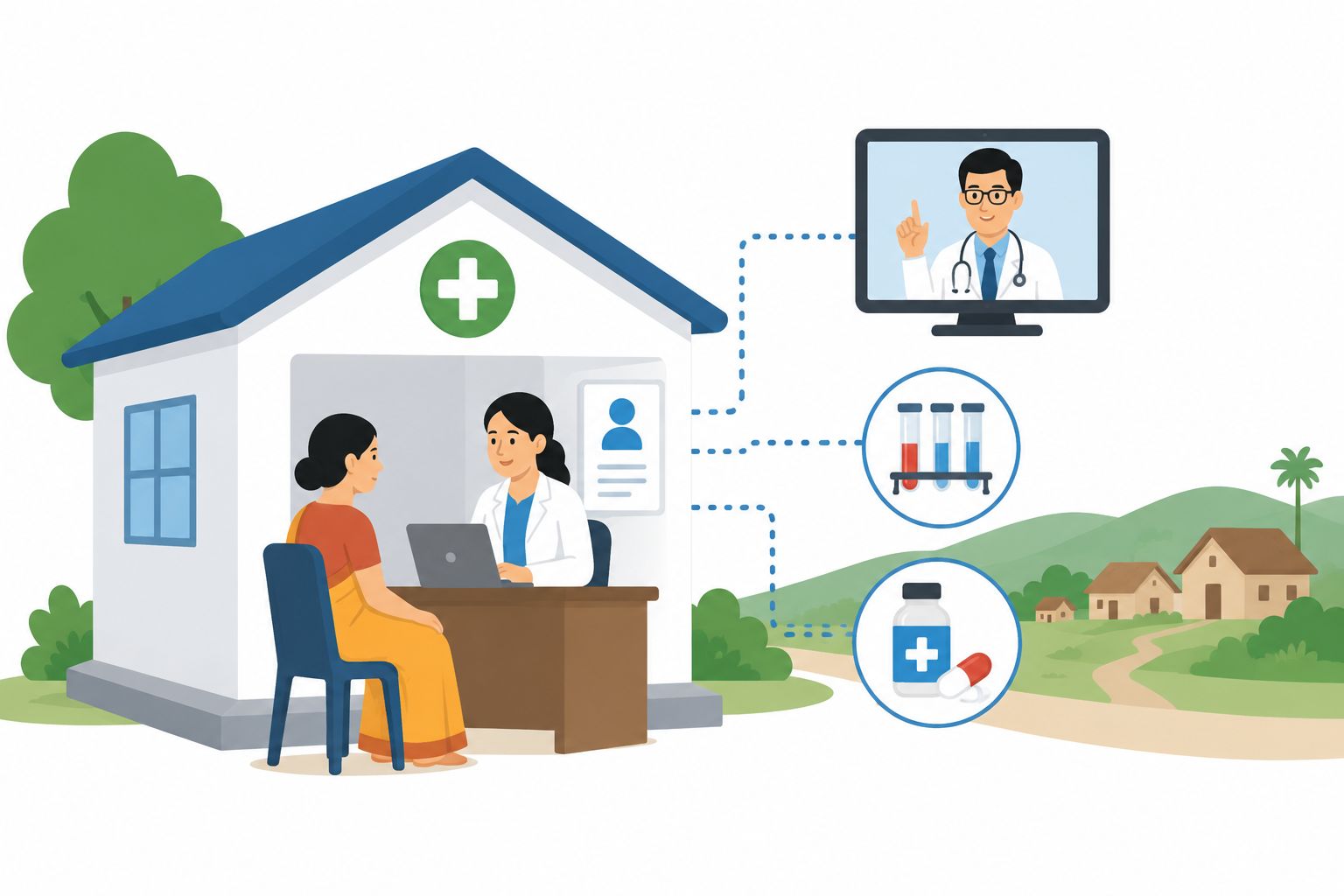
The company’s core product today is the Community Health Integrated Platform (CHIP). CHIP has three main components working together.
The first is a mobile application used by community health workers. This app allows workers to register beneficiaries, record services (like vaccinations, antenatal care, nutrition), and flag high-risk cases. It replaces multiple paper registers and separate apps with a single interface.
The second is a real-time dashboard for health officials. This dashboard aggregates data from thousands of workers and shows performance metrics, risk indicators, and coverage gaps. Officials can see, for example, which villages have low immunisation rates or rising malnutrition.
The third is an analytics layer. This is where the system goes beyond data collection. It uses algorithms and models to identify patterns—such as high-risk pregnancies, missed vaccinations, or disease hotspots—and prompts targeted interventions.
In simple terms, CHIP connects three levels: health worker → data → decision-maker. Earlier, these levels operated in isolation. Now they are linked in real time.
What changes on the ground
Before CHIP, a health worker might visit households, record information in registers, and submit reports at the end of the month. By the time issues were visible, it was often too late to act. With CHIP, data is recorded once and becomes immediately usable.
If a pregnant woman shows signs of anemia, the system flags her as high risk. Supervisors can see this and follow up. If a child misses a vaccine, reminders can be triggered. If a region shows rising disease risk, resources can be redirected.
This is the key shift: from reporting to intervention.
The system also reduces duplication. Health workers previously spent significant time entering the same data into multiple formats. By consolidating workflows, CHIP reduces this burden.
Scale, funding, and institutional backing
Khushi Baby operates as a Section 8 non-profit and works closely with government health departments. It serves as a technical partner to the Government of Rajasthan, where CHIP has been deployed at scale.
The platform has reached over 70,000–75,000 community health workers and tracks health data for more than 40–45 million people.
Funding has largely come from institutional and public sources rather than venture capital. The Ministry of Health has supported scale-up with over $15 million in funding, alongside partnerships with organisations like UNICEF, Gavi, Google AI, and Harvard Medical School.
This funding model reflects the nature of the problem. Public health infrastructure is not a typical SaaS market; it requires long-term institutional integration.
What makes the approach unique
There are many digital health tools. What distinguishes Khushi Baby is how tightly it integrates with real-world systems.
First, it is built with health workers, not just for them. The platform has been co-designed through thousands of hours of fieldwork, which shows in its usability.
Second, it works in low-resource environments. Offline functionality, simple interfaces, and WhatsApp-based tools ensure it can operate in areas with limited connectivity.
Third, it connects data to action. Many systems stop at data collection. CHIP focuses on making that data usable for decisions.
Fourth, it integrates multiple programs. Instead of separate systems for maternal health, nutrition, and disease tracking, it brings them into one platform.
Finally, it incorporates geospatial and climate data. By mapping health outcomes alongside environmental and socioeconomic factors, it helps identify broader risk patterns.
Performance and outcomes
The platform’s impact is visible in specific use cases.
Health workers can identify high-risk pregnancies earlier, leading to timely interventions. Vaccination tracking improves because missed cases are flagged automatically. Malnutrition and disease hotspots can be identified at a granular level.
One reported outcome is improved follow-up care. In cases where patients might otherwise be lost to the system, real-time tracking ensures they are revisited.
The system also improves administrative efficiency. Health officials gain visibility into program performance, enabling better planning and resource allocation.
Market feedback and challenges
Adoption within government systems is both a strength and a challenge.
On one hand, integration with public health departments allows scale. On the other, it requires navigating bureaucratic processes and aligning with existing workflows. Health workers benefit from reduced paperwork and clearer guidance, but adoption depends on training and ease of use. If the system adds friction, it fails.
There is also the broader challenge of data quality. Digital systems can only be as reliable as the data entered. Khushi Baby addresses this through training and feedback loops, but it remains an ongoing effort.
Global context
Globally, digital health platforms are increasingly used to strengthen primary healthcare systems, especially in low- and middle-income countries.
Many solutions focus on electronic health records or telemedicine. Fewer focus on community-level health systems, where data collection and service delivery happen simultaneously.
Khushi Baby’s model—combining field data collection, analytics, and government integration—is particularly relevant in regions with large rural populations and fragmented systems.
- Our Correspondent