Animal feed production depends heavily on ingredients such as fishmeal, soy protein, and other resource-intensive inputs.
These industries consume large amounts of land, water, and energy, while also facing price volatility and sustainability concerns. Bengaluru-based Loopworm is building an alternative system based on insects.
Founded in 2019, Loopworm develops insect-based protein and biomolecule platforms for animal nutrition, aquaculture, pet food, biotechnology, and industrial applications. The company farms insects including silkworms and black soldier flies, then processes them into proteins, oils, and other biological materials used in feed and biomanufacturing.
The company was founded by IIT Roorkee alumni Ankit Alok Bagaria and Abhi Gawri. The founders originally started exploring insect farming after studying global protein shortages and agricultural waste management systems. Their early work focused on using insects to convert agricultural residues and food waste into usable protein ingredients for aquaculture and poultry feed.
Ankit Alok Bagaria, who serves as CEO, has publicly described insect farming as a biological manufacturing system rather than simply an alternative feed business. The founders positioned Loopworm around industrial-scale protein production using insects because insects naturally convert organic matter into protein more efficiently than traditional livestock.
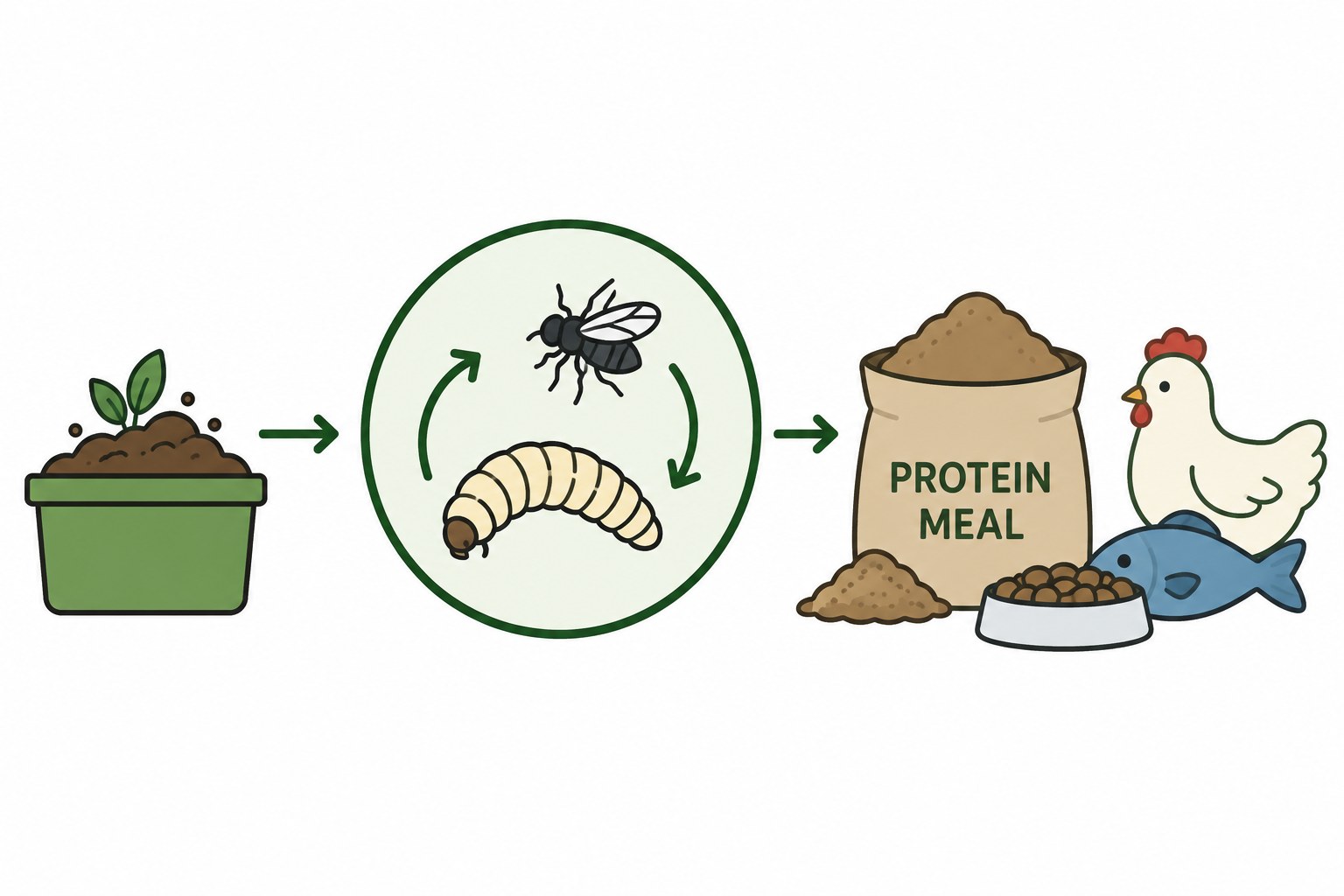
Loopworm’s core business today is insect-derived protein manufacturing. The company processes insects into protein concentrates and Omega-3-rich fats that are used as ingredients in aquaculture feed, poultry nutrition, and pet food products. The company exports some of these products to markets in Europe, Japan, South America, and Southeast Asia.
The operational model works differently from conventional livestock production. Instead of raising animals over large land areas, Loopworm farms insects in controlled indoor environments. The insects are fed agricultural byproducts and organic material, then harvested and processed into feed ingredients.
The company says insect farming requires significantly less land and water compared to conventional protein production systems. Insects also reproduce quickly and grow rapidly, which allows higher protein output within smaller spaces.
Loopworm initially focused heavily on black soldier flies, which are widely used globally in insect-protein production. Black soldier fly larvae are efficient at consuming organic waste and converting it into protein and fats suitable for feed applications. However, the company later expanded into silkworm-based biotechnology systems.
One of Loopworm’s more unusual projects involves using silkworms as biological production systems for recombinant proteins. Recombinant proteins are proteins manufactured through engineered biological processes and are widely used in pharmaceuticals, diagnostics, vaccines, and industrial biotechnology.
Traditional recombinant protein manufacturing often depends on expensive bioreactors and industrial fermentation systems. Loopworm says its “reactor-free” production platform instead uses silkworms as natural biological factories. According to the company, this approach could reduce production costs substantially for certain categories of biologics.
The company has stated that depending on the molecule being produced, its process may reduce biologics manufacturing costs to between one-half and one-fifth of conventional systems.
Loopworm also develops insect-derived biomolecules beyond feed ingredients. According to the company, it is working on cosmetic and plant-based applications using proteins extracted from silkworms. One example involves fibroin-based coatings for fruits and vegetables intended to replace petrochemical coatings. Another involves sericin-based materials positioned as sustainable alternatives to snail mucin in skincare products.
Funding has played a major role in the company’s scale-up efforts. In August 2022, Loopworm raised a $3.4 million seed round co-led by Omnivore and WaterBridge Ventures. Investors in the round included Titan Capital and angel investors such as Nadir Godrej of Godrej Agrovet and former ITC executive Sanjiv Rangrass.
In 2025, Loopworm raised another $3.25 million in a pre-Series A round co-led by WaterBridge Ventures and Japanese investor Enrission India Capital. Public startup databases estimate disclosed funding at around $6.65 million across major rounds.
The broader insect-protein industry has grown significantly over the past decade as global agriculture searches for alternatives to fishmeal and soy protein. Fishmeal production depends heavily on marine fisheries, while soy cultivation requires large land areas and contributes to deforestation pressures in some regions.
Insect protein is increasingly being explored as an alternative because insects naturally form part of the diets of fish and poultry species. Industry researchers also argue that insect farming could reduce organic waste by converting agricultural residues into usable protein.
Globally, companies such as Ÿnsect in France, Protix in the Netherlands, and Innovafeed have built large-scale insect-protein businesses targeting aquaculture and animal feed markets. In the United States, companies such as Exo explored insect-based protein products for human nutrition, including cricket-based protein bars.
However, the insect-protein industry has also faced operational challenges. Several global companies have struggled with scaling costs, regulatory approvals, and commercial economics.
Loopworm’s approach differs slightly because the company combines animal nutrition with higher-margin biotechnology applications. Instead of depending entirely on feed ingredients, it is also exploring recombinant proteins and biomaterial applications.
The company operates at the intersection of agritech, biotechnology, and industrial manufacturing. Rather than building consumer food brands, it focuses mainly on ingredient manufacturing and biological production systems.
As pressure grows on global food systems and industrial protein supply chains, insect-based manufacturing is attracting increasing attention from agriculture and biotech investors. Loopworm is part of a newer group of companies attempting to industrialize insect biology not only for feed production but also for broader manufacturing applications.
- Our correspondent