For many Indian farmers, agriculture decisions are still shaped by fragmented advice, local dealer recommendations, weather uncertainty, and inconsistent access to quality farm inputs.
A farmer growing soybean, wheat, cotton, or chilli may need to decide when to sow, how much fertilizer to use, how to handle pests, where to buy seeds, and whom to sell produce to — often with limited scientific guidance.
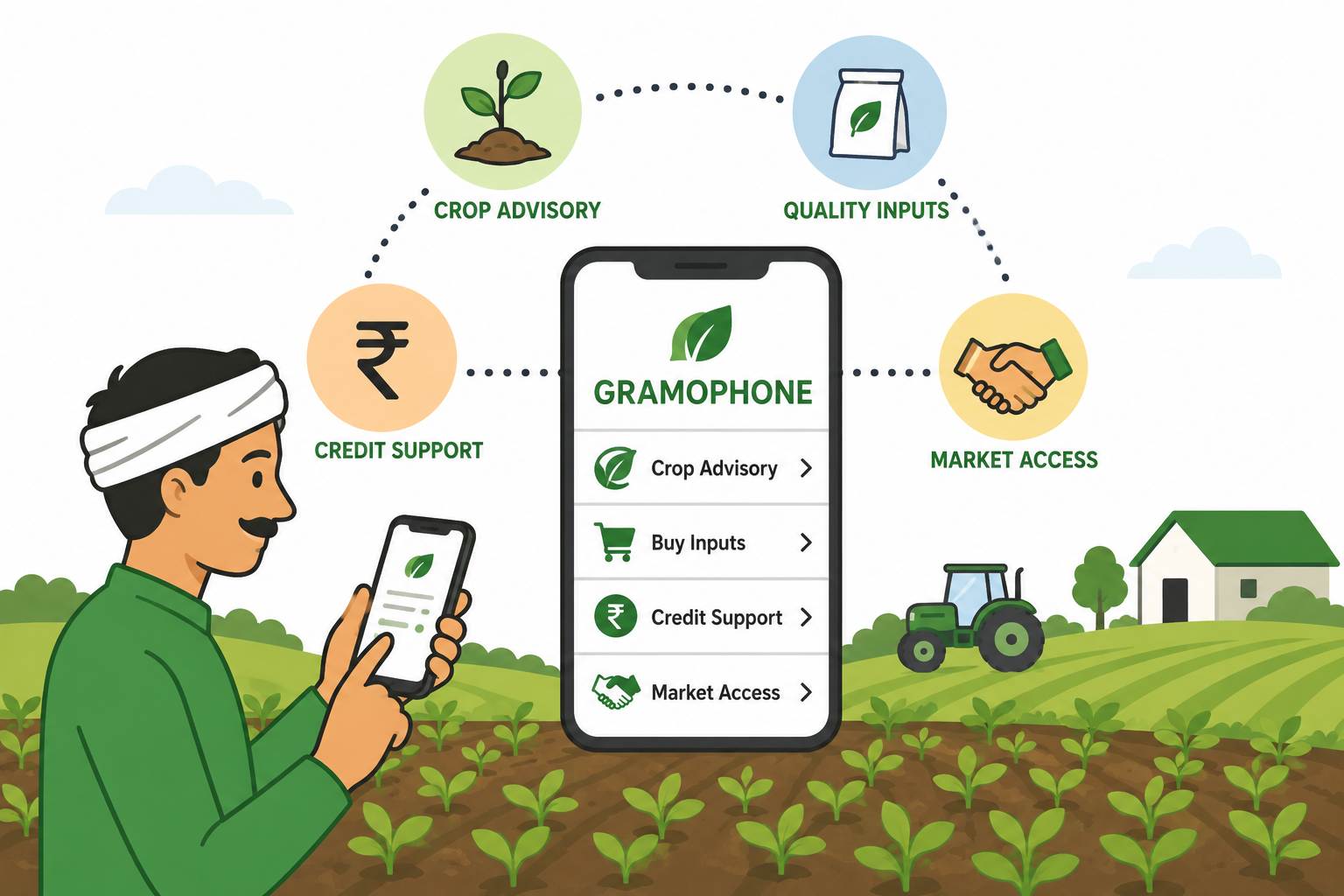
Indore-based Gramophone was built around trying to organize those decisions through a technology platform that combines crop advisory, ecommerce, market linkage, and financial services for farmers.
Founded in 2016, the agritech startup operates as what it calls a “full-stack intelligent farming platform.” Instead of focusing on only one part of the agricultural chain, the company works across crop advisory, farm inputs, credit access, and produce sales.
The company was founded by Tauseef Ahmad Khan, Nishant Mahatre, Harshit Gupta, and Ashish Rajan Singh. Public profiles describe the founding team as graduates from institutions including IIT Kharagpur and IIM Ahmedabad.
The founders started with a practical observation: most small farmers lacked access to localized scientific agricultural advice. India’s agriculture sector is highly fragmented, with different soil types, weather conditions, irrigation patterns, and crop cycles across regions. A single crop can involve hundreds of decisions across fertilizer timing, pesticide use, irrigation scheduling, and disease management.
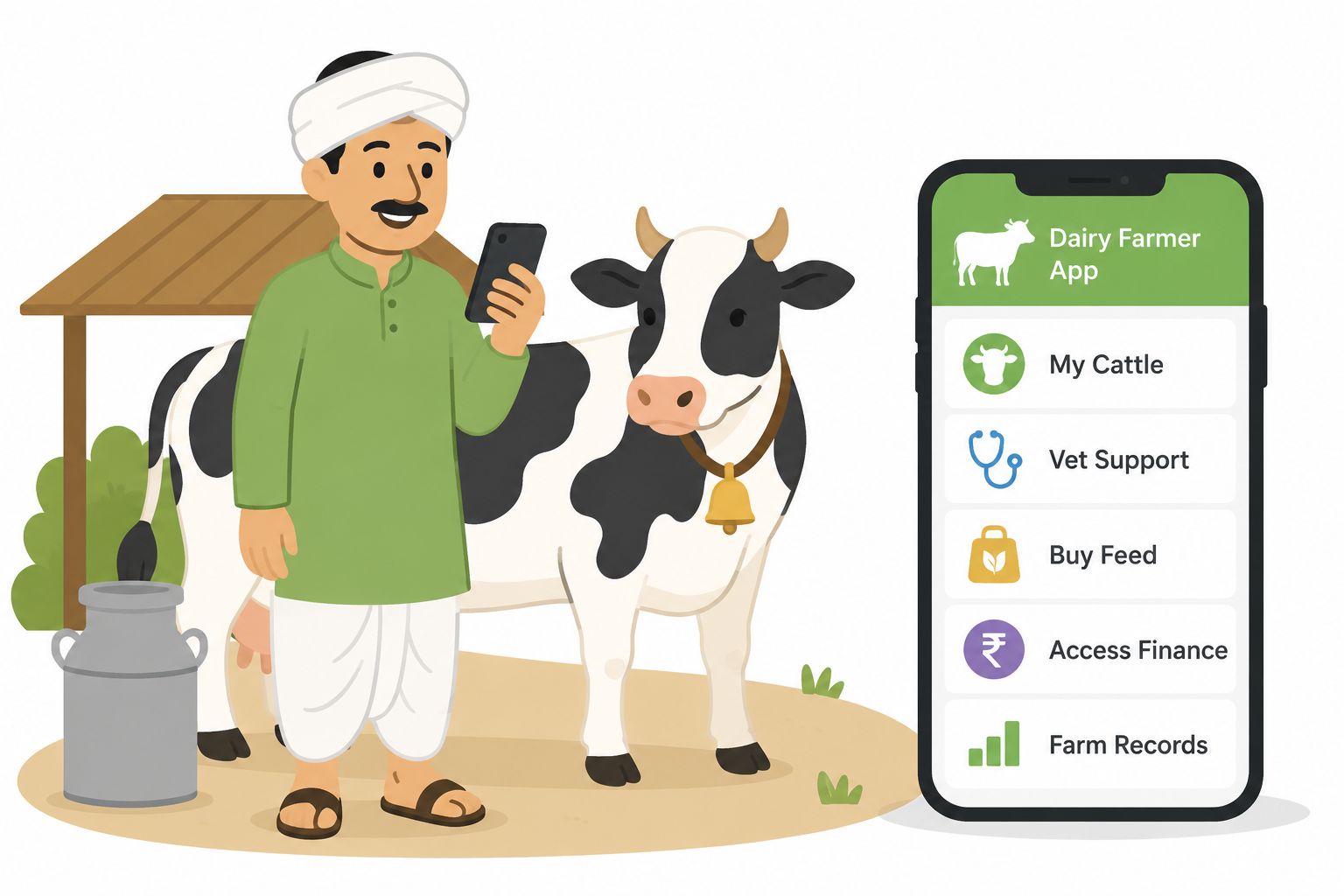
Gramophone’s early focus was advisory services. The company built a mobile platform that provides crop-specific recommendations based on local weather, soil conditions, crop stage, and disease risk. Farmers can receive guidance on sowing schedules, nutrient application, irrigation timing, and pest management through the app, helpline support, and local field agents.
Over time, the company expanded into ecommerce for agricultural inputs. Farmers using the platform can buy seeds, fertilizers, pesticides, crop nutrients, and farming tools directly through Gramophone’s network. The company positions this as a way to improve access to genuine products and reduce dependence on local intermediaries.
The platform also tries to personalize recommendations rather than offering generic advice. According to company material and interviews, the advisory engine uses farm-level information, crop cycles, and localized conditions to generate recommendations tailored to individual farms.
In practice, the company works as a combination of software platform, advisory service, and rural commerce network.
One operational challenge in Indian agriculture is trust. Farmers are often hesitant to adopt new products or recommendations without local validation. Gramophone appears to have addressed this partly through offline engagement alongside digital tools rather than relying entirely on app-based interaction.
The company gradually evolved into a broader “full-stack” agritech platform.
The company also entered agricultural lending through partnerships with fintech firms such as Jai Kisan. The idea is that farmers can buy agricultural inputs on credit and repay after harvest instead of making full upfront payments during sowing season. Gramophone says its systems improve productivity and reduce farming costs.
The startup raised early angel funding in 2017. In 2018, Info Edge invested in the company’s seed round. In 2019, Gramophone raised around $3.5 million in a Series A round from investors including Info Edge, Asha Impact, Better Capital, and Myntra co-founder Raveen Sastry. In 2020, the company raised another INR 25 crore led by Siana Capital, with participation from existing investors including Info Edge, Better Capital, and Asha Impact. In 2021, Gramophone secured a $10 million Series B round led by Z3Partners.
The agritech market globally has expanded rapidly over the last decade. Companies increasingly use satellite imagery, AI-driven advisory systems, IoT devices, supply-chain analytics, and fintech systems to improve agricultural productivity.
Internationally, firms such as Farmers Business Network in the United States, DeHaat in India, AgroStar, Ninjacart, and CropIn work in related areas such as advisory systems, agri-commerce, logistics, and farm intelligence platforms.
But India’s agricultural environment is unusually complex because most farmers are smallholders operating on fragmented landholdings. Digital adoption remains uneven, and farmers often depend on physical local relationships for decision-making.
This means agritech companies usually need hybrid “phygital” models combining software with offline support, logistics, and local networks.
Gramophone appears to have evolved in exactly that direction — combining digital advisory systems with physical input delivery, retail touchpoints, financing, and buyer networks.
The agritech sector itself has become more challenging financially in recent years. Many startups struggled with profitability because rural customer acquisition, logistics, and field operations are expensive.
In early 2026, Unnati acquired Gramophone through a stock-swap transaction as part of broader consolidation in India’s agritech sector. That consolidation reflects a wider reality in agritech: building sustainable businesses in fragmented rural markets often requires scale across multiple services rather than operating in a single narrow category.
Gramophone’s journey mirrors that broader shift. What began as a crop-advisory platform gradually expanded into a larger agricultural operating system connecting advice, inputs, credit, and market access for Indian farmers.
- Our correspondent