In agricultural markets, quality assessment is still heavily dependent on human judgment. Traders inspect grains manually. Retail buyers visually examine fruits and vegetables before procurement. Exporters rely on sampling processes that vary from one inspector to another.
The result is inconsistency across the supply chain — affecting pricing, procurement decisions, wastage, and disputes between buyers and sellers.
Gurugram-based Intello Labs was founded to digitize that process.
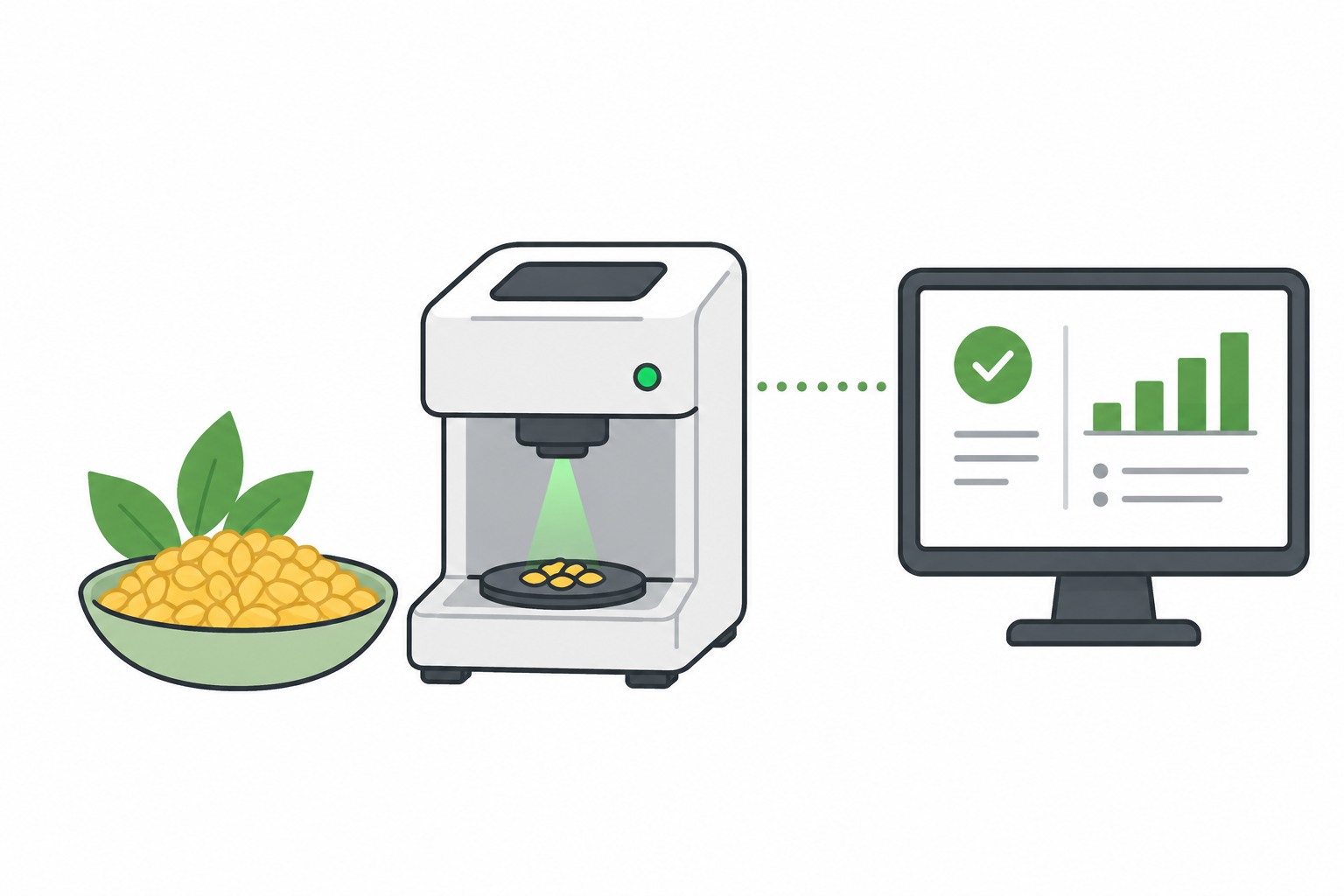
The company builds AI-based quality assessment systems for agricultural commodities, using computer vision, image analysis, and machine learning to evaluate fruits, vegetables, grains, and spices. Instead of relying entirely on manual inspection, the system uses smartphone images or specialized imaging hardware to generate measurable quality metrics.
Intello Labs was founded in 2016 by Milan Sharma, Nishant Mishra, Himani Shah, and Devendra Chandani. The founders came from engineering, analytics, and enterprise technology backgrounds rather than traditional agriculture businesses. Their focus was on applying image recognition and AI systems to one specific operational problem inside food supply chains: quality grading.
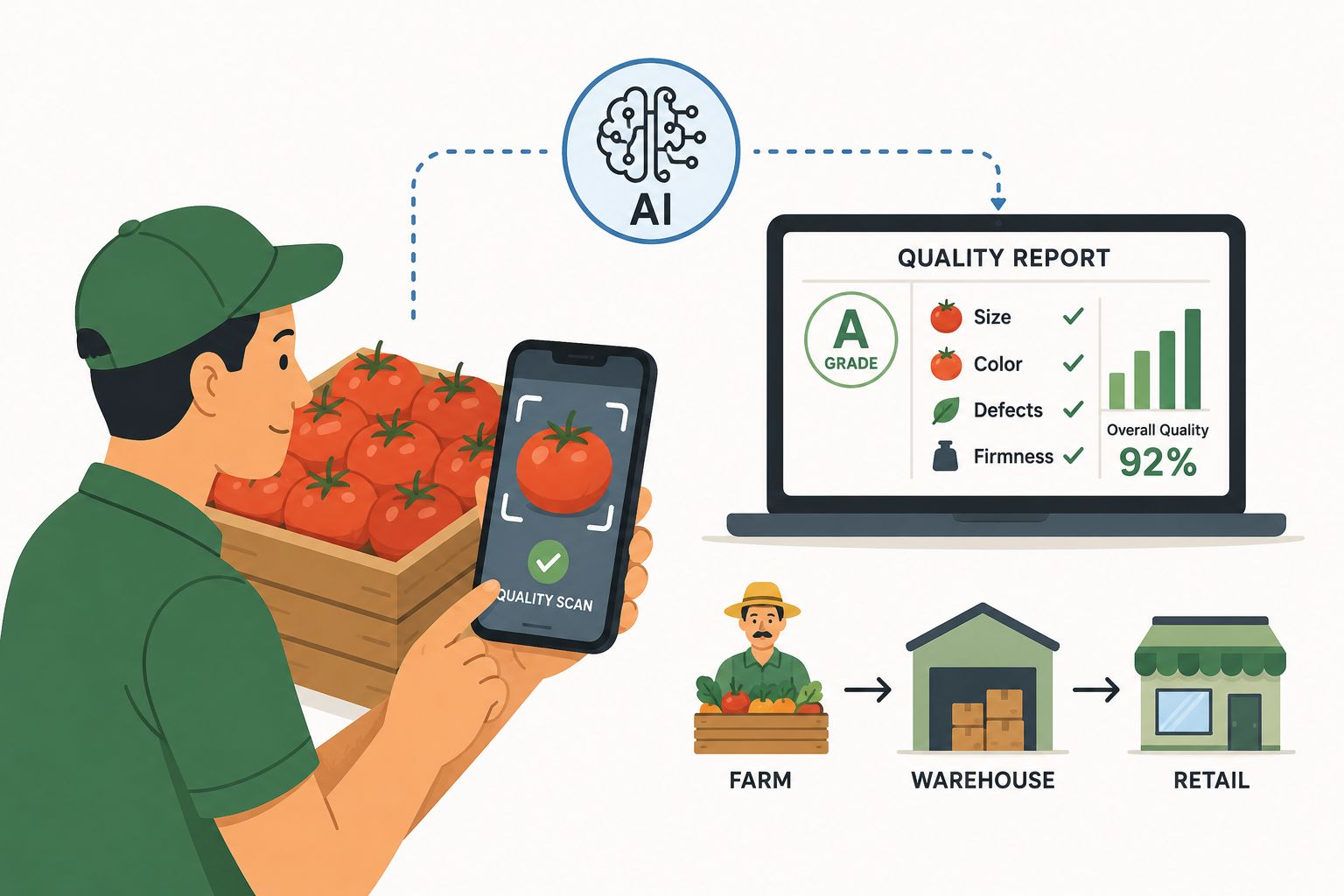
The company started with image-based inspection tools that could run through smartphone applications. A user could take a photograph of a produce sample — tomatoes, potatoes, onions, wheat, cardamom, or other commodities — and the system would analyze factors such as size, color, ripeness, defects, and visible damage.
The platform was initially designed to replace subjective and inconsistent manual inspections with standardized digital measurements. The company stated that its technology could measure quality variations that were difficult for human inspectors to consistently identify.
For example, in cardamom grading, even small size differences can affect pricing significantly. Intello Labs said its imaging systems could measure pod diameter variations more accurately than manual inspections and across much larger sample sizes.
The company’s flagship platform later evolved into a broader quality-management system called Intello Track. The company says its systems are designed to work across different stages of the supply chain. Retailers can use the software to inspect incoming produce at procurement centers. Warehouses can use it to monitor deterioration and quality drift over time. Exporters and traders can use it for grading and sorting before shipment.
One of Intello Labs’ early deployments came through Reliance Fresh. The company entered the JioGenNext accelerator in 2017, which helped connect the startup with Reliance Retail executives. Intello Labs then conducted a pilot at Reliance Fresh procurement centers in Mumbai.
During the pilot, procurement supervisors used the platform to photograph incoming produce crates. The software generated quality metrics and helped supervisors decide whether consignments met procurement standards. According to Intello Labs, the pilot reduced inspection turnaround time from around 20 minutes to roughly 2 minutes.
Intello Labs has since expanded beyond Indian retail chains.
In 2019, Intello Labs raised a $2 million seed round from Nexus Venture Partners and Omnivore. In 2020, the company raised a $5.9 million Series A round led by Saama Capital, with participation from GROW, SVG Ventures THRIVE, Omnivore, and Nexus Venture Partners. In 2021, the company raised another approximately $5 million round led by Avaana Capital, with participation from existing investors including Omnivore, Nexus, and Saama Capital.
The broader category Intello Labs operates in is often described as agricultural quality digitization or AI-based commodity grading.
Globally, agricultural supply chains still depend heavily on manual inspections, laboratory testing, and sampling systems. These processes are often slow, inconsistent, and difficult to scale across fragmented supply networks.
A growing number of startups are trying to digitize these workflows using computer vision, sensors, spectroscopy, and AI models.
India-based AgNext works on AI-powered commodity testing systems for grains, spices, tea, milk, and other agricultural products. US and Israeli companies have also developed imaging and sensing systems for produce grading, warehouse quality monitoring, and export inspection.
What differentiates Intello Labs is its focus on non-destructive image-based assessment systems that can operate through relatively low-cost hardware such as smartphones and cameras rather than relying entirely on expensive laboratory infrastructure.
The company also positions itself as a workflow platform rather than just an AI model provider. Its systems are integrated into procurement operations, quality management processes, and retail inspection workflows.
The market opportunity is closely tied to food waste and supply-chain inefficiency.
According to industry studies cited in agritech reports, a substantial percentage of fresh produce is lost due to inconsistent quality management, delayed sorting, and supply-chain rejection. Retailers and exporters often reject consignments because quality standards vary between suppliers and buyers.
Intello Labs argues that digitized quality systems can reduce these disputes while improving price transparency for farmers and traders.
The challenge, however, is operational complexity. Agricultural commodities vary across geography, weather conditions, lighting environments, crop varieties, and storage conditions. AI models trained on one dataset may not generalize perfectly across regions or supply chains. Maintaining accuracy across large commodity categories requires continuous data collection and retraining.
The company also operates in a market where procurement behaviour is deeply relationship-driven and where many inspections still depend on human trust networks rather than purely standardized systems.
Even so, the direction of the industry is increasingly moving toward digital quality infrastructure — especially as organized retail, food exports, and traceability systems expand.
For Intello Labs, the larger ambition appears to be building a common digital language for agricultural quality across fragmented supply chains. Instead of different buyers using different inspection standards, the company wants AI-generated quality scores and imaging systems to become part of routine procurement operations.
- Our correspondent