Every day, millions of commercial vehicles move across highways in India, carrying goods, people, and economic activity. Behind the wheel are drivers working long hours, often under pressure, navigating unpredictable roads. In this environment, safety is not just about rules—it is about real-time decisions.
Yet most systems designed to improve road safety are still reactive. They record what went wrong, analyse it later, and feed it back into training or compliance systems. By the time the insight arrives, the risk has already played out.
A Bengaluru-based startup, LightMetrics, is trying to change that equation by shifting road safety from hindsight to real-time intervention.
Founded in 2015, LightMetrics builds AI-powered video telematics systems that analyse live video feeds from vehicles and provide instant feedback to drivers. Its core idea is simple: if risky behaviour can be detected the moment it happens, it can also be corrected before it leads to an accident.
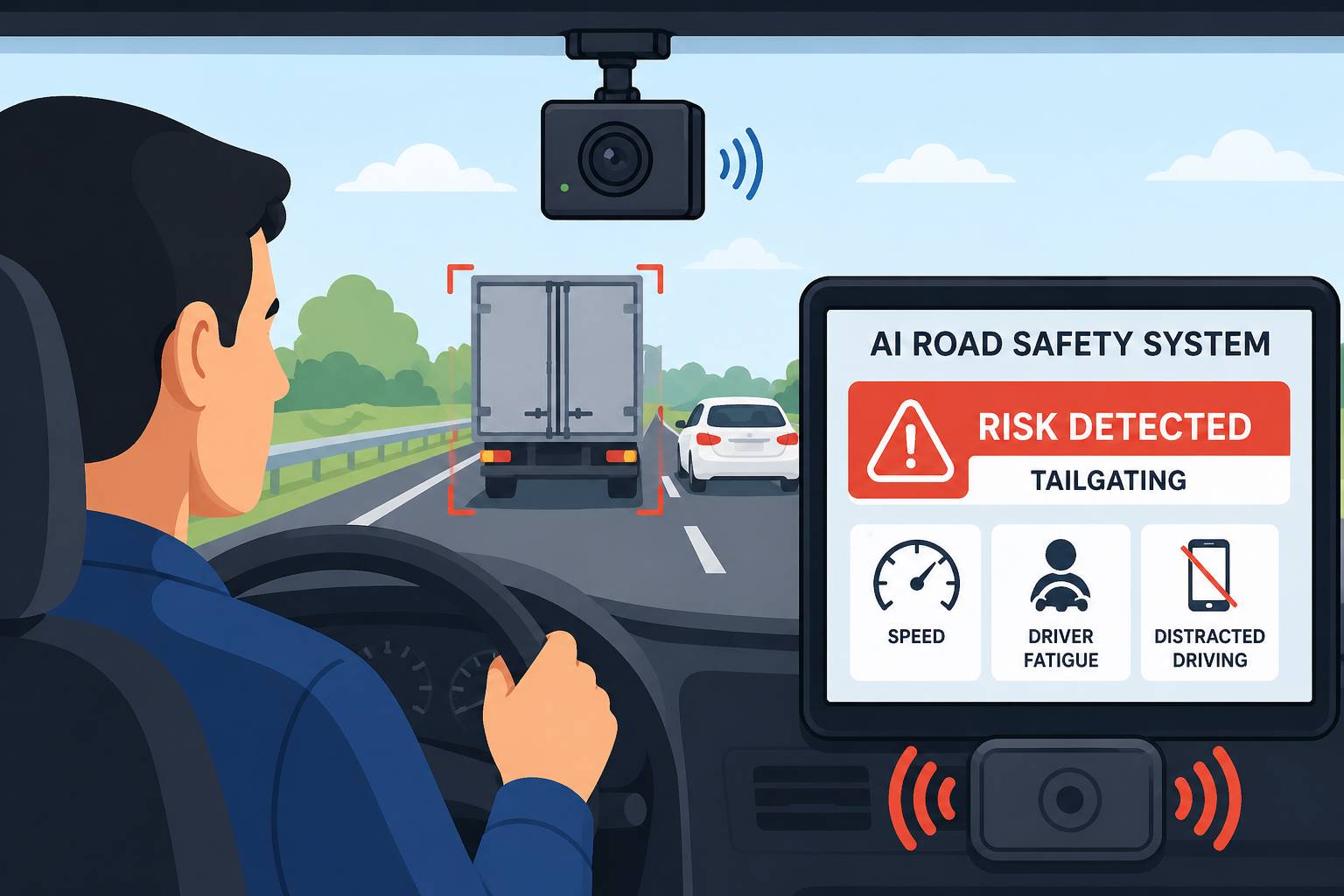
At the heart of its platform is a product called RideView, which uses computer vision models deployed directly on in-vehicle cameras. These models can detect events like tailgating, sudden braking, speeding, distracted driving, or driver fatigue, and generate alerts in real time.
Unlike traditional fleet management systems that rely on GPS data or post-trip analysis, LightMetrics focuses on what is actually happening on the road and inside the cabin. Its system processes video feeds, understands context, and translates that into insights for both drivers and fleet managers.
The shift is important because human error remains the leading cause of road accidents globally. LightMetrics is built around the idea that improving driver behaviour—rather than only improving vehicles or infrastructure—is the fastest path to safer roads.
In India, this problem is especially urgent. The country records one of the highest numbers of road accidents in the world, with commercial vehicles contributing significantly due to long-distance travel, fatigue, and high utilisation. At the same time, fleet operators are under pressure to reduce costs, improve efficiency, and comply with safety regulations.
This creates a strong case for technologies that can simultaneously improve safety and operational performance.
LightMetrics operates in this space by offering what is known as “video telematics.” Instead of just tracking where a vehicle is, video telematics adds a layer of visual intelligence—understanding how it is being driven. Its platform combines edge AI, which runs directly on cameras, with cloud-based analytics that provide deeper insights over time.
One of the company’s key design choices is to remain hardware-agnostic. Unlike many competitors that require proprietary cameras, LightMetrics builds software that can work across different camera systems. This allows fleet operators to adopt the technology without heavy upfront investment, making it more accessible across markets.
This flexibility has helped the company expand beyond India. Today, its systems are deployed across multiple geographies, including North America, Australia, Latin America, and Asia, working with telematics providers and automotive partners.
The global context is important here. Video telematics is emerging as a major category within the broader mobility and logistics ecosystem. As fleets grow larger and more complex, companies are looking for ways to reduce accidents, lower insurance costs, and improve driver performance.
Around the world, similar systems are being adopted to move from passive monitoring to active intervention. The idea is no longer just to know what happened, but to prevent what could happen.
LightMetrics fits squarely into this shift, but with a distinct approach shaped by its origins.
The founding team, led by Soumik Ukil along with co-founders like Krishna A. G., Ravi Shenoy, Mithun Uliyar, and Pushkar Patwardhan, previously worked together on computer vision and machine learning at Nokia Research.
Their insight was that while autonomous driving was attracting attention, there was a more immediate opportunity in improving human driving behaviour using AI. Instead of replacing drivers, they chose to assist them.
This decision reflects a broader pattern in India’s deep-tech ecosystem. Rather than competing directly in capital-intensive areas like full autonomy, startups are focusing on applied AI solutions that can deliver impact faster and at lower cost.
LightMetrics is a good example of this approach. Its models are designed to run efficiently on edge devices, without requiring expensive hardware or constant cloud connectivity. This makes them viable not just in high-end fleets, but across a wide range of operating conditions.
Another important shift in the company’s evolution is the move toward contextual intelligence. Early video telematics systems often generated too many false alerts, leading to “alert fatigue” among drivers and fleet managers. LightMetrics is now using more advanced AI techniques, including vision-language models, to better understand context and filter out irrelevant events.
This reflects a broader global trend in AI: moving from detection to understanding.
Instead of simply flagging a hard brake, systems are beginning to ask why it happened. Was it reckless driving, or did another vehicle cut in unexpectedly? This distinction matters, especially in industries where driver trust and fairness are critical.
Beyond safety, the platform also has economic implications. Fewer accidents mean lower insurance claims, reduced vehicle downtime, and improved operational efficiency. For fleet operators, safety is not just a compliance requirement—it is a business metric.
LightMetrics positions itself at this intersection of safety and economics, helping fleets unlock what it describes as the “economic benefits of safety.”
Because in road safety, the difference between an accident and a near-miss is often just a few seconds.
LightMetrics is trying to own those seconds.
- our correspondent