
India’s legal system runs on paperwork. Every case generates pages of filings, precedents, citations, and arguments.
For lawyers, much of the job is not courtroom drama but painstaking research—digging through judgments, verifying citations, and drafting documents that must be precise down to every word. This work is slow and repetitive.
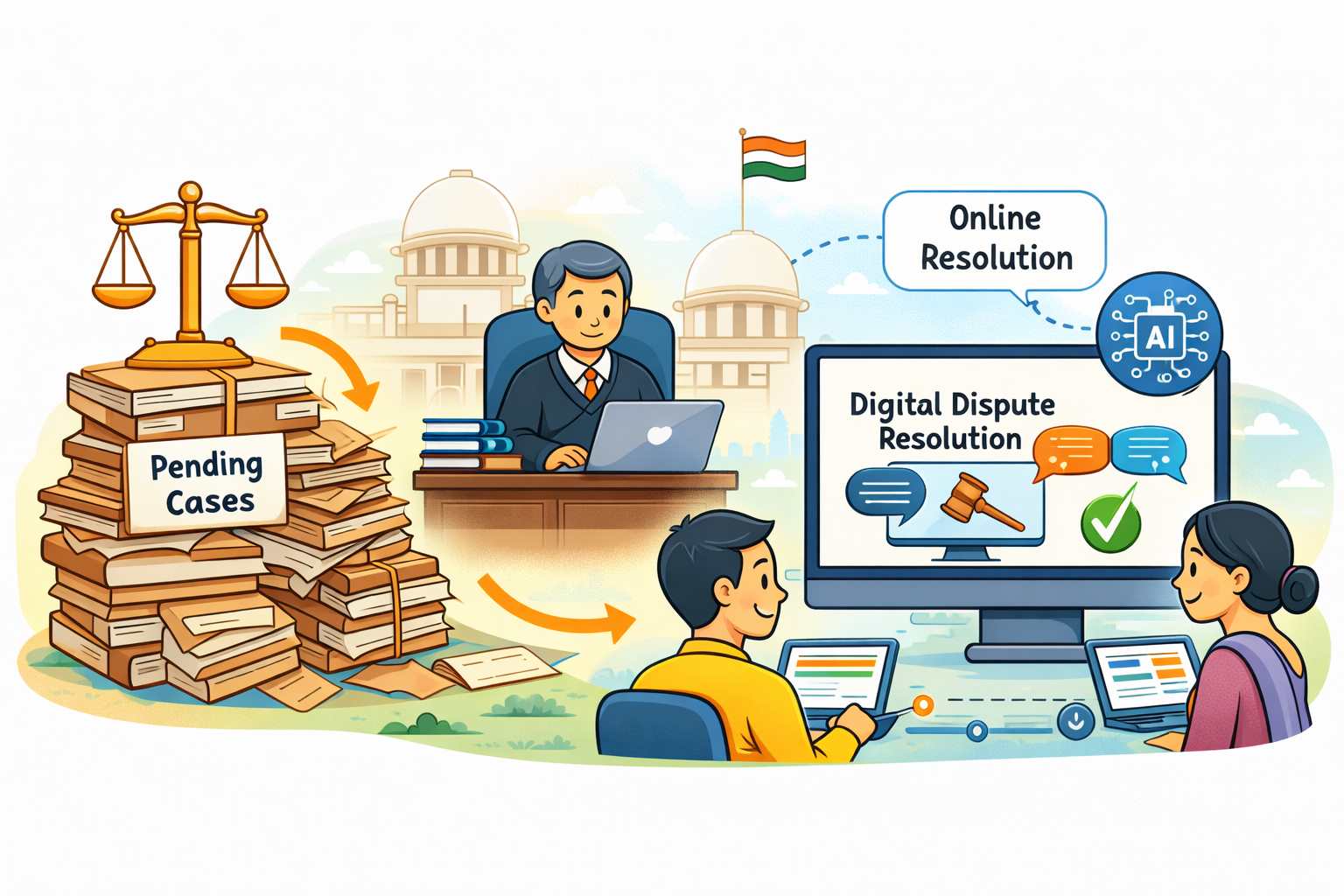
In a country with millions of pending cases and limited access to quality legal support, the bottleneck is not just the law—it is the process.
A Bengaluru-based startup, Jhana, is trying to change that by building what it calls India’s first “AI paralegal.”
Founded in 2022 and rooted in research work that began at Harvard, Jhana is designed to assist lawyers with the most time-consuming parts of their work—research, drafting, and document analysis.
What does it do?
At its core, the platform functions like a highly specialised AI assistant trained specifically on Indian law. Instead of searching databases with keywords, users can describe a case in natural language and receive structured outputs—relevant judgments, citations, legal arguments, and even draft documents. The idea is not to replace lawyers, but to remove the friction around how legal work gets done.
The scale of the problem in India makes this especially relevant. Indian judiciary handles an enormous volume of cases, with millions pending across different levels of courts.
The system generates vast amounts of legal data every day, yet access to this information remains fragmented and often inefficient. Many lawyers still rely on traditional databases and manual search methods that are time-intensive and inconsistent.
For younger lawyers or those outside large firms, the challenge is even greater, with limited resources and high expectations. Jhana is built around this reality, using a large proprietary dataset of legal documents to deliver responses that are not just fast but also structured and verifiable. It can generate propositions, identify contradictions in case law, and flag outdated citations, reducing hours of manual work into minutes.
Jhana’s approach reflects a broader shift in how AI is being applied to professional domains. Early legal-tech tools focused on digitisation, making documents searchable. The next wave focused on automation, speeding up tasks like contract review.
Context
Jhana represents a newer category that aims to build legal intelligence systems. Instead of simply retrieving information, these systems interpret it. By combining semantic search with structured reasoning, the platform processes legal queries more like a human researcher, analysing case files, generating summaries, and suggesting arguments. It also enables bulk document analysis, where entire case files can be uploaded and reviewed for risks or inconsistencies. Crucially, it traces outputs back to source material, addressing one of the biggest concerns with AI in law—accuracy and hallucination.
Global approach
This shift is not limited to India. Globally, legal-tech is undergoing rapid transformation. In markets like the United States and Europe, AI is being integrated into contract analysis, compliance workflows, and litigation support.
However, most of these systems are built for Western legal frameworks. India’s legal system is far more complex in its scale, diversity, and dependence on precedent. Generic AI models often struggle in this environment. Jhana’s strategy of building specifically for Indian law, using local datasets and contextual training, gives it a distinct advantage. At the same time, its core idea—AI as a legal assistant—has universal relevance, as legal systems everywhere deal with increasing complexity and information overload.
Founders
The company was founded by Hemanth Bharatha Chakravarthy, Em McGlone, and Ben Hoffner-Brodsky, bringing together expertise across law, artificial intelligence, and research. Their work began in global academic environments, where they saw firsthand the gap between advanced legal research tools and the reality of legal practice in India.
That gap became the starting point for Jhana, which aims to make high-quality legal intelligence more accessible and usable in everyday workflows. The founding team’s interdisciplinary background reflects the complexity of the problem they are trying to solve, combining legal understanding with deep technical capability.
Relevance
What makes Jhana significant is not just the technology, but the shift it represents. Legal systems have long been constrained by the limits of human processing—how much a lawyer can read, remember, and analyse within a given time. By augmenting this capacity with AI, the potential exists to fundamentally change how legal work is done. Lawyers can spend less time searching and more time thinking, less time drafting and more time strategising. This could also have broader implications for access to justice, as better tools enable more efficient and affordable legal services.
Challenges
The road ahead, however, is not without challenges. Law is a field built on trust, precedent, and accountability. Any AI system entering this space must prove not only that it works, but that it works reliably and transparently. Adoption will depend on whether lawyers trust the outputs and feel confident integrating the tool into their workflows. Jhana’s focus on verifiable, citation-backed responses is a step in that direction, but long-term success will require continuous validation and adaptation to legal practice.
Our correspondent