PUCAR (Public Collective for Avoidance and Resolution of Disputes) is a collaborative initiative working on one of India’s largest systemic problems: the backlog of court cases.
Instead of building standalone legal-tech products, PUCAR is structured as a collective that brings together legal experts, technologists, policymakers, and researchers to redesign how disputes are resolved.
The focus is not on digitizing courts as they exist today, but on rethinking how disputes can be handled earlier, faster, and outside traditional court processes.
Origin
PUCAR was formed around 2022–2023 as a mission-driven collective rather than a traditional company or non-profit.
It brings together more than 100 contributors across fields such as legal practice, economics, public technology, artificial intelligence, and government.
The initiative is closely linked to the broader ecosystem of justice innovation in India, including organizations like Agami. Public references indicate that individuals such as Supriya Sankaran, co-founder of Agami, are involved in shaping PUCAR’s direction and workstreams.
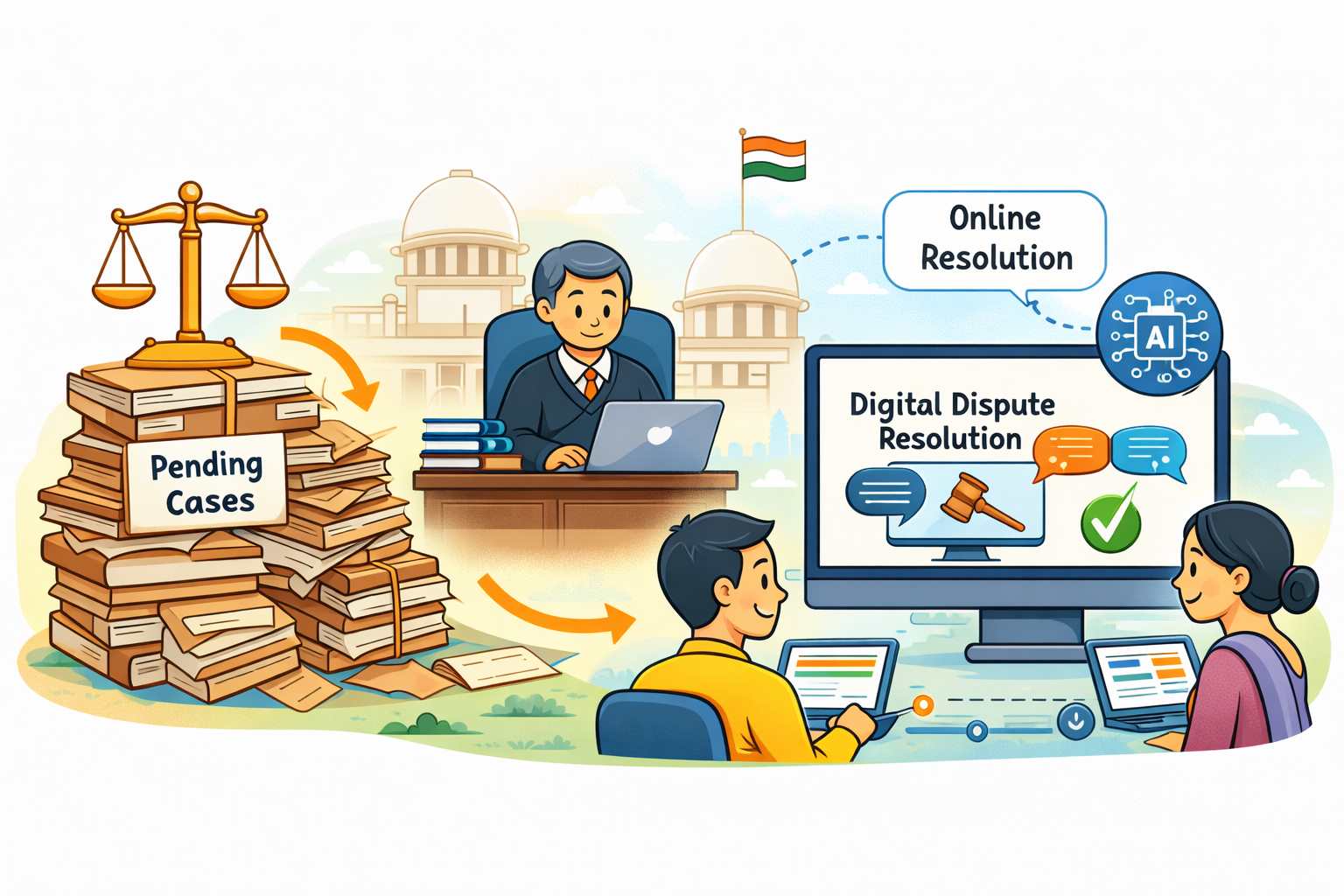
The core problem it addresses is structural. India has over five crore pending legal cases, creating delays that affect individuals, businesses, and public systems.
PUCAR’s approach starts with the idea that not all disputes need to go through the full court process, and that technology can help resolve many of them earlier.
Product
PUCAR does not offer a single software product. Instead, it works on designing systems and frameworks that enable faster dispute resolution.
Its work focuses on areas such as online dispute resolution, digital courts, and process redesign. The goal is to create pathways where disputes can be handled through structured digital workflows rather than lengthy court procedures.
PUCAR is working on using technology to address inefficiencies in dispute resolution, particularly in high-volume case types like cheque bounce cases and motor accident claims.
These categories alone account for a significant share of pending cases, making them a priority for system-level intervention.
How the system works
PUCAR’s approach begins by identifying specific categories of disputes that can be resolved outside traditional court processes.
The next step is redesigning workflows. This involves mapping how disputes currently move through the system and identifying where delays occur.
Once these bottlenecks are understood, the collective works on designing digital-first processes. These may include online filing, automated data capture, asynchronous communication between parties, and simplified rules for documentation.
In some cases, the work extends to helping define rules for “natively digital courts,” where processes are designed for digital interaction from the start rather than adapted from paper-based systems.
Technology plays a supporting role rather than being the entire solution. The emphasis is on combining process redesign with digital tools.
Deployment
PUCAR operates through collaborations rather than direct deployments.
It has worked as a knowledge and design partner with institutions such as courts and public agencies. One example includes involvement in initiatives like 24×7 digital court systems, where processes are restructured to allow continuous, asynchronous case handling.
Differentiation
PUCAR’s main difference lies in how it approaches the problem.
Many legal-tech solutions focus on building tools for lawyers or courts. PUCAR focuses on redesigning the underlying system.
Another key distinction is its structure as a collective. Instead of operating as a single organization, it brings together contributors from multiple disciplines.
This allows it to work across legal, technological, and policy domains simultaneously.
Market Landscape
PUCAR operates within the broader justice innovation and legal-tech ecosystem.
In India, this includes:
- online dispute resolution platforms
- legal-tech startups
- policy and research organizations
Globally, similar efforts exist in areas such as digital courts, mediation platforms, and alternative dispute resolution systems.
However, many of these operate as standalone platforms. PUCAR’s role is closer to a system designer and ecosystem builder.
Global Context
Across the world, justice systems are facing similar challenges: delays, high costs, and limited accessibility.
This has led to increased interest in:
- online dispute resolution
- digital courts
- process simplification
The focus is shifting from simply digitizing existing systems to redesigning them for efficiency and accessibility.
PUCAR’s work reflects this shift. By focusing on high-volume disputes and system-level redesign, it aligns with global efforts to modernize justice systems.
- Our correspondent