Jivi AI is building an AI-powered system designed to act as a first point of medical interaction for millions of people who do not have easy access to doctors.
Instead of starting with hospitals or clinics, the company is building a voice-based interface that allows users to describe symptoms in their own language and receive structured medical guidance.
The approach is shaped by a simple constraint: in large parts of India, the first interaction with healthcare is not a doctor, but a delay, a guess, or a local workaround. Jivi is trying to standardize that first interaction.
Origin
Jivi AI was founded by Dr. Vishal Bali and Ruchi Kalra, both of whom have long experience in healthcare and digital platforms in India.
Dr. Vishal Bali has spent decades in healthcare delivery and policy. He has held leadership roles at Fortis Healthcare and has worked on public health initiatives and digital health systems across India and other emerging markets. His experience includes building hospital networks and working on scalable healthcare models.
Ruchi Kalra is known for co-founding OfBusiness, a large B2B commerce and financing platform in India. Her background is in building technology-led businesses that operate at scale, particularly in sectors where distribution and access are fragmented.
The combination of these backgrounds shows up clearly in Jivi’s design. The system is not just a medical tool; it is structured to work in environments where users may not be comfortable with apps, typing, or formal healthcare systems.
Product
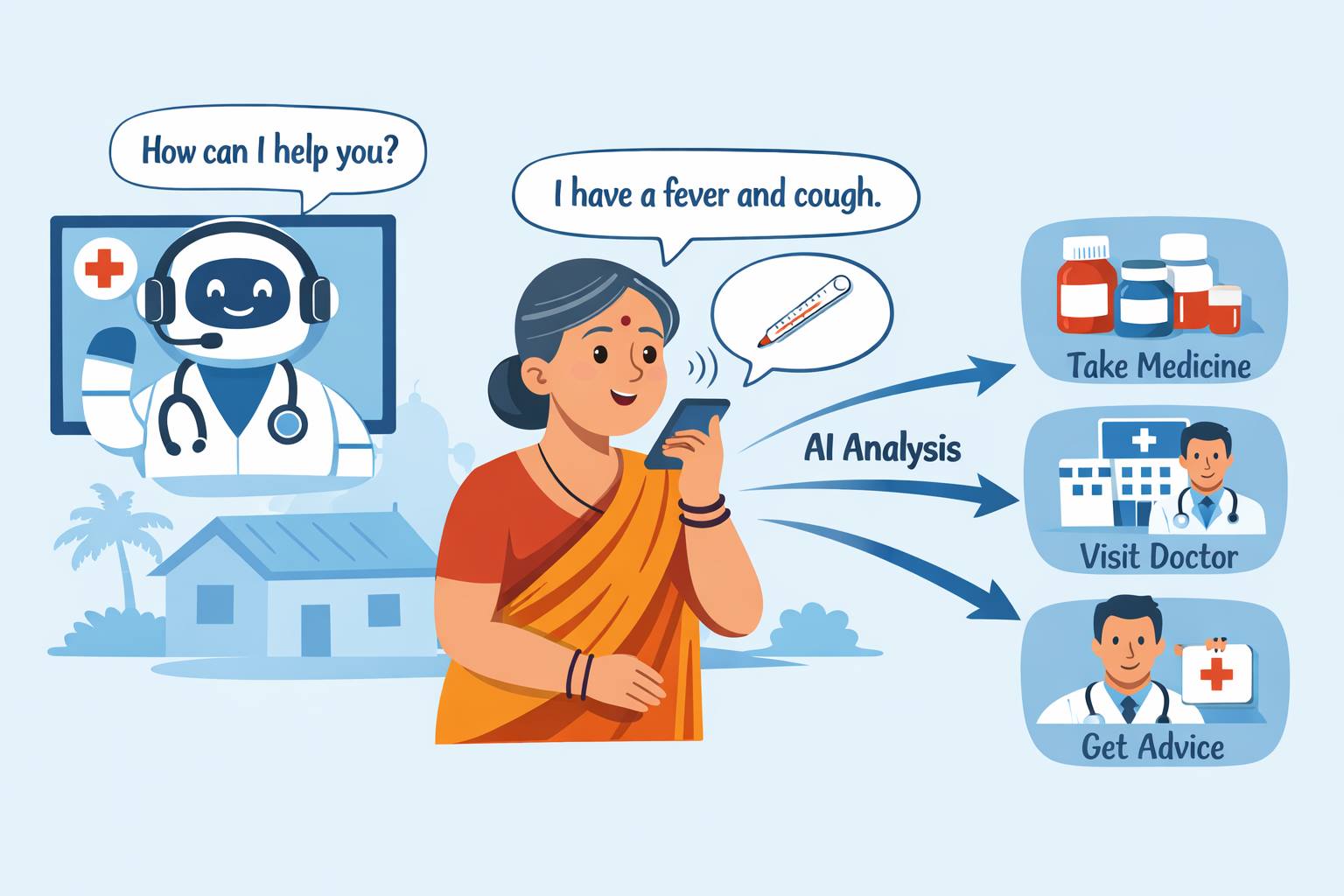
Jivi’s core product is an AI system that interacts with users through voice. A user can speak in their preferred language, describe symptoms, and receive guidance without needing to navigate complex interfaces.
The system is designed to function like an initial doctor interaction. It asks questions, narrows down possibilities, and suggests next steps. These could include home care, medication guidance, or escalation to a human doctor.
Unlike search engines or generic chatbots, Jivi is structured around clinical pathways. This means that the questions it asks are not random. They follow medical logic, similar to how a doctor would take a patient’s history.
How it works
The interaction begins with a user speaking into the system, often through a mobile device. The AI converts speech to text and processes it to identify symptoms and context.
From there, the system runs a structured triage. It asks follow-up questions to clarify duration, severity, and associated symptoms. For example, a complaint of fever would trigger questions about temperature, duration, and additional signs like cough or fatigue.
The AI uses this information to generate a set of possible conditions and recommended actions. These are not presented as definitive diagnoses but as guided advice.
One of the key parts of the system is language handling. Jivi is built to support multiple Indian languages, allowing users to interact in a way that feels natural. This is critical in regions where English-based interfaces limit access.
The system also maintains a record of interactions. This allows for continuity, so follow-up conversations build on earlier inputs rather than starting from scratch.
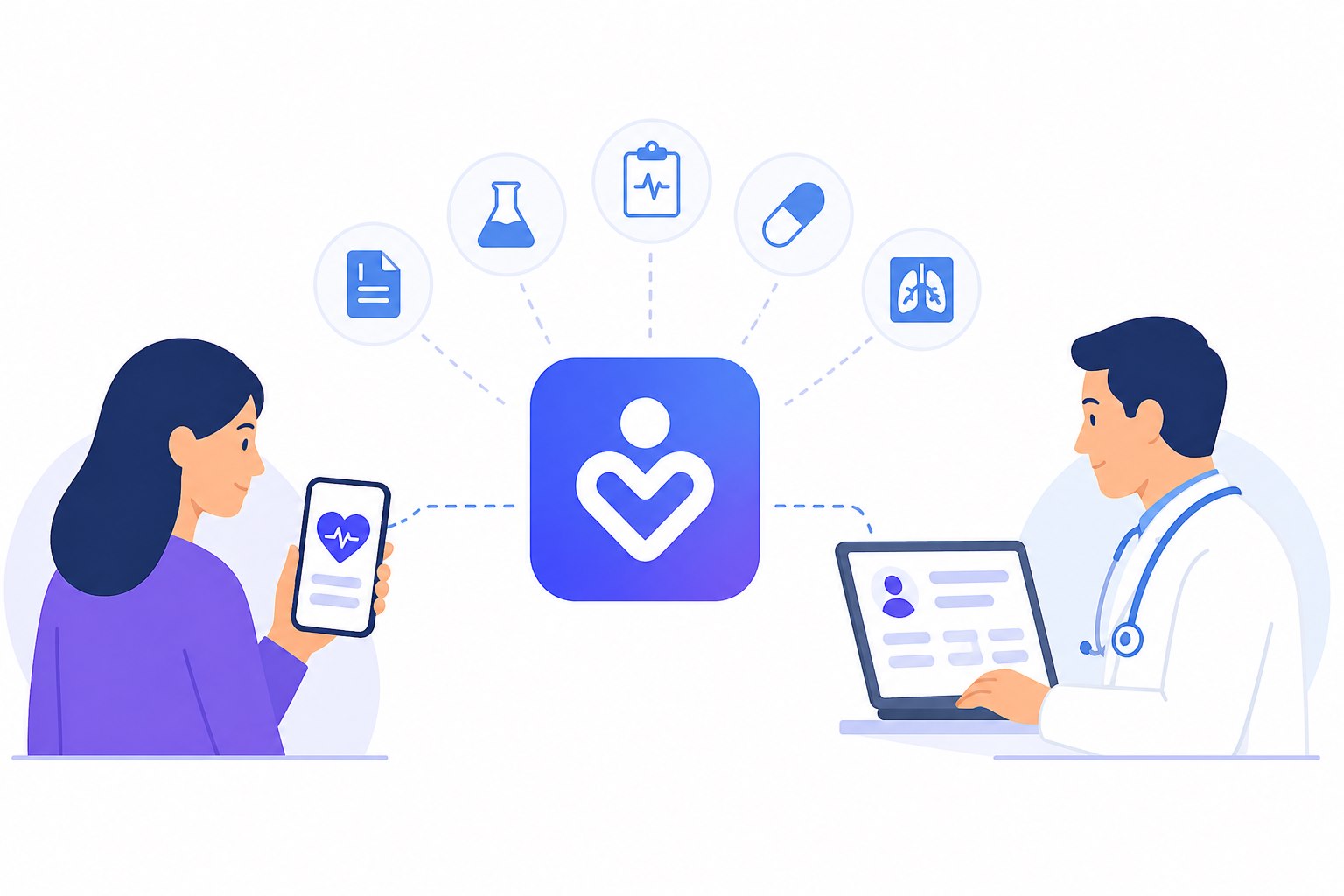
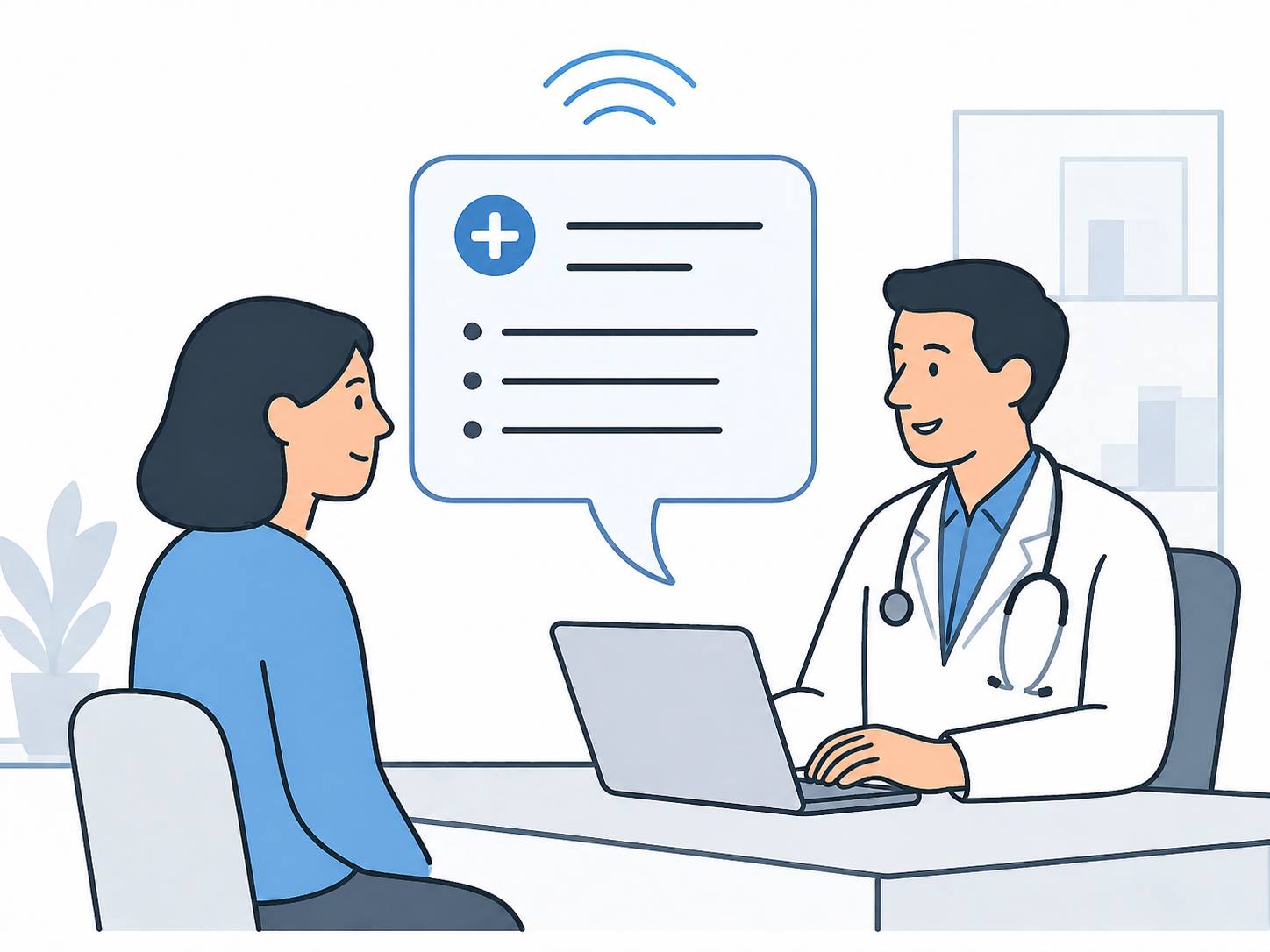
In some cases, the system can connect users to human doctors or healthcare providers, creating a hybrid model where AI handles the first layer and humans handle more complex cases.
Deployments
Jivi is designed primarily for large-scale deployment in underserved and semi-urban populations. While detailed public metrics are still limited, the company has indicated that it is working on partnerships with healthcare providers and organizations to integrate the system into broader care delivery.
The use cases include primary care triage, early symptom assessment, and guiding patients on whether they need to seek in-person care.
Because the system is voice-based, it is particularly suited for users who may not be comfortable typing or navigating apps. This expands its usability beyond typical digital health platforms.
Performance
At this stage, most performance indicators are based on system design and early deployments rather than large-scale published studies.
The key measure for a system like Jivi is whether it can accurately guide users to the right level of care. This includes avoiding unnecessary hospital visits while also not missing serious conditions.
The structured questioning approach improves consistency compared to informal consultations or self-diagnosis through search engines.
Another important factor is user engagement. Voice interaction tends to be more natural for many users, which can lead to higher completion rates in symptom reporting.
Formal validation, including clinical studies, will be critical as the system scales. This is a common requirement for AI-driven healthcare tools globally.
Differentiation
Jivi’s main difference lies in its focus on voice as the primary interface.
Most digital health platforms assume literacy, smartphone familiarity, and comfort with typing. Jivi removes these assumptions. By allowing users to speak, it lowers the barrier to entry significantly.
Another key difference is its focus on the very first step of care. Instead of trying to replace doctors or provide full telemedicine services, Jivi focuses on triage and guidance.
This positioning allows the system to handle a large volume of interactions while directing only necessary cases to human doctors.
The system also emphasizes language diversity, which is essential in a country with hundreds of languages and dialects.
Market
Jivi operates within the broader digital health and AI-assisted care category.
In India, telemedicine platforms like Practo and Tata 1mg focus on connecting patients with doctors. These platforms typically start with booking consultations.
There are also symptom checker tools globally, such as Ada Health and Babylon Health, which use AI to guide users through symptom assessment.
Jivi’s difference is in combining voice interaction, local language support, and a focus on underserved populations. It is not just a symptom checker; it is designed as a first interaction layer for healthcare systems.
Global Context
Jivi is part of a global trend where AI is being used to manage the front end of healthcare.
Healthcare systems worldwide face similar challenges: limited doctor availability, rising demand, and uneven distribution of resources.
AI systems are increasingly being used to collect patient information, standardize triage, and guide decision-making before a doctor is involved.
The effectiveness of these systems depends on accuracy, user trust, and integration with existing healthcare infrastructure.
In high-income countries, these tools are often used to reduce load on healthcare systems. In countries like India, they are also used to expand access where none existed before.
- Our correspondent