Solarad AI is building software that helps solar plant operators detect faults and improve performance using computer vision and data analysis.
The focus is on what happens after a solar plant is installed—how it is monitored, maintained, and kept running at optimal efficiency.
Solar plants often lose output over time due to issues like damaged panels, dust, shading, or electrical faults. These problems are not always easy to detect, especially in large installations spread across hundreds of acres. Solarad AI is designed to make that detection process faster and more consistent.
Origin
Solarad AI is part of a newer group of companies working on the operational side of renewable energy. Instead of building solar capacity, the company is focused on improving how existing assets perform.
Product
Solarad AI’s product is a monitoring platform that uses image data and analytics to identify issues in solar installations. The system processes visual inputs along with operational data to detect faults and performance gaps.
The platform focuses on identifying problems such as damaged panels, hotspots, and shading. These are issues that directly affect how much electricity a solar plant can generate. The system analyzes this data to generate insights that operators can act on.
The product is built for teams managing solar plants, including asset owners and operations teams who are responsible for maintaining output levels.
How it works
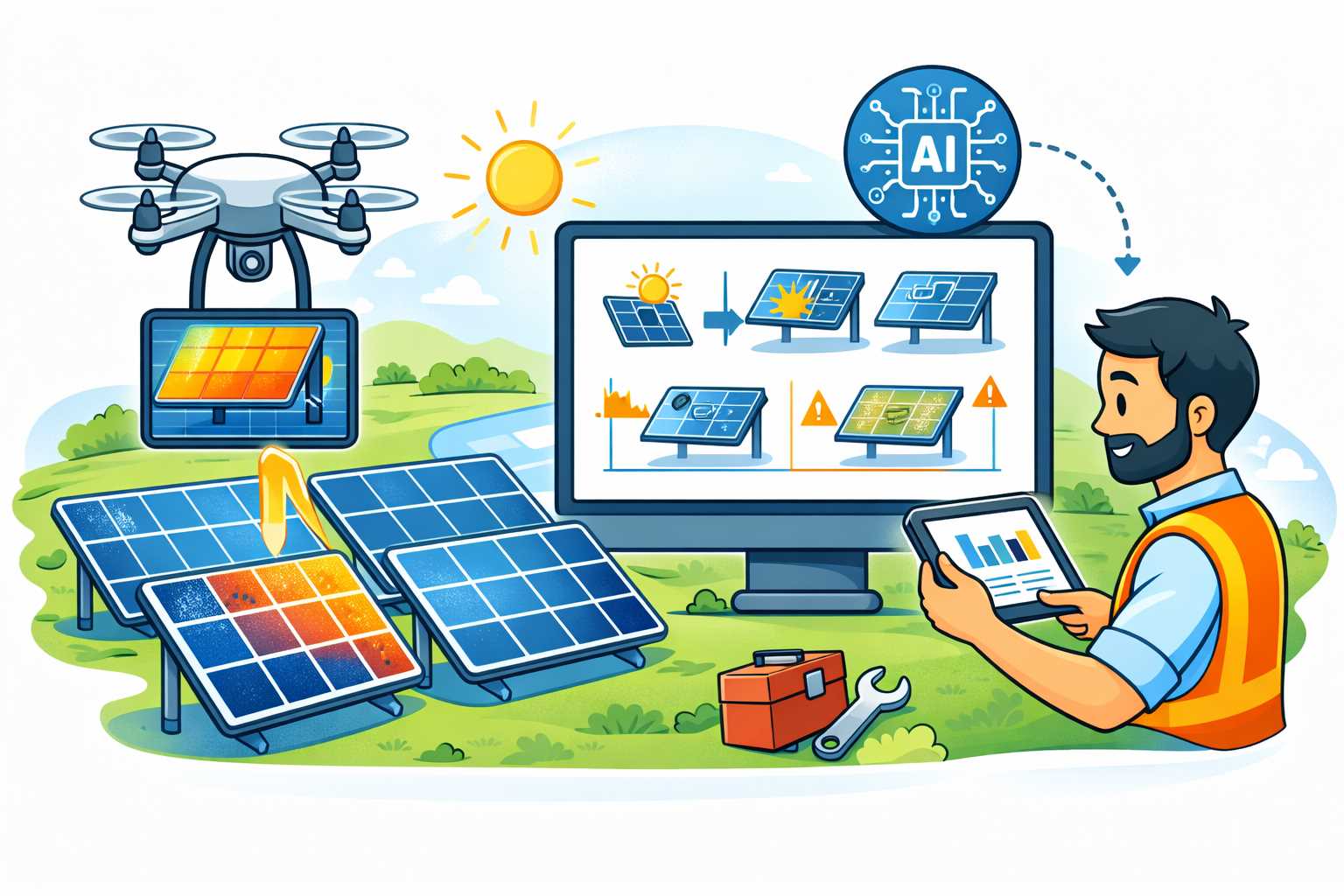
The system begins with data collection from the solar plant. This typically involves capturing images of solar panels using drones or imaging systems. These images provide a detailed view of the condition of each panel.
Once the data is collected, the platform applies computer vision models to analyze the images. The AI looks for patterns that indicate faults. For example, a hotspot on a panel can signal an electrical issue, while uneven shading may indicate environmental factors affecting performance.
The system then generates reports that highlight these issues. These reports help operators identify where problems are located and what kind of maintenance is required.
In addition to visual analysis, the platform can incorporate performance data from the solar plant. By combining these two data sources, the system can link visual defects with drops in energy output.
This allows operators to move from detection to action more quickly, reducing the time between identifying a problem and fixing it.
Deployment
The product is designed for use in large solar installations as well as commercial systems. In these environments, manual inspection is difficult because of the scale of operations.
Automated systems like Solarad’s are particularly useful in large solar farms where inspecting every panel manually would require significant time and resources.
Differentiation
Solarad AI’s main difference lies in how it replaces manual inspection with automated analysis.
Traditional solar plant monitoring often relies on periodic checks and basic performance metrics. These methods can miss issues or detect them only after they have already affected output.
By using image-based analysis, the platform allows for more detailed and frequent inspection. This makes it easier to identify problems early.
Another important aspect is the combination of visual data with performance data. This provides a more complete view of how the plant is functioning and helps prioritize maintenance efforts.
Market landscape
Solarad AI operates in a category that includes companies working on solar analytics and inspection.
Globally, there are platforms that use drones and AI to inspect solar installations and detect faults. These systems are designed to help operators maintain performance and reduce downtime.
Solarad’s approach fits within this category, focusing on automated inspection and data-driven maintenance.
Global context
As solar capacity continues to grow, the focus is shifting toward maintaining and improving performance.
Even small inefficiencies can result in significant losses when scaled across large installations. This has created demand for tools that can monitor performance continuously and identify issues quickly.
AI and computer vision are increasingly being used in this context because they can process large amounts of data and detect patterns that are difficult to identify manually.
- Our correspondent