In 2020, when most people in India had never heard the word “exoskeleton,” a Delhi-based startup called GenElek Technologies was already working on wearable robotic systems designed to help people with lower-limb disabilities stand and walk again.
Over the last few years, the company has quietly built rehabilitation-focused robotic devices for clinics and mobility assistance systems for individuals living with paralysis and other movement disorders.
GenElek Technologies operates from the IIT Delhi Research and Innovation Park in New Delhi. The company develops robotic exoskeletons — wearable machines that support or assist movement using motors, sensors, and software.
Unlike a wheelchair, which replaces walking, an exoskeleton attempts to help the user stand upright and move their legs through controlled motion patterns.
The company says its systems are designed both for rehabilitation clinics and for personal mobility use. Its rehabilitation product is positioned as a robotic gait trainer for hospitals and physiotherapy centers, while its personal mobility device is aimed at individuals who need walking assistance in daily life.
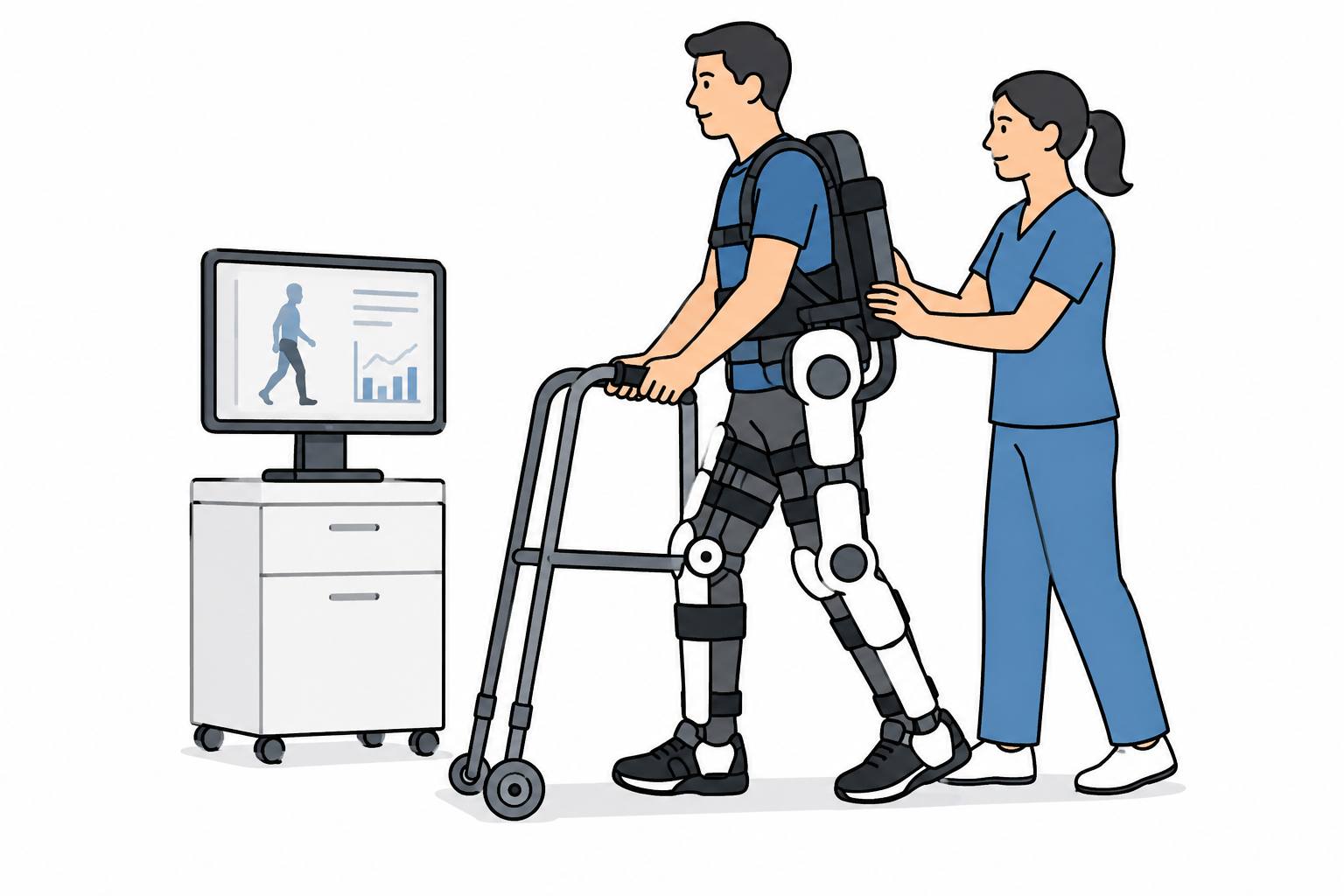
The core technology GenElek is building is relatively complex, but the basic idea is straightforward. The company’s exoskeleton is worn externally around the legs and hips. Motors at the joints assist movement, while sensors monitor posture and gait. Software coordinates the motion so that the user can perform repetitive walking exercises or assisted walking sessions.
For rehabilitation clinics, the system is intended to reduce the physical strain on therapists during gait training sessions. Traditionally, rehabilitation after spinal injuries or neurological conditions can require therapists to manually support a patient’s body weight while helping them repeat walking movements for extended periods.
Robotic gait trainers automate part of this process. According to GenElek’s clinic-focused materials, its system includes six training modes, adjustable configurations, and support for users weighing up to 100 kilograms.
The company also positions the device as a data-enabled rehabilitation system. Its website says the platform integrates robotics with “data insights” to improve therapy consistency and patient monitoring.
For individual users, the product is presented differently. The company markets a lightweight wearable exoskeleton intended to assist standing and walking for people with lower-body mobility impairments.
Most advanced exoskeleton systems sold internationally are expensive medical devices that can cost tens of thousands of dollars, making them inaccessible to most patients in developing countries.
In late 2019, GenElek Technologies was also selected to represent India at CYBATHLON 2020 in Zurich. CYBATHLON is an international competition focused on assistive technologies where teams demonstrate systems designed for people with disabilities.
Reports claim that the company’s work in walking-assistance exoskeletons as part of a broader rise in Indian exoskeleton development.
GenElek is not operating in isolation. The global exoskeleton market has expanded significantly over the past decade, especially in rehabilitation medicine, industrial safety, and military applications. Internationally, companies such as Ekso Bionics, ReWalk Robotics, Cyberdyne, and SuitX have developed robotic wearable systems for rehabilitation and assisted movement.
Many of these systems are used in hospitals treating spinal cord injury, stroke rehabilitation, and neurological disorders. Some industrial exoskeletons are designed not for disabled users but for factory workers, helping reduce fatigue during lifting or repetitive work.
In India, the ecosystem is still relatively small. Several IIT-linked and medtech startups are exploring rehabilitation robotics, but commercial deployment remains limited. The biggest challenge is cost. Imported exoskeletons are often unaffordable for Indian hospitals and patients. There are also challenges around training physiotherapists, servicing devices, and integrating robotic rehabilitation into conventional clinical workflows.
GenElek appears to be addressing this gap by positioning itself as a locally developed rehabilitation robotics company with India-focused deployment and pricing strategies.
That reflects the broader reality of rehabilitation robotics globally. Even in developed markets, exoskeleton adoption is still gradual because these systems are expensive, require training, and are often used in specialized rehabilitation settings rather than mainstream healthcare environments.
Still, the category is growing steadily. Advances in lightweight materials, motor efficiency, battery systems, and motion control software are making exoskeletons smaller and more practical. AI-based gait analysis and adaptive movement systems are also becoming more common across the industry.
For GenElek Technologies, the next phase will likely depend on whether it can move from demonstration and pilot-stage adoption toward sustained clinical deployment at scale.
What the company has already demonstrated is that advanced rehabilitation robotics is no longer limited to imported medical systems from Europe, Japan, or the United States. Indian companies are now attempting to build these technologies locally, for Indian healthcare settings, at lower price points and with more localized support models.
-Our correspondent