India’s packaging industry has long depended on plastic mailers, laminated pouches, bubble wrap, and disposable food containers. Much of it is cheap, lightweight, and difficult to recycle at scale.
Bengaluru-based Bambrew is one of a growing set of companies trying to replace some of these materials with packaging made from bamboo fibre, wood pulp, sugarcane residue, seaweed-based materials, and coated paper products.
Founded in 2018, the company works mainly with businesses rather than individual consumers. Its products are used in sectors such as ecommerce, food delivery, FMCG, retail, pharmaceuticals, and logistics.
The company began with a narrow problem: replacing plastic straws. Over time, it expanded into broader packaging categories after identifying a larger commercial opportunity in ecommerce and retail packaging.
Founder Vaibhav Anant studied fashion technology at the National Institute of Fashion Technology (NIFT), Bengaluru. His background was not in packaging chemistry or materials science. Instead, the company evolved through experimentation with suppliers, manufacturers, and material partners.
In its early phase, Bambrew reportedly worked with handcrafted products sourced from tribal communities across India. These products used bamboo, sugarcane, and similar plant-based materials. But the company later shifted toward machine-based production because handcrafted manufacturing was difficult to scale consistently.
That shift shaped the company’s current model. Bambrew today operates through a combination of in-house production and external manufacturing partnerships. Instead of building entirely new factories everywhere, the company also works with existing packaging manufacturers that traditionally handled plastic packaging.
The core of Bambrew’s business is material substitution. The company develops packaging products that try to retain the functional characteristics businesses expect from plastic — durability, flexibility, moisture resistance, printability, and machinability — while using materials that are easier to recycle or biodegrade.
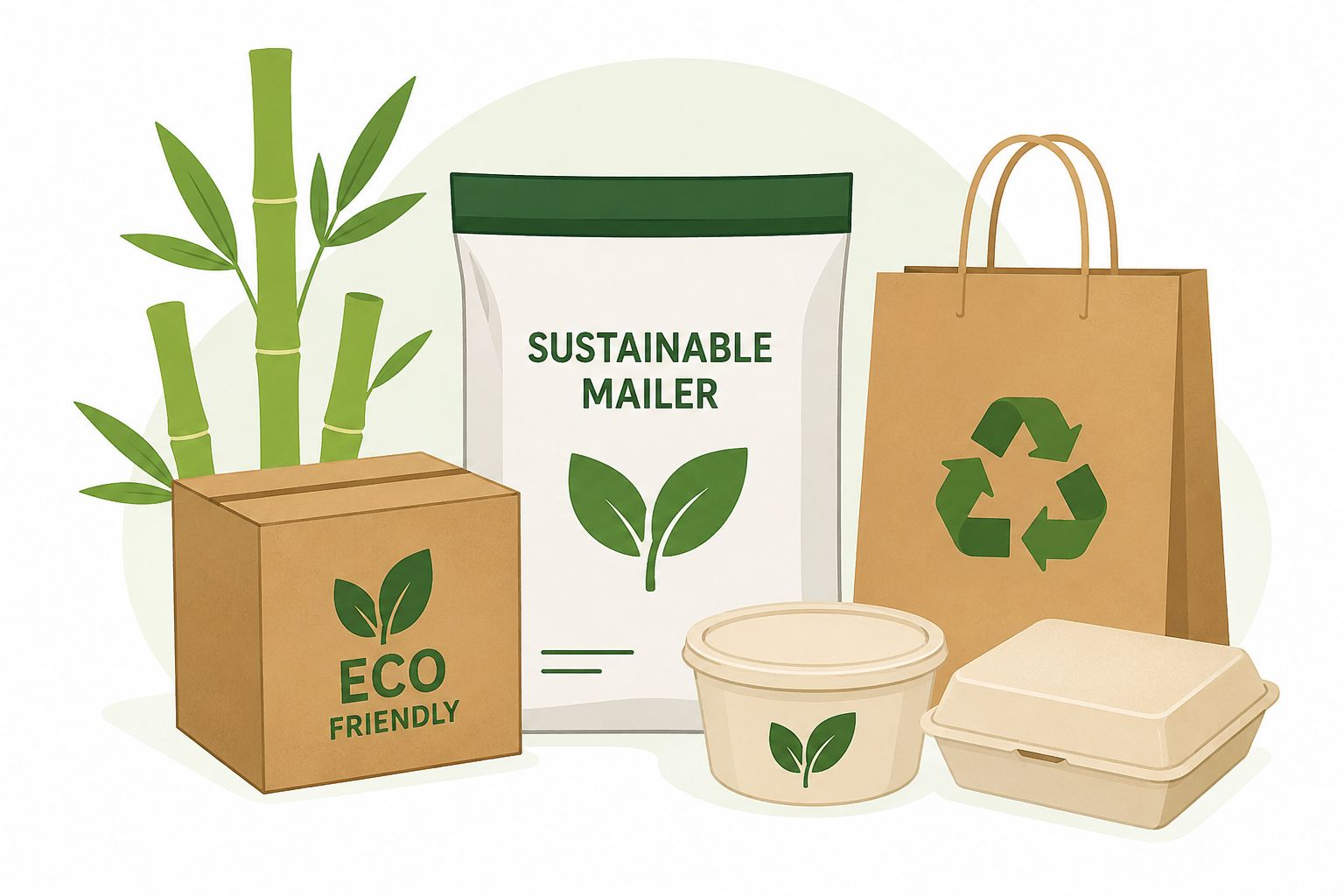
Its products include ecommerce mailer bags, paper-based pouches, food containers, takeaway packaging, cartons, pharmaceutical packaging components, and flexible packaging materials.
One of the technical challenges in sustainable packaging is that paper alone often lacks the barrier properties required for shipping and storage. Plastic performs well because it resists water and tearing. Bambrew claims to have developed proprietary coating methods that give paper “plastic-like properties” without eliminating biodegradability or recyclability.
The company says it uses bamboo pulp and wood pulp certified by the Forest Stewardship Council (FSC), a global certification system for responsibly sourced forest materials. Some raw materials are sourced domestically while others, including bamboo pulp, have been imported.
Bamboo is attractive to packaging companies because it grows relatively quickly compared to timber forests and can produce strong fibres suitable for paper and moulded packaging. Sugarcane bagasse — the fibrous residue left after extracting juice from sugarcane — is also widely used globally in compostable plates and containers.
The company’s commercial growth appears tied closely to the rapid expansion of ecommerce in India after 2020. Increased online shopping led to rising demand for mailer bags, secondary packaging, and food delivery containers. During the COVID-19 period, Bambrew reportedly focused heavily on research and development for packaging alternatives across ecommerce, FMCG, food delivery, and pharmaceuticals.
In January 2022, Bambrew raised a pre-Series A funding round of approximately $2.35 million led by Blue Ashva Capital and Supack Industries, with participation from Mumbai Angels and other investors.
In 2025, the company announced a larger funding round of about Rs 90 crore from investors including Ashok Goel and Enrission India Capital.
The market response to sustainable packaging has been mixed globally, largely because businesses still evaluate packaging heavily on cost and operational compatibility. Several companies have struggled because eco-friendly alternatives are often more expensive than conventional plastic. Bambrew’s approach has been to focus on products that can work within existing packaging supply chains rather than requiring companies to completely redesign operations.
Bambrew operates in a crowded and fast-growing sector. In India, companies such as Bizongo, Aggarwal Biotech, Ecoright, and several paper-based packaging manufacturers are targeting alternatives to plastic packaging. Internationally, companies such as Notpla, TIPA, and EcoEnclose are working on compostable films, seaweed coatings, fibre packaging, and recyclable flexible materials.
Globally, the sustainable packaging market has grown rapidly due to regulations restricting single-use plastics, pressure from large retailers, and consumer demand for recyclable packaging. Europe has introduced stricter packaging waste regulations, while several countries including India have imposed bans on selected single-use plastic items. Large ecommerce companies are also under pressure to reduce packaging waste.
But the industry still faces unresolved questions. Compostable packaging often requires industrial composting infrastructure that many countries lack. Some paper-based alternatives still use thin plastic coatings. Recycling systems remain fragmented. Cost remains a major barrier for small businesses.
Bambrew’s strategy appears to be less about inventing entirely new materials and more about adapting existing fibre-based materials into commercially usable packaging formats at industrial scale. That practical positioning has helped it secure large enterprise customers in sectors where packaging volumes are extremely high.
- Our correspondent