For decades, doctors have relied on symptoms, patient descriptions, and periodic tests to understand what is happening inside the human brain.
Unlike the heart, which can be monitored continuously with clear signals, the brain has remained harder to interpret in real time. Its signals are complex, noisy, and often difficult to translate into clear clinical decisions.
A Bengaluru-based startup, NeuroDX, is trying to change that. It is attempting to build what it calls a “brain language model”—an artificial intelligence system that can interpret brain activity the way large language models interpret text.
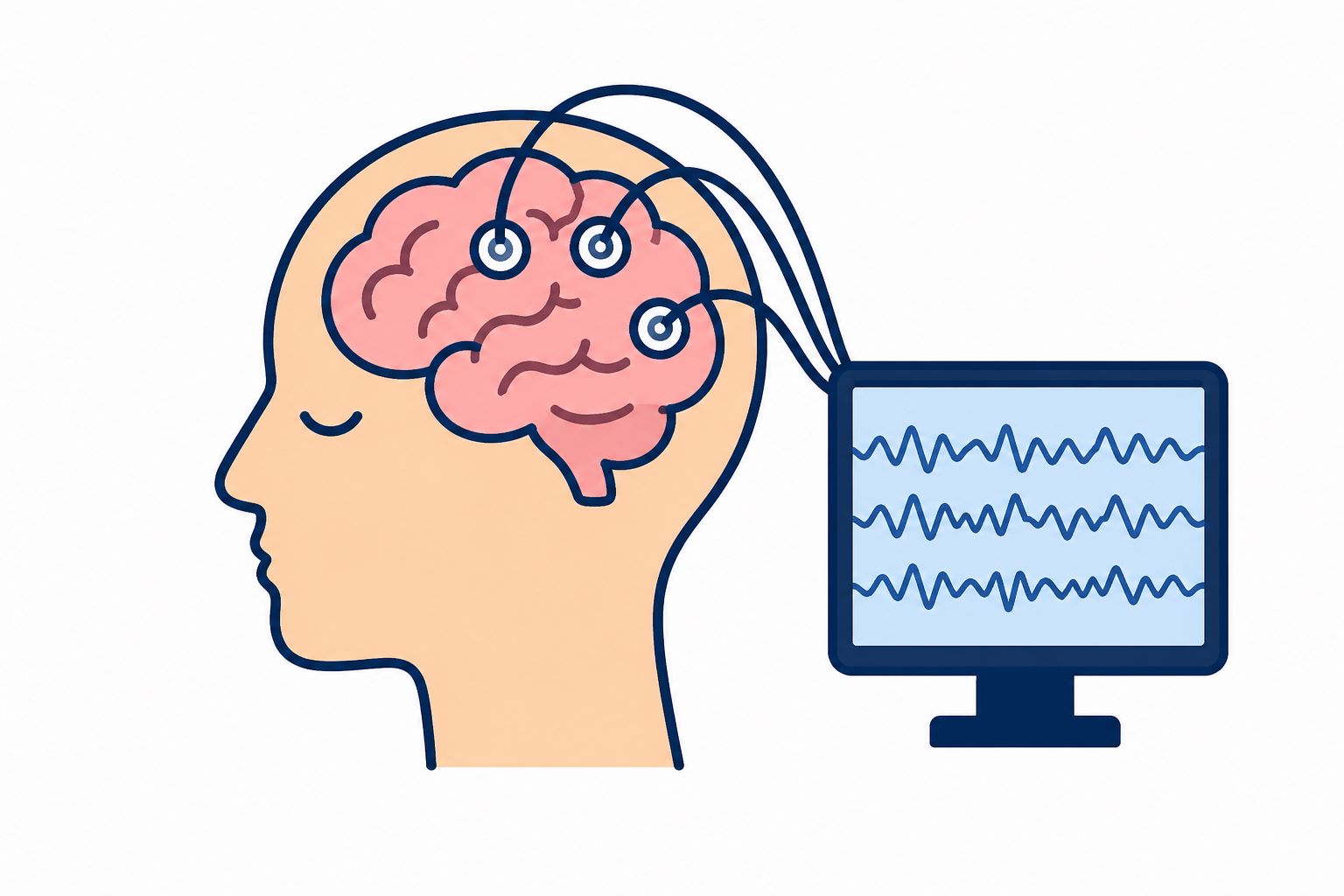
At the centre of this effort is a model called MANAS-1, designed to decode the electrical activity of the human brain. Built on large-scale EEG data, the system is trained to recognise patterns that correspond to neurological conditions such as epilepsy, cognitive decline, and mental health disorders.
Early results suggest high levels of accuracy in identifying biomarkers linked to these conditions, pointing to a future where diagnosis can begin much earlier than it does today.
NeuroDX’s founding team includes Kailash Sati and Siddharth Panwar, who together bring a mix of large-scale AI engineering and applied healthcare innovation. Kailash Sati has a strong background in data science and enterprise AI, including leadership roles at companies like Walmart Labs and earlier entrepreneurial experience, with training from IIT Delhi.
Origins
The idea behind NeuroDX is simple to describe but difficult to execute. The human body produces continuous streams of signals—brain waves, heart rhythms, muscle activity—but these signals are usually analysed in isolation. NeuroDX is building a system that brings them together, creating a unified picture of physiological state.
In India, this approach comes at a critical moment. Neurological and psychiatric disorders are rising, but access to specialist care remains uneven. Diagnosis often happens late, especially outside major urban centres. Tools that can provide objective, data-driven insights—rather than relying only on subjective assessments—could significantly change outcomes.
NeuroDX’s systems aim to do exactly that. By analysing brain signals, the platform can help clinicians detect epilepsy earlier, identify subtle signs of cognitive decline, and even provide measurable indicators for conditions like depression.
What makes this notable is not just the use of AI, but the attempt to make brain health measurable in a consistent, scalable way.
This aligns with a broader push in India toward building foundational AI systems.
Under initiatives like the IndiaAI Mission, startups are being encouraged to develop large-scale models rooted in Indian data and use cases. NeuroDX is part of this emerging ecosystem, working on what could become one of the country’s first foundation-scale models for human physiology.
The local relevance is clear. India needs healthcare solutions that are scalable, affordable, and capable of working across diverse populations. Traditional diagnostic pathways are often expensive, time-consuming, and dependent on specialist availability. AI systems that can interpret signals quickly and remotely could help bridge that gap.
At the same time, the problem NeuroDX is tackling is global.
Worldwide, more than 600 million people are affected by neurological disorders, making them one of the largest categories of disease burden. Despite advances in imaging and neuroscience, early diagnosis remains a challenge. Conditions like epilepsy, Alzheimer’s, and depression often go undetected until symptoms become severe.
This has led to growing interest in what is sometimes called “digital neurology”—the use of AI and biosignal analysis to understand the brain in real time. Companies and research groups across the world are working on similar ideas, from brain-computer interfaces to AI-driven diagnostics. What sets NeuroDX apart is its focus on building a foundation model for brain signals, rather than solving a single narrow use case.
In many ways, this mirrors what has happened in language AI. Instead of building separate systems for translation, summarisation, and search, researchers began building large foundational models that could handle multiple tasks. NeuroDX is attempting something similar for the brain—treating EEG signals as a kind of “language” that can be decoded, understood, and applied across different domains.
If successful, the implications extend far beyond diagnostics.
Such models could enable continuous monitoring of patients, allowing doctors to track how brain activity changes over time. They could support mental health treatment by providing objective measures rather than relying only on self-reported symptoms. They could even play a role in emerging fields like brain-computer interfaces, where machines respond directly to neural signals.
There are also applications outside traditional healthcare. NeuroDX points to potential use cases in robotics, wellness, and consumer devices, where understanding human physiological state could enable more responsive systems.
Yet, as with many deep-tech efforts, the path forward is complex.
Building accurate models requires large amounts of high-quality data, and in healthcare, data comes with strict privacy and regulatory constraints. Clinical validation takes time, and integration into existing healthcare systems is often slow. There is also the challenge of trust—doctors and patients need to be confident that AI-driven insights are reliable and interpretable.
NeuroDX appears to be addressing some of these challenges by working closely with clinicians and grounding its models in real-world medical data. Its founders bring backgrounds spanning neurology, AI research, and healthcare operations, reflecting the interdisciplinary nature of the problem.
- Our correspondent