In many hospitals and diagnostic labs, one of the most important steps in diagnosis still depends on a human looking through a microscope.
A pathologist examines a blood smear, a urine sample, or a peripheral slide manually, identifies abnormalities, counts cells, and prepares a report. It is slow, repetitive work, and accuracy depends heavily on experience, fatigue, and workload. SigTuple was built to change that.
Based in Bengaluru, SigTuple develops AI-powered digital pathology systems that automate microscopic analysis of visual medical data. Its goal is simple: make routine pathology testing faster, more accurate, and easier to scale—especially in places where trained specialists are limited.
Instead of replacing pathologists, the company focuses on AI-assisted diagnosis. Its system digitizes microscope workflows, analyzes samples using machine learning, and gives doctors reports with visual evidence for final review.
Founders
SigTuple was founded in 2015 by Tathagato Rai Dastidar, Rohit Kumar Pandey, and Apurv Anil.
The company was started by engineers who wanted to apply machine learning to healthcare diagnostics rather than general enterprise software .
Before starting SigTuple, Tathagato had worked in technology and data systems and believed one of the biggest gaps in Indian healthcare was not only access to doctors, but access to reliable diagnostics.
The company began with a broad vision of “AI for healthcare” but quickly narrowed its focus to pathology, where routine diagnostic processes still relied heavily on manual microscopy.
Unlike futuristic AI claims around fully automated medicine, pathology offered a practical entry point where automation could improve daily hospital operations immediately.
What the product actually does
SigTuple’s core platform is AI-assisted digital microscopy. Its flagship system combines robotic microscopes, imaging hardware, and diagnostic AI software to analyze visual medical samples such as blood, urine, semen, and other pathology specimens.
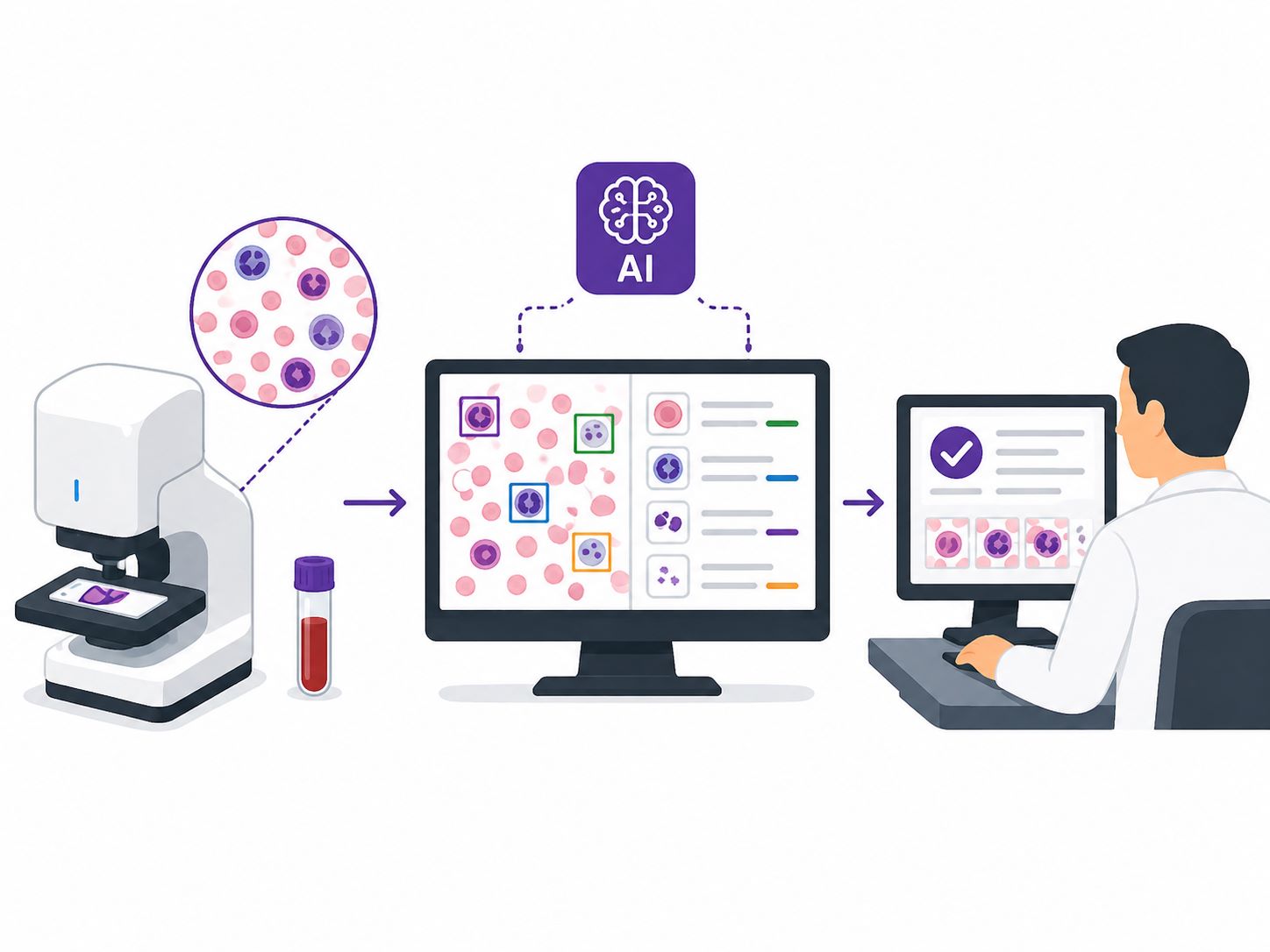
The company’s AI100 digital microscope captures high-resolution images of samples automatically, replacing the traditional manual viewing process. Instead of a technician manually scanning slide after slide, the machine digitizes the sample and sends it to SigTuple’s AI layer for analysis .
Its best-known diagnostic engine is called Shonit. Shonit is used for peripheral blood smear analysis. It identifies red blood cells, white blood cells, platelets, parasites, and abnormal morphology patterns. It can help detect anemia, infections, malaria, leukemia indicators, and other blood abnormalities.
The company also has solutions for urine microscopy and semen analysis.
How the system works
The workflow is straightforward. A sample slide is loaded into the AI100 digital microscope. The robotic system captures multiple high-resolution images automatically across the sample. These images are processed using SigTuple’s machine learning models. The AI identifies cells, classifies abnormalities, flags suspicious regions, and prepares a structured diagnostic draft.
A pathologist then reviews the results remotely or onsite, validates findings, and signs off on the final report. The doctor remains responsible for diagnosis.
SigTuple is not selling “AI replaces pathologists.” It is selling faster, more standardized review. That makes hospital adoption easier because clinical responsibility remains with licensed professionals.
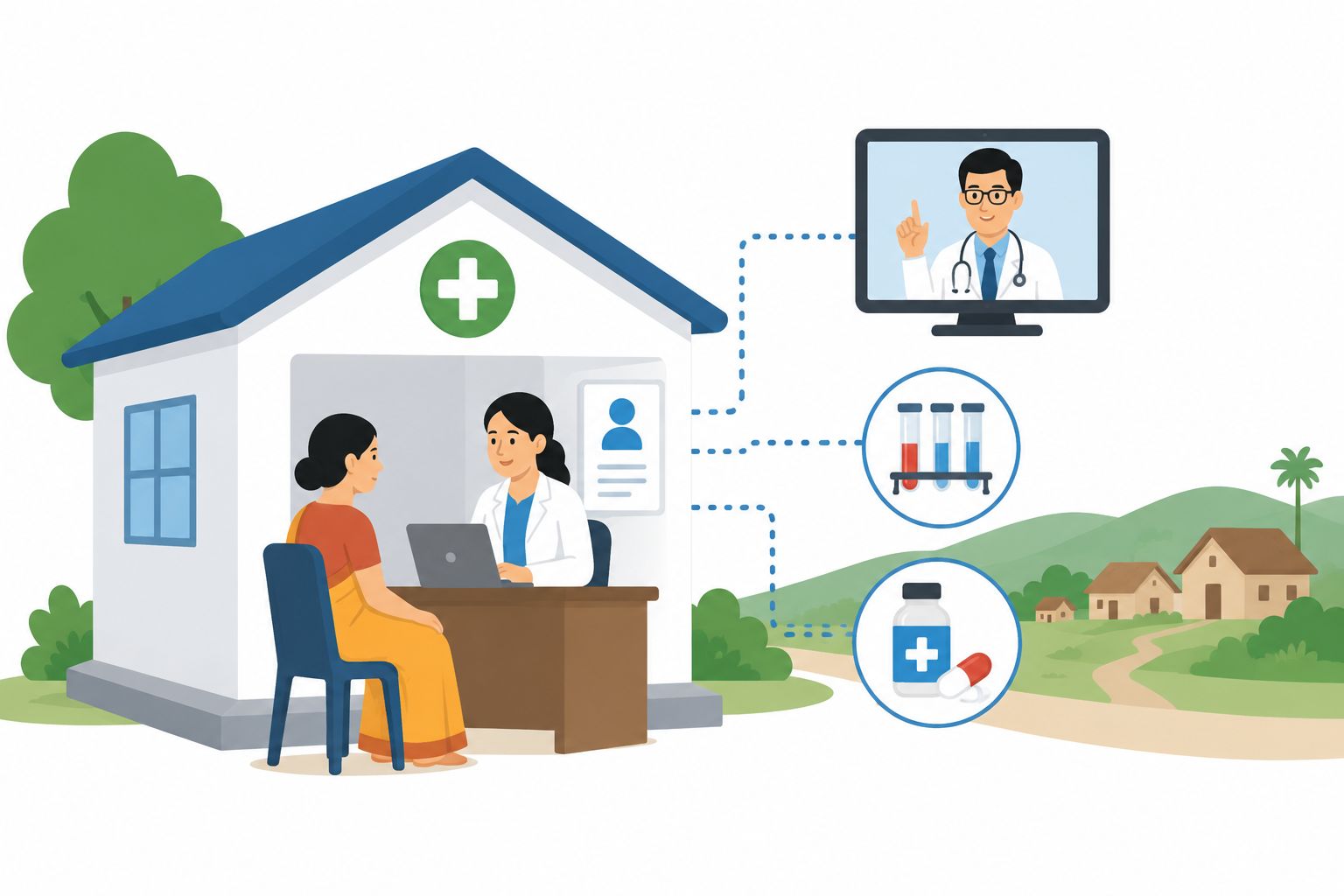
Its cloud-enabled workflow also allows remote specialist review, which matters in smaller cities and regional labs where expert pathologists may not be available locally .
Funding
SigTuple has raised significant capital compared to most Indian diagnostic AI startups. Tracxn reports that by 2026, the company had raised about $54.7 million across multiple funding rounds .
Its investors include Accel, Endiya Partners, Chiratae Ventures, IDG Capital, SIDBI Venture Capital, and others.
Market feedback and competition
The strongest market feedback for SigTuple is repeat use inside clinical workflows. Hospitals do not adopt diagnostic systems casually. Pathology tools must fit regulatory requirements, reporting standards, and doctor trust.
SigTuple’s value is strongest where it reduces repetitive manual review without changing the final medical accountability.
Its closest competitors include global pathology players like CellaVision in hematology imaging and digital pathology systems from larger medical device companies. In India, companies such as Niramai focus more on imaging diagnostics like breast cancer screening, while Qure.ai works on radiology and imaging AI rather than microscopy.
Global overview
AI-assisted pathology is becoming one of the fastest-moving areas in medical diagnostics.
Radiology received attention first because imaging data was already digital. Pathology is now following because digital microscopes and AI models make slide-based diagnosis easier to scale. The global push is driven by the same problem everywhere: too much diagnostic volume and too few specialists.
Labs in India, Southeast Asia, Africa, and even developed health systems face delays because trained reviewers are limited.
AI helps by standardizing first-pass analysis and reducing review time. Unlike fully autonomous diagnosis, this category works because it keeps doctors in control while improving operational efficiency. That makes procurement easier and regulatory approval more realistic.
The tech-for-good angle
The strongest social impact case for SigTuple is access. In many smaller hospitals, diagnostic delays happen because specialist review is slow or unavailable. A sample may travel physically to another city before a report is completed.
Digital pathology reduces that dependence. If a pathologist can review remotely and AI handles the first layer of screening, diagnosis becomes faster and more consistent.
That matters for diseases where time changes outcomes—anemia, infections, malaria, blood cancers, kidney disease, and routine preventive screening. It also reduces the burden on technicians doing repetitive manual microscopy for hours every day.
- Our correspondent