For years, India’s agricultural technology ecosystem has tried to solve farmer access through apps. However, Indian farmers still rely more on calls, WhatsApp groups and local input dealers than on formal agri-tech platforms.
A large number of platforms have promised better crop advisory, weather forecasting, market prices, pest management, and financial inclusion. Yet for millions of farmers, especially smallholders, digital agriculture still feels distant.
The problem is not always lack of information. It is often the interface.
Most farmers do not think in terms of dashboards, nor or they English speaking. They work in regional languages, rely on spoken communication, and need answers in real time—often while standing in a field, not sitting in front of a smartphone. This is where voice AI is beginning to emerge not as a feature, but as a possible operating system for Indian agriculture.
The next phase of agri-tech may not be about building more apps. It may be about making agriculture conversational.
Why apps alone have not solved the problem
India has seen a rapid rise in agri-tech platforms over the past decade. Companies like DeHaat, Gramophone, and Fasal have built strong digital layers around crop planning, advisory, and input delivery. But adoption challenge remain persistent.
Many farmers still depend on local input dealers, WhatsApp groups, call centers, and informal networks rather than structured digital tools. Even when mobile apps are available, barriers such as literacy, language mismatch, trust deficits, and interface complexity reduce actual usage.
————————————————————————————————
Read more: KissanAI, Building Voice AI for Indian agriculture
————————————————————————————————
A farmer may not search for “fungal disease in tomato crop” through an app interface. They are more likely to ask, in their own language, why their tomato leaves are turning yellow. That difference is not cosmetic. It changes the entire design of agricultural technology.
Why voice changes the equation
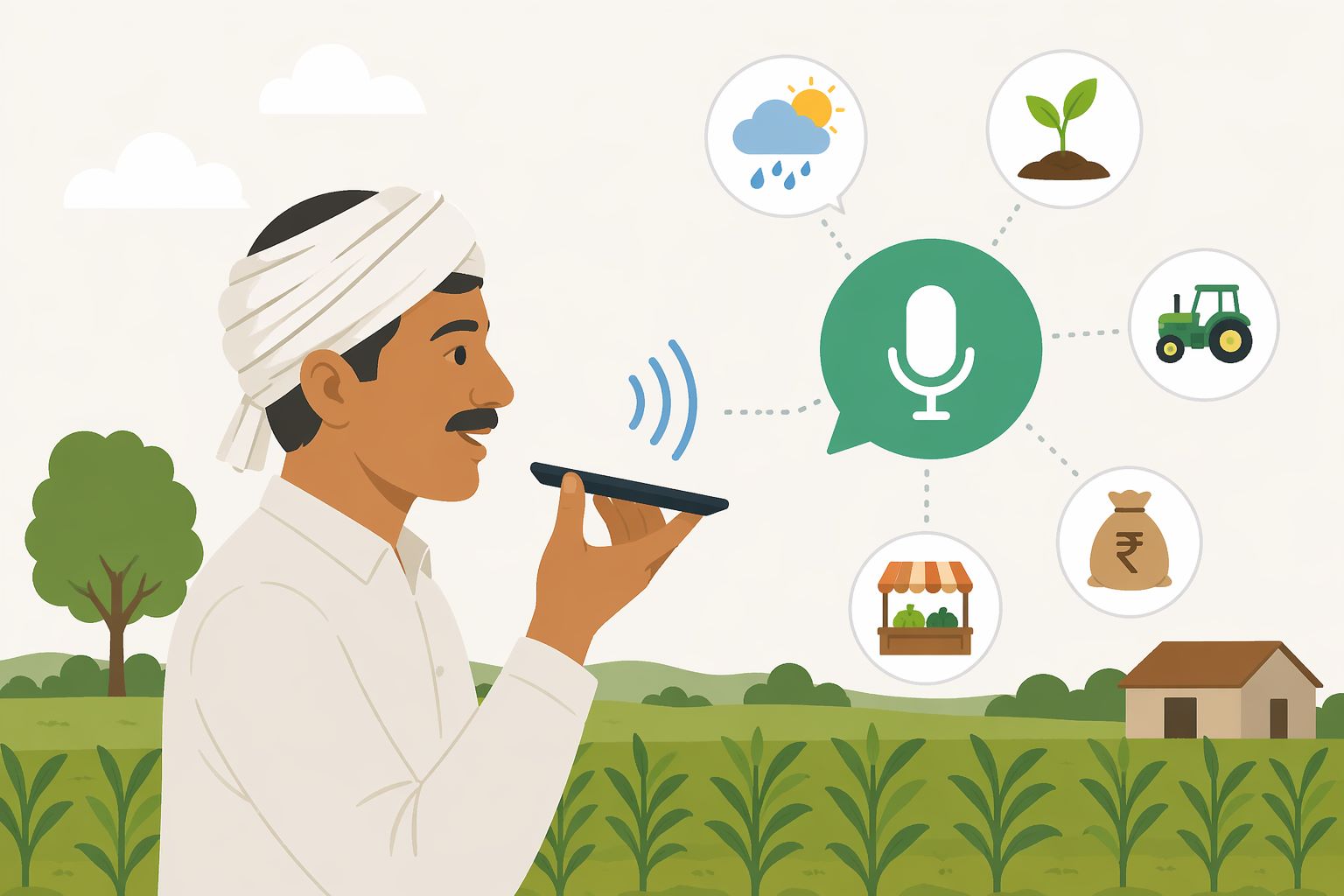
Voice creates a far more natural interface for agriculture because it mirrors how farmers already seek advice—through conversation.
Instead of navigating menus, users can ask questions directly. Instead of reading long recommendations, they can receive contextual spoken guidance. This reduces friction significantly, especially in regions where literacy and smartphone familiarity vary widely. Voice also works better in moments of urgency.
A pest outbreak, an irrigation issue, or a sudden weather change demands quick decisions. Farmers was far more likely to use a voice assistant than browse through multiple screens during these moments.
This is why voice AI is becoming important layer. It does not just improve access; it changes who can participate in digital agriculture.
Startups are building this new layer
One of the clearest examples is KissanAI, which is focused on building voice-based AI infrastructure for Indian agriculture. Rather than treating voice as an add-on, the company is positioning it as the primary interface between farmers and agricultural systems.
Its approach reflects a broader shift: from software designed for agricultural professionals to systems designed for everyday farmer interaction. Other platforms are moving in similar directions, even if voice is not their core identity.
DeHaat has invested heavily in farmer support systems that combine digital tools with human-assisted advisory. Gramophone focuses on localised recommendations where trust and language matter as much as technology. Fasal, while more precision-agriculture focused, still depends on making complex data understandable for farmers.
————————————————————————————————
Read more: DeHaat, Buiding a digital backbone for Indian agriculture
————————————————————————————————
Beyond startups, government helplines, agri call centers, and WhatsApp-based advisory models also point toward the same conclusion: farmers prefer interaction over interfaces. Voice AI simply scales that preference.
The real opportunity is infrastructure
The biggest opportunity is not a single voice assistant app. It is the infrastructure underneath. India’s agriculture system is fragmented across crop advisory, credit access, insurance, market linkage, government schemes, weather intelligence, and supply chain coordination. Each operates through separate platforms, often disconnected from each other. Voice AI can become the common interface layer across all of them.
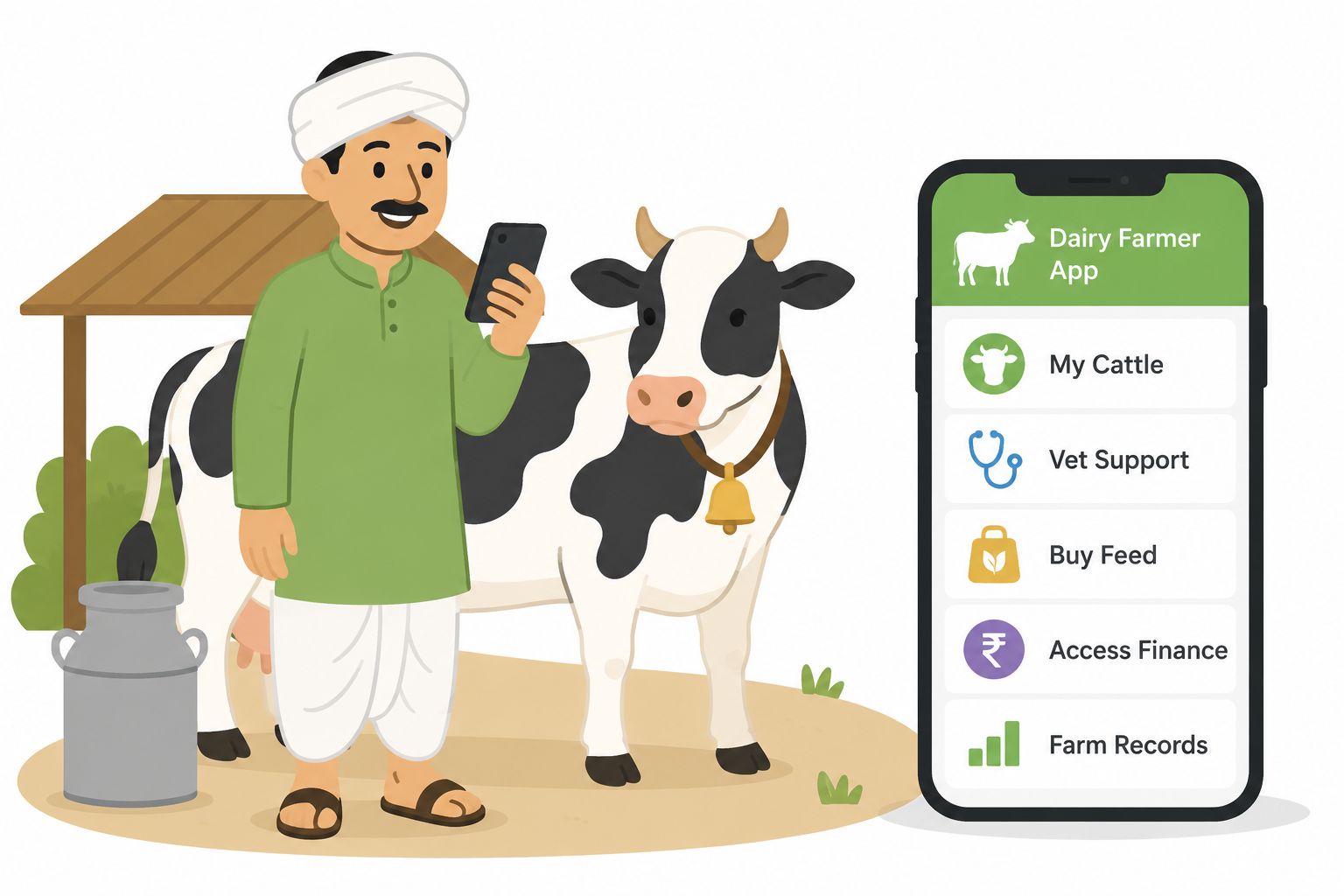
A farmer should not need five apps to solve five problems. A single conversational system could connect them to advisory, input recommendations, mandi prices, insurance updates, and government schemes through one interface.
That is why voice should be seen as infrastructure, not just customer support. It is the layer that makes digital agriculture usable.
Challenges remain
The opportunity is large, but execution is difficult. Agricultural voice AI in India faces real constraints. Language diversity is one of the biggest. India’s agricultural economy runs across dozens of languages and dialects. Accuracy in Hindi alone is not enough. Systems must understand accents, regional terminology, and crop-specific vocabulary.
Trust and reliability are equally important. Farmers will only rely on voice systems if advice is consistently useful. One wrong recommendation during a pest outbreak can permanently damage trust.
Agriculture is also deeply local. Soil type, weather patterns, crop cycles, and regional practices all affect decision-making. Voice AI must go beyond generic answers and become context-aware.
Monetization remains another unresolved issue. Whether farmers, enterprises, governments, or ecosystem partners ultimately pay for this infrastructure is still an open question. This is not just a technology challenge. It is a systems challenge.
Why this matters now
India is entering a period where agricultural productivity, climate resilience, and rural incomes are becoming increasingly interconnected.
Climate volatility is making decision-making harder. Farmers need faster, more precise, and more trusted information than ever before.
At the same time, smartphones and digital public infrastructure have created the foundation for new delivery models. The missing layer is often not data, but access. Voice systems helps farmers turn information into action.
Beyond agriculture
The importance of this shift extends beyond farming. The same pattern is visible in healthcare, legal systems, and public service delivery: technology adoption improves when systems become conversational rather than procedural.
Agriculture is simply one of the clearest places where this transition is visible.
- Our correspondent