Ambee is an environmental intelligence company focused on collecting and delivering hyperlocal data on air quality, weather, pollen, and other environmental factors.
Its core idea is that most environmental data available today is either too sparse, too delayed, or too general to be useful for real-time decisions. Ambee builds systems to make this data more granular, continuous, and usable through APIs.
Origin
The company was founded in 2017 by Jaideep Singh, who has a background in data science and environmental analytics. The origin of Ambee came from a personal and widely shared problem. Air pollution levels were rising in Indian cities, but the available data was limited to a few monitoring stations, often spaced far apart. This meant that the air quality reading for an entire city could be based on a handful of sensors, missing local variations that actually affect people’s daily lives.
Ambee started by building a denser data layer.
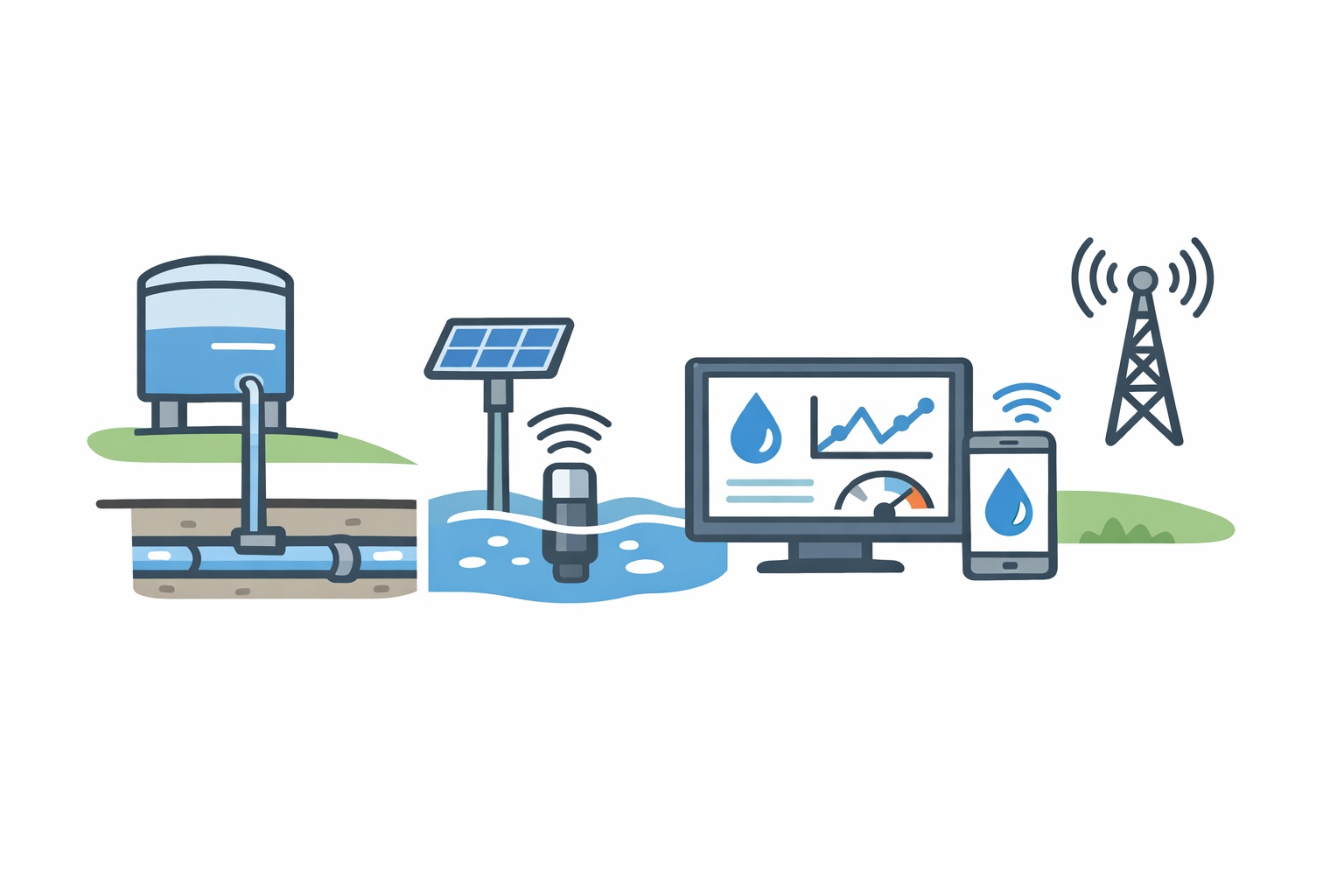
In its early phase, the company experimented with deploying its own network of air quality sensors. These are compact devices placed across different locations to capture real-time environmental data. Over time, Ambee expanded beyond just hardware and moved toward a hybrid model that combines sensor data with satellite inputs, weather data, and machine learning.
Funding
The company has raised funding from a mix of venture capital firms and institutional investors. It has gone through accelerator programs, including Y Combinator, which helped shape its early growth. The capital has been used to build its data infrastructure, expand geographic coverage, and develop APIs for enterprise use.
Product
At the core of Ambee’s offering is an environmental data platform delivered through APIs. Instead of building consumer apps, the company primarily serves businesses and developers who need environmental data integrated into their systems.
The product works by combining multiple data sources into a single, standardised output.
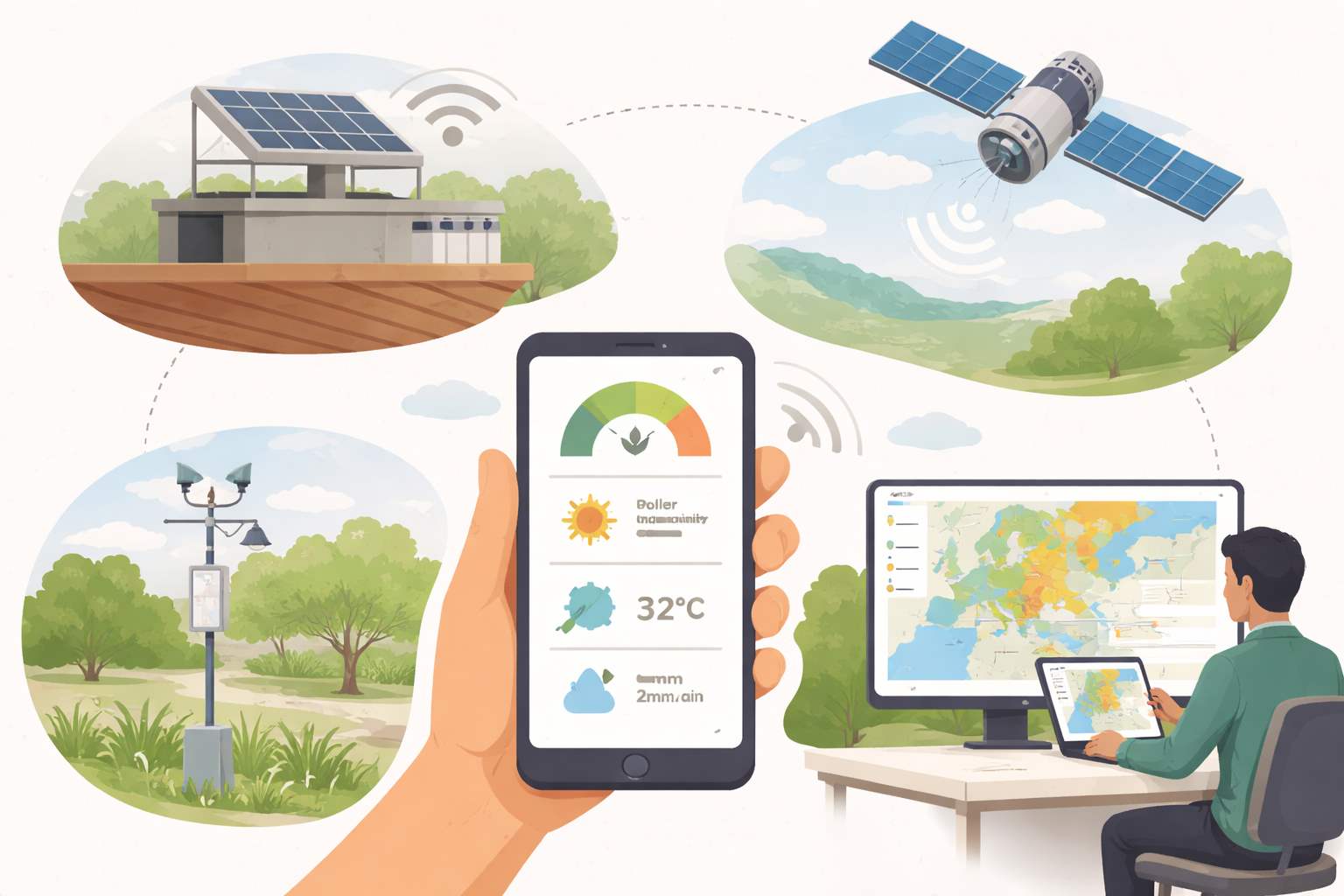
One layer comes from physical sensors. These measure parameters such as particulate matter (PM2.5 and PM10), temperature, humidity, and other local conditions. Sensors provide high-frequency, location-specific data but are limited by where they are installed.
Another layer comes from satellite data. Satellites can observe large geographic areas and capture indicators such as aerosol concentration, vegetation, and atmospheric conditions. However, satellite data alone is not always precise at ground level.
The third layer is modelling. Ambee uses machine learning models to combine sensor data, satellite inputs, and weather patterns. These models fill gaps between sensor locations and generate estimates for areas where direct measurements are not available.
The result is a high-resolution map of environmental conditions that updates in near real time.
For example, instead of saying that a city has a certain air quality index, Ambee can provide street-level estimates. This is particularly useful in cities where pollution can vary significantly from one neighbourhood to another.
The company packages this data into APIs that businesses can integrate into their products. A health app can use Ambee’s data to show users pollution levels in their area. A logistics company can adjust routes based on weather conditions. An insurance company can assess environmental risk for specific locations.
Ambee also provides specialised datasets such as pollen levels, which are important for allergy forecasting. This is a less visible but commercially valuable use case, especially in markets like the United States and Europe where pollen allergies affect a large population.
Deployment
In terms of deployment, Ambee’s data is used by a range of industries. Healthcare platforms use it to provide environmental context for patients with respiratory conditions. Mobility and navigation platforms use it to improve routing and safety. Enterprises use it for risk assessment and operational planning.
The company has expanded its coverage beyond India to multiple countries, building a global data layer. This is important because environmental data needs to be consistent across geographies for many enterprise use cases.
Performance in this category is measured less by traditional metrics and more by coverage, accuracy, and uptime. Ambee has focused on increasing the density of its data and improving model accuracy over time. The value of the platform increases as more data points are added and models are refined.
Challenges
At the same time, accuracy remains a constant challenge. Environmental data is inherently variable, and models need to account for a wide range of factors. Ensuring that API outputs are reliable enough for enterprise use requires continuous calibration and validation.
Ambee operates in a category often referred to as environmental data infrastructure. This includes companies that collect, process, and distribute data related to air, weather, and environmental conditions.
Global context
Globally, there are several players in this space. Companies like BreezoMeter, Plume Labs, and Tomorrow.io offer similar services, combining data sources to provide hyperlocal environmental insights. Some focus more on consumer applications, while others, like Ambee, emphasise enterprise APIs.
Traditional players such as government agencies and weather companies also provide environmental data, but often at lower resolution or with less flexibility for integration.
Differentiation
What differentiates Ambee is its API-first approach and its focus on combining multiple data sources into a unified system. Instead of relying solely on sensors or satellites, it uses a layered approach to improve coverage and accuracy.
Another point of differentiation is its expansion into multiple environmental parameters. While many companies focus only on air quality, Ambee includes weather, pollen, and other datasets in the same platform. This makes it more useful for applications that require a broader environmental context.
The broader category is growing as environmental factors become more relevant to business decisions. Climate change, urbanisation, and health concerns are increasing the need for real-time environmental data.
For example, insurance companies are incorporating climate risk into their models. Mobility platforms are considering weather and pollution in route planning. Healthcare providers are using environmental data to manage chronic conditions such as asthma.
This shift is turning environmental data into a core layer of digital infrastructure, similar to maps or payments.
In emerging markets like India, the need is particularly acute. Rapid urbanisation has led to significant variations in air quality and environmental conditions, but monitoring infrastructure has not kept pace. This creates an opportunity for companies that can build scalable data systems.
Globally, the opportunity extends beyond air quality to broader climate intelligence. Businesses are increasingly required to measure and report environmental impact, and this depends on reliable data.
- Our correspondent