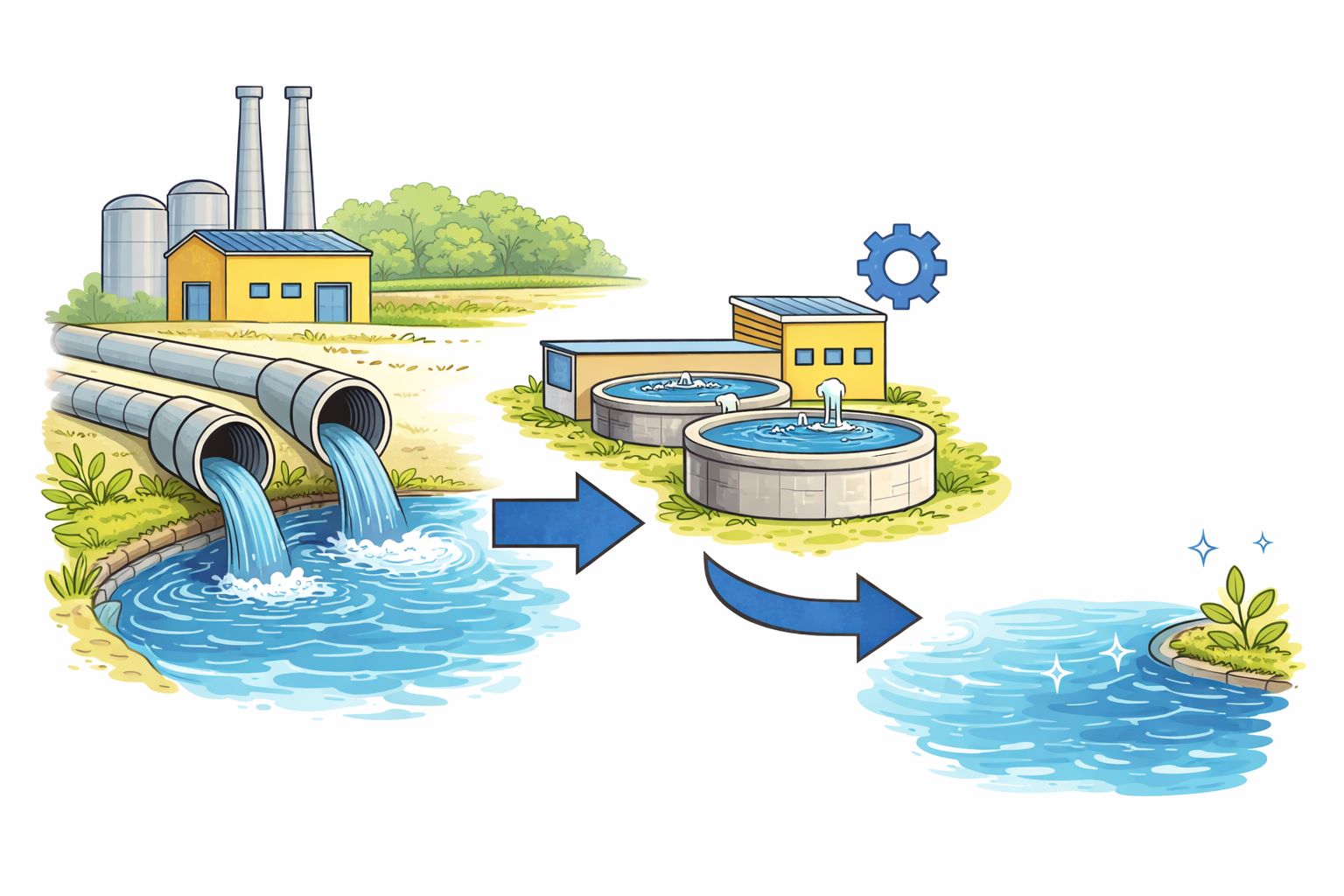
There is a strange contradiction at the heart of India’s water crisis. Cities are running out of fresh water, yet millions of litres of wastewater—water that could be treated and reused—go to waste every day.
The infrastructure exists. Thousands of sewage and wastewater treatment plants have already been built. But a large number of them do not function properly.
The origin:
Digital Paani was founded in 2020 by Mansi Jain and Rajesh Jain, a daughter–father duo combining two very different perspectives. Mansi brought a background in environmental economics from Stanford, while Rajesh brought over 25 years of experience in designing and operating water treatment plants.
Their insight came from a simple but overlooked reality. India has close to 90,000 wastewater treatment plants, but most are run manually. Many break down, operate inefficiently, or simply stop working.
In fact, a large percentage of these plants fail not because the technology is bad, but because they are poorly managed.
This is the gap Digital Paani chose to address. Instead of building new plants, it asked: what if existing plants could run better?
What Digital Paani actually does
At its core, Digital Paani is a software and IoT platform for wastewater treatment plants. But the idea becomes clearer with a simple analogy.
Think of a wastewater treatment plant like a factory. It has machines, processes, and operators. If something goes wrong, it needs to be detected early and fixed quickly. But in most plants, this is done manually—often too late.
Digital Paani installs sensors that monitor how the plant is performing in real time. It then uses software and algorithms to analyse this data, detect issues, and suggest actions. Operators receive alerts—often through simple tools like WhatsApp—telling them what needs attention. In effect, the platform turns a reactive system into a proactive one.
Instead of fixing problems after they occur, plants can prevent them.
Growth and funding
Digital Paani is still an early-stage company, but it has shown steady traction.
It has raised around $1.2 million in seed funding from investors such as Enzia Ventures, Elemental Excelerator, Climate Angels, and Bharat Founders Fund.
This mix of investors is telling. It includes both climate-focused funds and global innovation platforms, indicating confidence in both impact and scalability.
On the ground, the company has already deployed its solution across multiple facilities, working with clients like Tata Power, Delhi Jal Board, Britannia, and hospitality chains. Its systems are now helping treat over 90 million litres of wastewater every day.
What makes the solution unique
Wastewater treatment is not a new problem. Neither is automation. What makes Digital Paani interesting is how it combines three layers into one system.
First, it brings visibility. Many treatment plants operate without clear data on performance. By introducing sensors and dashboards, Digital Paani makes the invisible visible.
Second, it adds intelligence. The platform does not just show data; it interprets it. It identifies inefficiencies, predicts failures, and suggests corrective actions.
Third, it simplifies operations. Instead of requiring highly specialised engineers on-site, it enables operators with simple, actionable instructions.
This combination turns a complex engineering system into something that can be managed more easily.
Another important aspect is its business model. Digital Paani operates as a SaaS (software-as-a-service) platform, meaning clients pay for ongoing use rather than large upfront investments. This lowers the barrier to adoption.
Impact:
The real test of any infrastructure technology is performance on the ground.
Digital Paani’s deployments have shown measurable improvements. In some cases, plants have seen treatment capacity increase by around 30%, while operational costs have dropped significantly. Other estimates suggest cost reductions of 25–35% across facilities.
There are also environmental gains. Each plant using the system can save tens of millions of litres of freshwater by enabling reuse, while also reducing carbon emissions.
A functioning treatment plant means less freshwater extraction. It means less pollution. And it means cities can stretch limited water supplies further.
The broader landscape
Globally, the water-tech space includes companies working on sensors, leak detection, desalination, and smart infrastructure.
In India, there are players focused on water purification, distribution, and conservation. However, relatively fewer companies focus specifically on optimising wastewater treatment operations. Digital Paani occupies this niche.
Internationally, similar models exist in industrial IoT platforms for utilities, where data and automation are used to improve efficiency. But these are often designed for more advanced infrastructure systems.
The global context:
The world is facing increasing water stress due to climate change, population growth, and urbanisation.
At the same time, wastewater is emerging as an untapped resource. Treated properly, it can be reused for industrial, agricultural, and even potable purposes.
Globally, many treatment plants underperform—not because of lack of technology, but because of poor operations and maintenance.
Digital Paani’s model—using data and automation to improve performance—can be applied far beyond India, especially in emerging markets.